

You've probably stood in front of a specialty shelf holding a jar of soft red tomatoes in oil and wondered if they're the same thing as the dry, leathery pieces in the baking aisle. They look related, they both carry a lot of flavor, and both are called “sun-dried” often enough to make the label feel slippery. The useful distinction is simpler than the packaging makes it seem, semi sun dried tomatoes keep far more moisture, which gives them a softer bite and changes how you use and store them.
Table of Contents
- What Semi Sun Dried Tomatoes Are
- How Semi Sun Dried Tomatoes Are Made
- Flavor, Texture, and Nutrition Compared to Other Forms
- Smart Ways to Use Semi Sun Dried Tomatoes
- How to Store Them Safely Once Open
- Easy Substitutes When You Don't Have a Jar
- How to Make Semi Sun Dried Tomatoes at Home
What Semi Sun Dried Tomatoes Are
A jar of semi sun dried tomatoes usually tells you more by feel than by name. They are soft, pliable, and often a little glossy, not brittle or heavily wrinkled. In technical terms, a Wageningen University study found semi-dried tomato halves processed around 60–65°C for 5–6 hours and finished at 75–85% moisture, while conventional sun-dried tomatoes were much lower, at about 19.38–21.63% moisture (Wageningen University study).
That moisture gap is the category's defining feature. Semi-drying removes enough water to slow deterioration, but it leaves enough behind to keep a fresh-like, supple texture. For a home cook, that means these tomatoes belong in dishes where you want ready-to-eat convenience, such as salads, sandwiches, pasta, and antipasto. If you want to see how that softer style compares with a drier one, the comparison graphic shows the difference clearly.
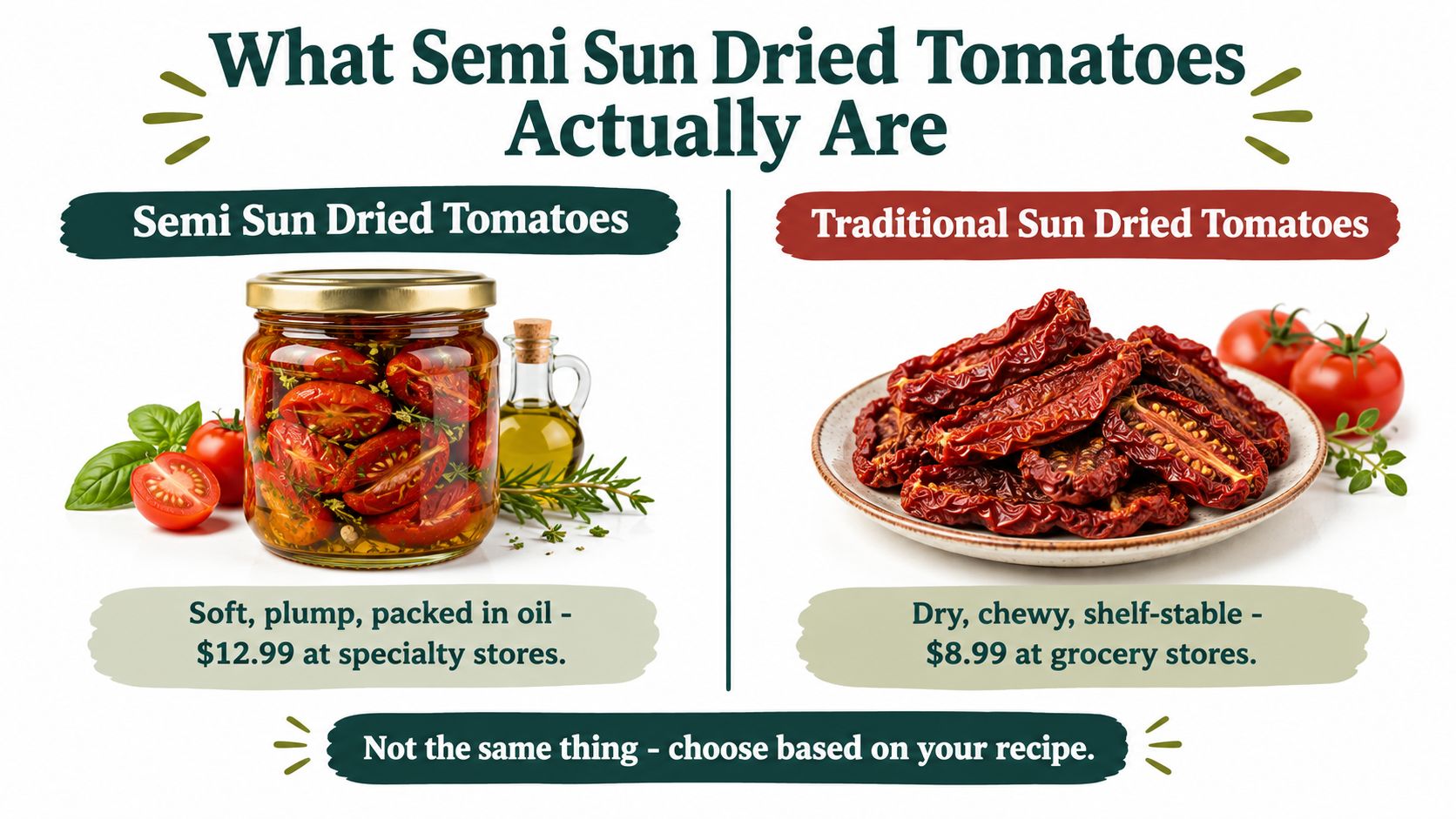
A quick way to tell them apart
- Fresh tomatoes are juicy and perishable, with a garden-fresh feel.
- Semi sun dried tomatoes bend when you press them, and they usually look plump or softly collapsed rather than hard.
- Fully sun-dried tomatoes feel leathery, dense, and much drier, with a chewy texture that works best when rehydrated or chopped small.
Practical rule: if the tomato gives slightly under pressure and looks meant to be eaten as-is, you are in semi-dried territory. If it feels tough and dry enough to tear, it is the fully dried version.
That difference matters in the kitchen. You are not choosing between two names for the same ingredient. You are choosing between a tomato that behaves like a savory garnish and one that behaves like a concentrated pantry staple. For contrast with a sweeter preserved tomato product, see this confit and confiture guide.
How Semi Sun Dried Tomatoes Are Made
A jar of semi sun dried tomatoes starts with a choice about how far the fruit should be dried. Producers usually use one of two routes. The traditional method relies on open-air sun drying, where tomatoes sit in strong heat and moving air until they lose enough water to soften their character. The more controlled route uses low ovens, dehydrators, or solar tunnels, which gives makers a steadier texture and a result that suits packaged foods.
A 2022 study of solar- and sun-dried tomato slices shows why that control matters. Fresh tomatoes began at about 95–96% moisture. Solar drying brought them down to 14–15% after 23–25 hours, while ordinary sun drying ended around 19–22% moisture, with the solar dryer recording 24.2% first-day efficiency (2022 drying study).
Why the softer texture is deliberate
That flexible texture is not an accident. It is the point of the category. Some makers want a tomato that folds into pasta, sits easily on a sandwich, or softens a salad without needing rehydration first. Controlled drying lets them stop there instead of pushing the fruit all the way to a tough, leathery finish.
Pretreatments can shape the result too. Research on tomato dehydration found that salt, calcium chloride, or citric acid changed how the fruit dried and affected quality outcomes, including water activity and lycopene retention (tomato dehydration study). That does not mean every jar uses those steps, only that the path from fresh fruit to shelf-ready tomato is often more deliberate than the label suggests.
A useful comparison is simple. Traditional sun drying aims for deeper preservation through heavy dehydration. Semi drying keeps usable moisture so the tomato stays soft enough to eat as-is.
For a home cook, that is the whole point of the category. Semi sun dried tomatoes are made to be used as an ingredient, not just stored as a preserved fruit.
For a useful pantry comparison, see how to choose extra virgin olive oil.
Flavor, Texture, and Nutrition Compared to Other Forms
A jar of semi sun dried tomatoes usually sits between two familiar extremes. Fresh tomatoes bring a light, watery bite. Fully dried tomatoes bring a dense, leathery chew. Semi dried tomatoes keep enough moisture to stay supple, while still concentrating the flavor that makes tomato taste taste like itself.
What changes when water leaves
Drying changes more than softness. It also shifts how the tomato's pigments behave. In one study, untreated tomatoes retained only about 26.57% of their initial lycopene after drying, while certain pretreatments brought reported retention to about 41.39%–45.85% (lycopene degradation and isomerization study). The same work reported water activity around 0.328–0.336 after six hours under the tested pretreatments.
That matters because water activity is a measure of how much water is available for spoilage and texture change. Lower water activity usually means a more stable product and a firmer bite. Semi dried tomatoes sit in a middle zone, with more moisture left in the fruit than a fully dried sample, so they feel softer but need more care once opened.
A separate tomato drying study found dried tomatoes at about 3.95% moisture and water activity near 0.31, and that level stayed steady through 180 days in vacuum packaging at 25 ± 2 °C (water activity study). That gives you a useful comparison point. Fully dried tomatoes are built for long keeping, while semi dried tomatoes are made to remain tender and ready to use sooner.
| Trait | Semi sun dried | Fully sun dried | Fresh |
|---|---|---|---|
| Texture | Soft, pliable, juicy | Dense, chewy, leathery | Crisp, watery, fragile |
| Flavor | Concentrated but still bright | Very concentrated, more intense | Light, clean, less concentrated |
| Moisture | Higher residual moisture | Much lower moisture | Very high moisture |
| Best use | Salads, pasta, sandwiches, antipasto | Rehydrated uses, chopping into sauces, pantry cooking | Raw eating, quick cooking |
The practical takeaway is simple. Semi dried tomatoes are a high-flavor ingredient, not a guaranteed nutrition upgrade. Their value depends on how they are packed, how much you use, and whether added oil or salt changes the final plate.
Smart Ways to Use Semi Sun Dried Tomatoes
The best use for semi sun dried tomatoes is usually the one that lets their texture stay intact. They shine when you want a tomato that can finish a dish rather than disappear into it. Think of them as a ready-to-eat accent, not a long-simmer ingredient that needs hours to break down.
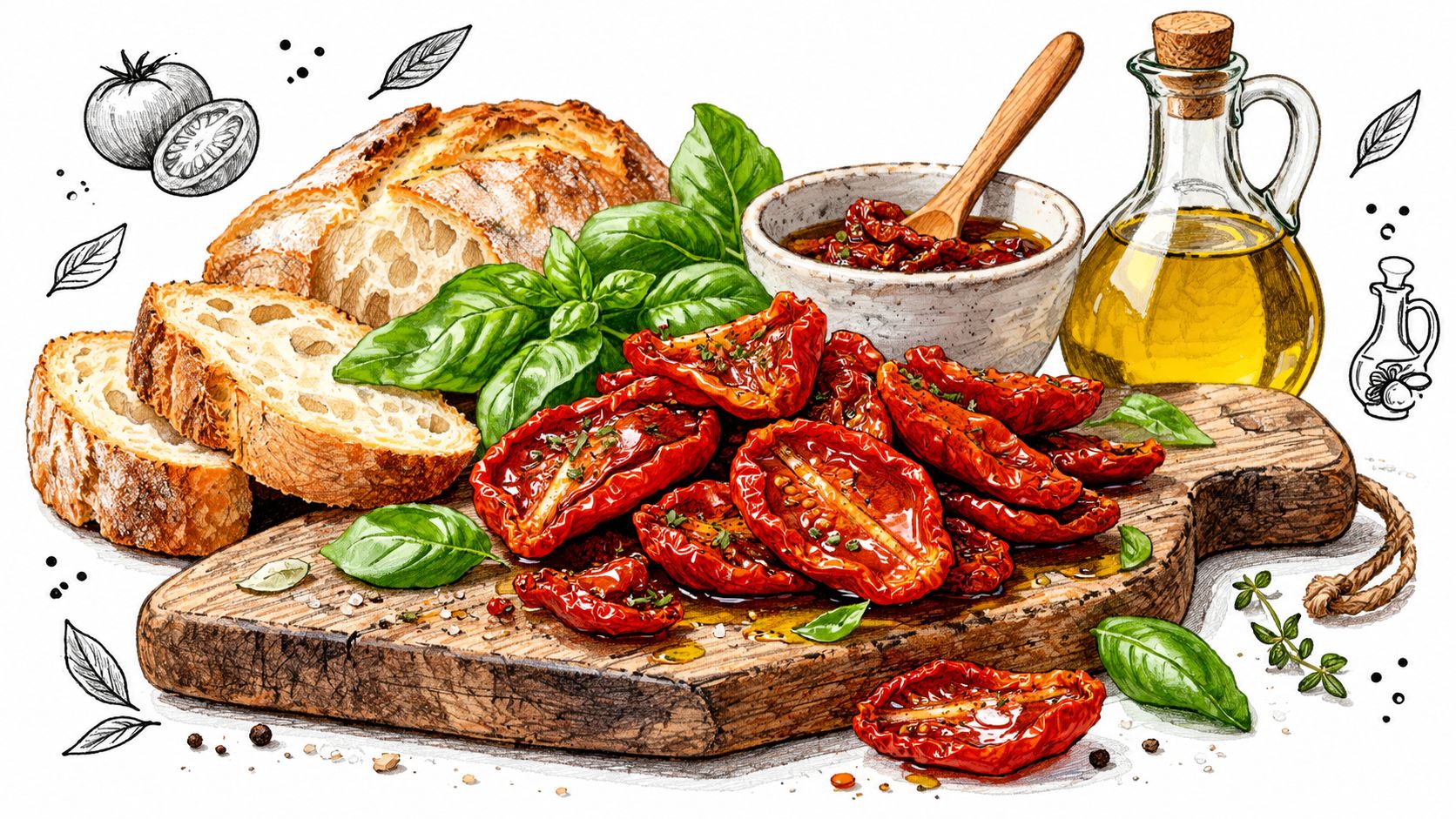
Where they earn their keep
- Cheese boards and bruschetta: Chop them loosely and spoon them over toasted bread with soft cheese, or fold them into a simple bruschetta. Their softness keeps the bite balanced instead of brittle, and they pair naturally with olive oil and herbs. A classic bruschetta base is a natural match, as in this bruschetta guide.
- Quick pasta sauces: Warm them briefly in olive oil with garlic, then toss with pasta and a little starchy cooking water. The goal is to warm and perfume them, not cook them down until they vanish.
- Salads: Slice them into ribbons or rough pieces and scatter them across greens, beans, or grain salads. They do the flavor lifting fast, so you don't need a heavy dressing.
- Breads and focaccia: Press small pieces into dough or onto the surface before baking. They bring pockets of tomato flavor without flooding the crumb.
An easy way to ruin them is to overcook them. Too much heat turns a tender, ready-to-eat tomato into something jammy in the wrong way, or worse, splits the oil and dulls the flavor. Another mistake is drowning them in extra oil when the jar already carries plenty.
Use them like a garnish with substance, not a sauce ingredient that needs rescue.
If you like working from a pantry with a few strong anchors, the ideal partners are obvious: good olive oil, flaky salt, and bread. Those three let the tomato stay the focus instead of turning into background decoration.
How to Store Them Safely Once Open
A jar of semi sun dried tomatoes can look simple on the shelf and still belong to different storage rules. Some are dry-packed, some sit in oil, some are meant to be refrigerated, and the label decides which path to follow. Texture alone does not tell you enough.
Start with the package, not memory. Storage guidance for sun-dried tomatoes varies across consumer sources, which is why the label matters more than a general rule of thumb (storage guidance discussion). If the maker gives refrigeration or use-by directions, follow those first.
Three practical cases
- Unopened, commercially packaged jars can usually stay in a cool, dark cabinet if the label says they are shelf-stable.
- Opened dry-packed tomatoes are best kept in a sealed container in the refrigerator, where they stay protected from air and stray moisture.
- Opened oil-packed tomatoes should go in the refrigerator unless the label clearly says otherwise. Keep the tomatoes covered with oil and use a clean utensil each time. For a broader sense of what belongs in the fridge versus the cabinet, see this guide to what to refrigerate.
Homemade oil-packed tomatoes need extra caution. Oil can limit oxygen, but if acidity, moisture, or handling is not controlled, the jar becomes a poor candidate for countertop storage. The same guidance warns that fresh garlic or fresh herbs make the mixture riskier, so those jars belong in the fridge, not on the shelf.
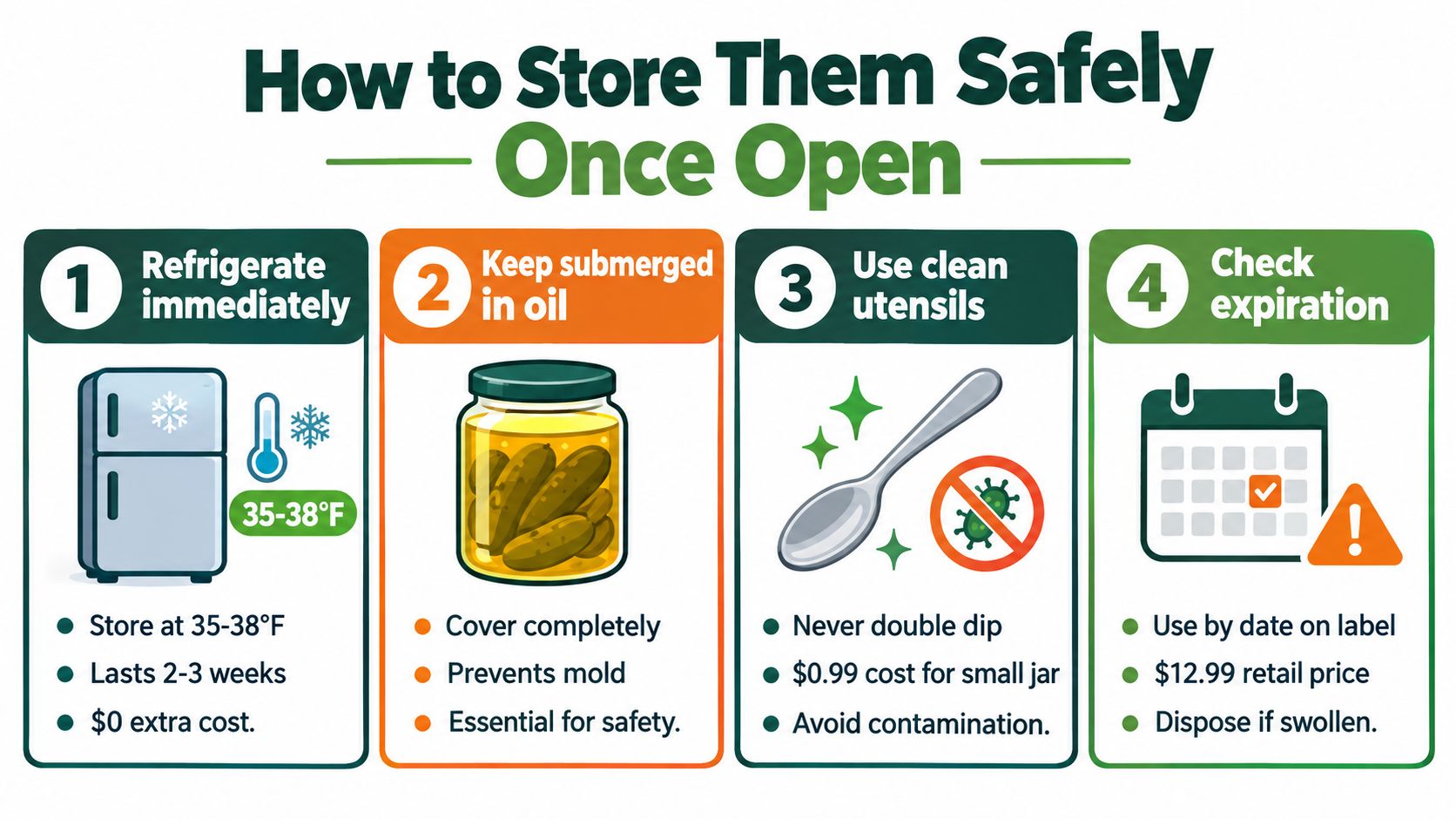
Signs to throw the jar out
- Visible mold on the surface, lid, or inside the jar.
- Slimy texture instead of supple firmness.
- Off smell that suggests spoilage rather than tomato aroma.
- Swelling or damaged packaging on unopened products.
If the label is unclear, refrigerate the jar. If the jar looks wrong, do not rely on smell alone. With a moist preserved food like this, caution is the safer habit.
Easy Substitutes When You Don't Have a Jar
If you open the pantry and find no jar, start with the substitute that behaves most like the actual thing. Oven-roasted cherry tomatoes come closest because they keep some juice and give you that soft, sweet-tart bite. They won't taste identical, but they'll land in the same texture zone.
Fresh tomatoes plus a little tomato paste work well in cooked dishes. The fresh fruit brings juiciness, while the paste adds the concentrated depth you're missing. This swap is honest in pasta, grain bowls, and skillet sauces, but it's less convincing when the tomato needs to stand on its own on toast or a board.
A simple ranking by closeness
- Closest: Oven-roasted cherry or plum tomatoes.
- Next best: Fresh tomatoes with tomato paste in cooked dishes.
- Useful in sauces: Canned fire-roasted tomatoes.
- Least close, but workable: Fully sun dried tomatoes rehydrated in hot water or oil.
The last option can still save dinner, but it changes the dish more than the others. Rehydrated fully dried tomatoes bring a tougher chew and a more concentrated flavor, so they're better when you can chop them finely or let them melt into a sauce. They're not a true stand-in for the softer semi dried style.
A good substitution rule is to match the job, not just the ingredient. If the tomato is there for a bright finish, choose something that stays tender. If it's there to build body in a sauce, a firmer or more concentrated substitute can still work.
How to Make Semi Sun Dried Tomatoes at Home
A home version is easiest in a low oven. Use halved plum or Roma tomatoes, scoop out some of the seeds and pulp, and arrange them cut-side up on a lined sheet pan. The goal is gentle dehydration, not a brittle finish, so keep the heat low and give them time to soften and shrink without losing all their moisture.
A brief salt rest can help pull out surface water before roasting, but don't overdo it. Too much salt shifts the tomatoes toward steaming and makes them taste flat in the oven. For a good result, you want the tomatoes to bend when pressed, not snap like a chip.
The texture to aim for
- Done: flexible, plump enough to hold together, with some juice left inside.
- Not done enough: still raw and watery in the center.
- Too far: dry, leathery, and hard to bite cleanly.
Once they cool, keep them refrigerated. A home batch isn't automatically shelf-stable, especially if you plan to add oil or herbs. Oil can be a lovely finishing medium, but for homemade tomatoes it should be treated as a refrigerated step, not a room-temperature preservation method.
That caution matters even more if you're tempted to tuck in fresh garlic or herbs. For fridge storage, they can be delicious. For ambient storage, they're not something to guess about. If you want a deeper pantry mindset around preserved ingredients, the history of Frantoi Cutrera artichoke hearts in extra virgin olive oil is a useful reminder that preservation always depends on method, not just flavor.
Semi sun dried tomatoes make the most sense when you think of them as a category, not a vague midpoint. Once you know how much moisture they keep, how they behave in oil, and where they shine in cooking, they stop being confusing and start being one of the most useful tomatoes in the pantry.
Lello.Store curates specialty pantry foods, olive oils, preserves, and table essentials with the kind of editing that makes ingredient choices feel easy instead of crowded. If you want thoughtfully selected pantry pieces and practical guides that fit the way you cook, visit Lello.Store and explore the collection.