

Organic pasta noodles are defined by regulated farming standards, and pasta labeled “organic” generally must contain at least 95% certified-organic ingredients. That label alone doesn't guarantee superior cooking performance or identical nutrition across every brand.
So what are you buying when you choose organic pasta? A cleaner, healthier noodle, a more responsible farming system, or just a different package on the shelf? The useful answer starts by separating certification, wheat quality, and cooking performance. Organic standards tell you how qualifying ingredients were produced and handled. They don't tell you that every noodle will have the same texture, protein content, flavor, or suitability for your favorite sauce.
Table of Contents
- What the Organic Label Actually Means for Pasta
- Key Factors That Define Organic Pasta Quality
- Comparing Dried Organic Pasta and Fresh Egg Varieties
- Cooking Tips for Organic Pasta Noodles
- Understanding Sustainability and Farming Practices
- How to Choose Organic Pasta for Everyday Use
What the Organic Label Actually Means for Pasta
What are you getting from the organic label on a box of pasta: better wheat, better nutrition, or a verified production standard? The most reliable answer is the last one. Organic certification sets rules for how qualifying ingredients are grown and handled. It does not tell you, by itself, how the pasta will taste, how much protein the semolina contains, or whether the noodles will stay pleasantly firm in the pot.
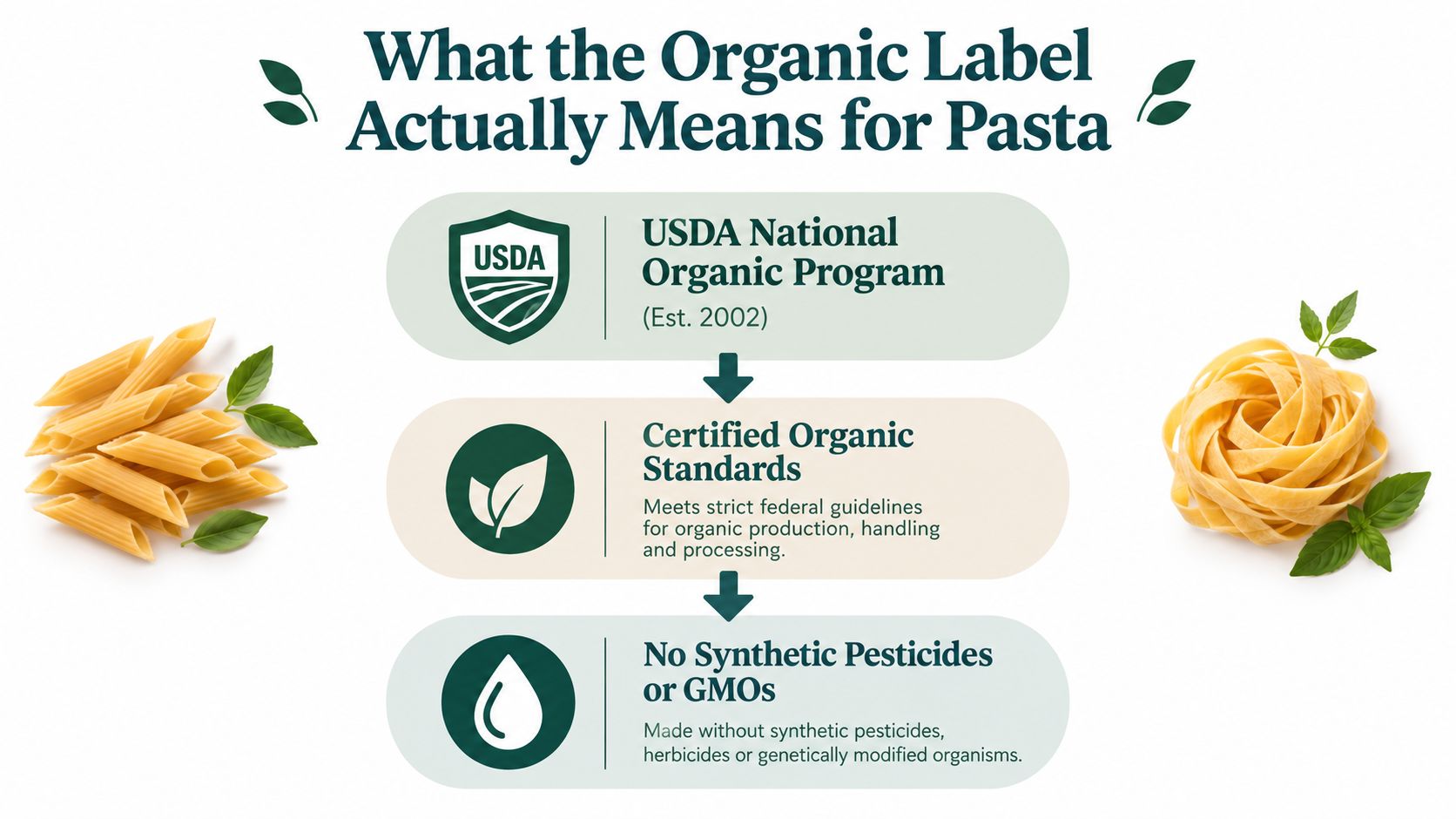
In the United States, that standard comes from the USDA's National Organic Program. It was established in 2000 and took effect in 2002, creating a national system for certification, labeling, and enforcement across organic foods, including pasta made with organically grown durum wheat. The value of that system is consistency. A shopper is not relying on a brand's private definition of “organic.” The label refers to a shared set of rules for production and handling, as summarized here: The USDA organic framework and its role in organic pasta are summarized in this market overview.
Certification is about production standards
A useful way to read the label is to separate the standard from the ingredient quality. Certification works like a rulebook for farming and processing. Wheat used in qualifying organic pasta is grown without prohibited synthetic pesticides and fertilizers, and the producer must meet certification, recordkeeping, and land-management requirements. That gives the label real meaning, but it is a meaning tied to process.
The wording on the package also matters:
- “Organic” or USDA organic seal: The product generally contains at least 95% certified-organic ingredients.
- “Made with organic”: The product contains at least 70% organic ingredients, but it can't use the USDA organic seal in the same way.
- Ingredient list: The rest of the formula still shapes the final pasta. Added ingredients can affect flavor, texture, and dietary fit.
One more distinction helps avoid confusion. Organic certification does not mean a food is entirely free of residues under all conditions. Mayo Clinic notes that organic standards, pesticide exposure, and long-term health outcomes are related but not identical questions. Environmental contamination and other routes can still lead to detectable residues in some cases. Mayo Clinic's guidance explains the distinction between organic standards, pesticide exposure, and uncertain long-term health advantages.
So the shelf-level rule is simple. Treat organic as a verified claim about farming and handling. Then look beyond the buzzword. If you care about pasta quality in the bowl, check the wheat source, the cultivar when it is disclosed, the formulation, and the maker's attention to the raw material.
Key Factors That Define Organic Pasta Quality
What separates a good organic pasta from one that only wears the label well?
Start with the bowl, not the badge. Organic certification covers how ingredients are grown and handled. Pasta quality shows up somewhere else, in the wheat itself, where it was grown, which durum variety was selected, how the semolina was milled, and how the noodle behaves in boiling water. The label gives you a standard. The eating quality comes from the raw material and the maker's choices.
Origin is one of the clearest clues. Organic pasta noodles are closely tied to the geography of durum wheat, especially in Southern Italy. In 2020, the European Union produced approximately 7.3 million metric tons of durum wheat on 2.199 million hectares, with an average yield of about 4 metric tons per hectare. More than 140,000 hectares were cultivated organically, according to The Southern Italian durum-wheat study provides the production and organic-area context.
Provenance gives the label more meaning
That regional picture matters because provenance helps explain what kind of wheat is likely in the package. Apulia, Sicily, Calabria, and Molise together accounted for more than half of Italy's organic durum-wheat area. Apulia alone produced about 0.99 million metric tons, approximately 24% of Italian production and more than 13% of total EU production in the cited data. That helps explain why so many organic pasta brands point to Southern Italy when they describe their wheat.
Provenance is not a shortcut for quality. It is context. A pasta made outside those regions can still be excellent. But when a package names a growing area, semolina mill, or farming network, you learn something concrete about the supply chain. “Organic” answers one standard. Provenance helps answer what the wheat is and where it comes from.
Cultivar matters just as much. Durum wheat is not a single interchangeable ingredient any more than apples are one single eating experience. Some varieties are better suited to certain soils and climates. Some hold their structure better after milling and extrusion. Some produce pasta with a firmer bite.
In a comparison of five durum cultivars grown under organic and conventional systems in Southern Italy, Saragolla showed the strongest combination of yield and pasta quality under both systems, while other cultivars performed less well under organic conditions. All cultivars recorded gluten-index values above 75, yet the finished pasta still varied by cultivar. The cultivar comparison explains why organic status doesn't replace wheat selection.
Nutrition panels can also give useful hints. One analysis of pasta sold in Italy found median protein of 12.0 grams per 100 grams for organic pasta, compared with 13.7 grams per 100 grams for conventional pasta. Fiber was slightly higher in the organic category, 3.0 versus 2.8 grams per 100 grams. The pasta nutrition analysis connects these values with texture and composition.
Protein supports structure during cooking. Fiber can change how pasta hydrates and how firm it feels. These are category medians, not guarantees for every box, so compare the actual label in front of you. If you also want to understand how surface texture and formulation change the final result, this guide to egg pasta and bronze-die pasta is a useful companion.
Comparing Dried Organic Pasta and Fresh Egg Varieties
Dried durum pasta and fresh egg pasta aren't competing versions of the same product. They're different pantry tools, each suited to a particular texture, sauce, and cooking rhythm.
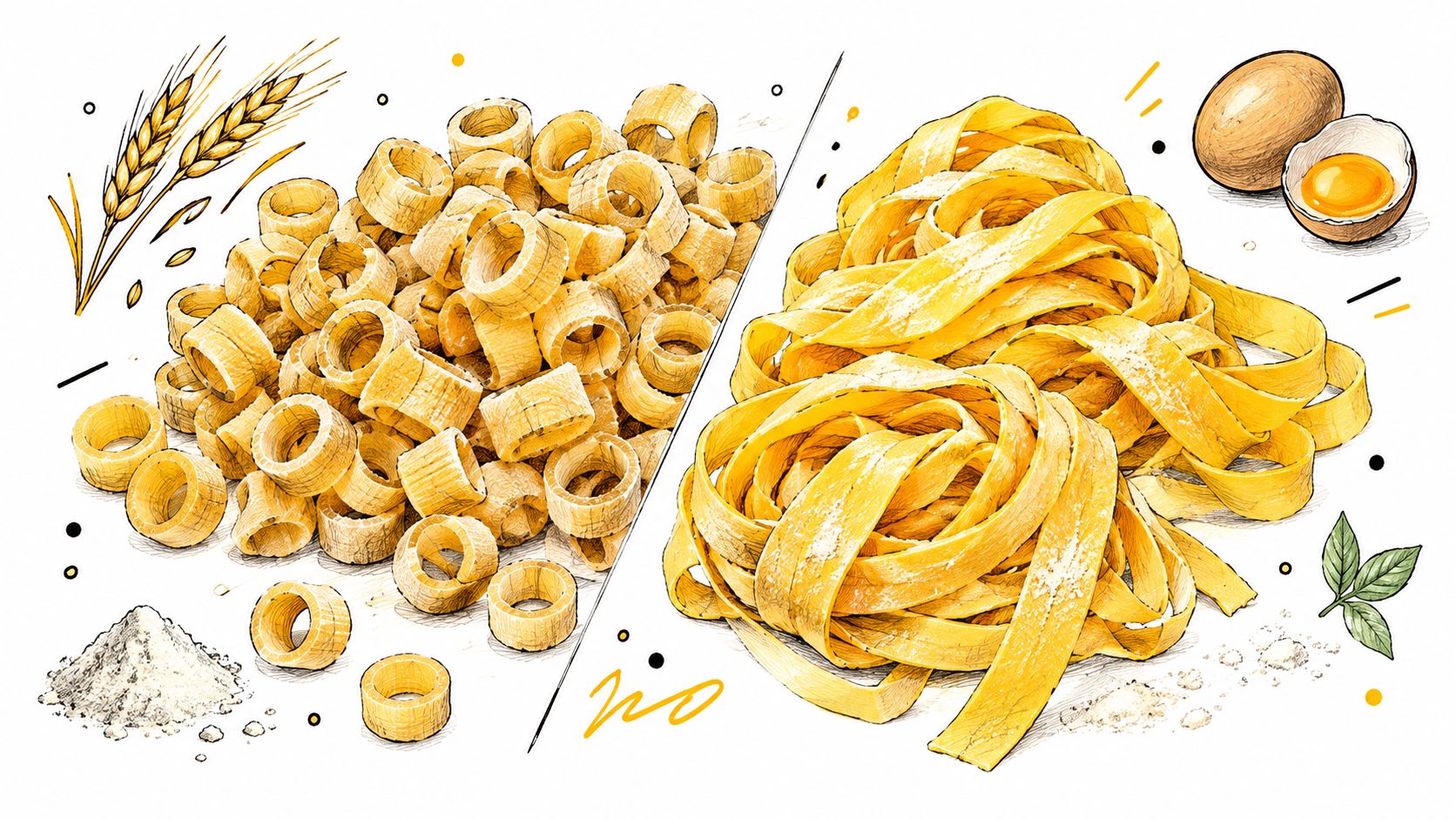
Dried organic pasta is usually built around durum semolina and water. Its firm structure makes it a dependable partner for tomato sauces, vegetables, legumes, seafood, and baked preparations. The shape stays useful across a broad range of meals, and a well-made dried noodle can deliver a resilient bite when cooked carefully.
Fresh or dried organic egg pasta brings a different character. Egg contributes richness and a tender, delicate texture, while thin shapes cook quickly and absorb lighter sauces readily. Certification may apply to both the grain and the egg sourcing, so check the product's actual claim rather than assuming that every egg pasta is organic just because it looks artisanal.
Match shape to the sauce
Fine tagliolini works naturally with butter, lemon, delicate cream, and lightly dressed vegetable sauces. Its narrow ribbons don't need a heavy coating to feel complete. Wider pappardelle, by contrast, has the surface and width to carry a substantial ragù, mushroom preparation, or slow-cooked meat sauce.
The point isn't to enforce rigid rules. A cook can pair any shape with any sauce, but shape and thickness influence how the dish feels. A thin egg noodle may become overwhelmed by a dense sauce, while a broad ribbon can make a light dressing feel sparse.
Cipriani Classica Tagliolini offers a clear example of the delicate category. This Cipriani organic egg pasta is made in Italy and designed as a fine ribbon for quick cooking and restrained sauces.
Use cooking time as a clue
Delicate egg pastas often cook in two to four minutes, though the package remains the final authority. That short timing reflects their thin structure and intended use. Dried durum shapes usually need more time because the pasta has been dried and has a denser structure.
Organic certification doesn't determine whether pasta cooks quickly or slowly. Thickness, shape, egg content, semolina composition, and drying method matter more. If you're choosing for weeknight flexibility, keep a sturdy dried shape for sauces with weight and a fine egg shape for quick meals where butter, cheese, citrus, or herbs can remain visible.
Cooking Tips for Organic Pasta Noodles
Organic pasta noodles don't follow a separate law of physics at the stove. Their behavior depends on cultivar, protein quality, thickness, shape, and formulation, so the package timing is a starting point rather than a guarantee.
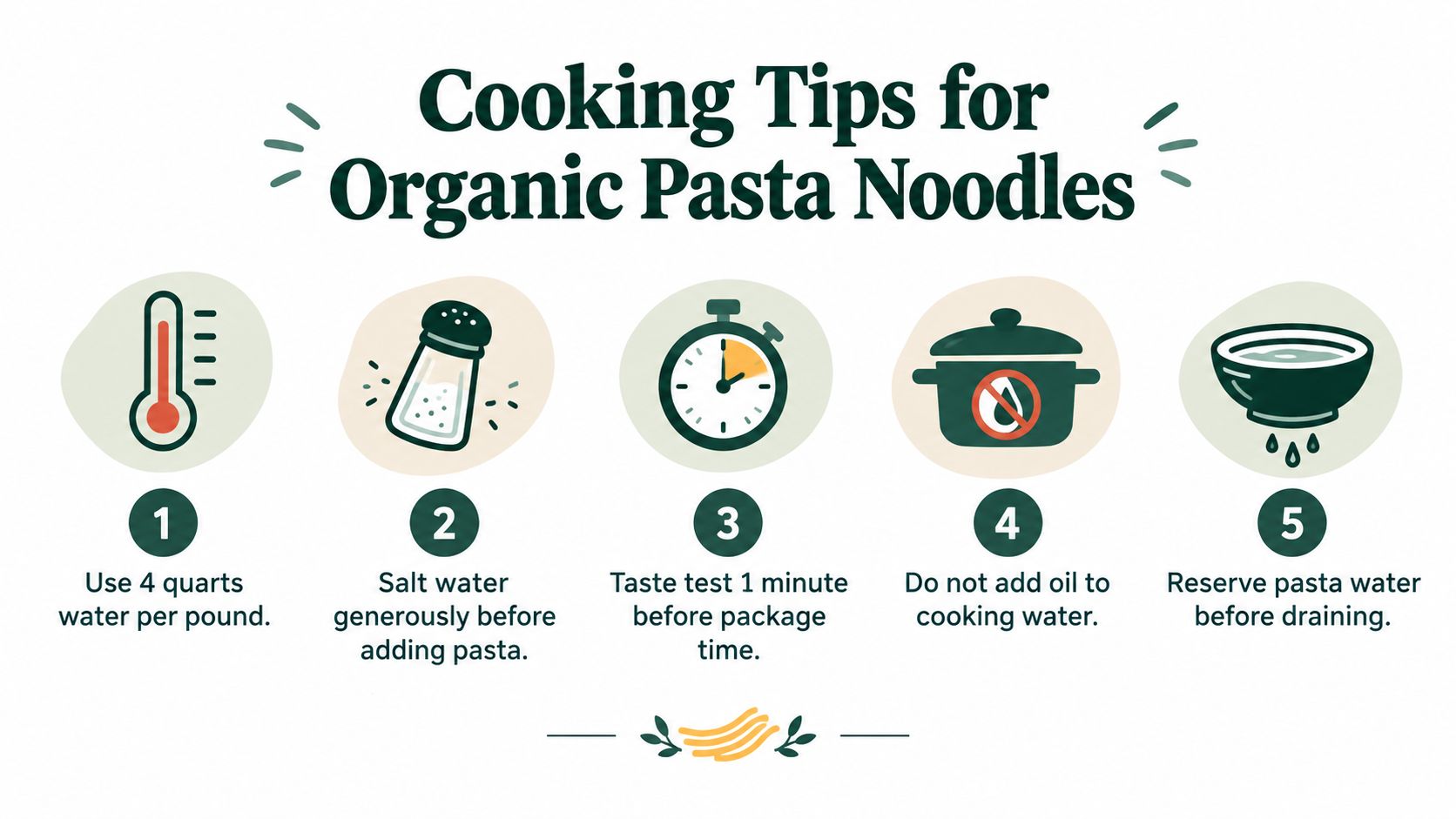
Begin with plenty of boiling water and salt it before adding the pasta. The water should season the noodle from within, not merely flavor the sauce at the end. Add the pasta only when the water is at a full boil, then stir soon after adding it so strands or ridged shapes don't settle together.
Five habits that improve consistency
- Use the package as a guide: Begin tasting before the stated cooking time ends, especially with thin or egg-based pasta.
- Taste for the center: The noodle should be cooked through but retain enough resistance to feel structured.
- Don't add oil to the water: Oil can make it harder for sauce to cling to the finished pasta.
- Reserve cooking water: Starchy water helps loosen a sauce and helps it adhere when you finish the pasta in the pan.
- Finish with the sauce: Transfer the drained pasta to the sauce while it still has structure, then toss briefly with a spoonful of pasta water.
Texture check: Cut or bite one noodle. The center should no longer taste raw, but the pasta shouldn't feel swollen or limp.
A fine egg pasta may need only a brief boil, while a thick dried shape needs more time to hydrate. Neither result tells you whether the pasta is organic. If a noodle softens faster than expected, remove it early and finish it in the sauce. If it remains firm, continue cooking in short intervals rather than relying on the clock alone.
Organic pasta also works in broth. Choose a small shape, cook it until tender without allowing it to become mushy, and account for the fact that pasta will continue absorbing liquid in the bowl. Light vegetable sauces suit thin strands, while ridged tubes and sturdy shapes work well with thicker sauces. For a focused example of pairing delicate pasta with a bright sauce, try Cipriani tagliolini with lemon.
Watch the technique in motion before cooking your next batch:
Understanding Sustainability and Farming Practices
What does an organic pasta label tell you about sustainability? It tells you the farming followed a defined standard. It does not, by itself, tell you the full environmental story of the noodle in the pot.
For pasta, sustainability works like a chain. Farming methods matter, but so do yield, land use, crop rotation, transport, milling, packaging, and how much provenance a producer is willing to share. That distinction helps clear up a common confusion. A label confirms rules were followed. A broader sustainability judgment asks how the whole system performs.
Yield is part of that system. Organic farming often reduces synthetic inputs, which many shoppers value, yet lower output per field can change the land needed to produce the same amount of grain. That does not make organic pasta a poor choice. It means the strongest comparison looks past the seal and asks how the wheat was grown, where it came from, and what happened before it reached the mill.
Rotation is one of the most useful clues. A recent review of pasta production systems found that durum wheat grown in rotation with legumes can lower life-cycle impacts compared with monoculture, and it also identified wheat cultivation as a major source of impact in many pasta systems. The review examines rotation, legumes, and life-cycle impacts in pasta production
That gives you a more practical way to shop. Instead of asking only, “Is it organic?”, ask questions that connect the pasta to an agricultural system:
- Rotation: Does the producer say whether the durum follows legumes or another crop?
- Origin: Is the wheat's growing region clearly named?
- Cultivar and provenance: Does the package, maker, or product page identify the wheat variety or at least narrow it to a place and harvest context?
- Milling: Is the semolina producer or mill identified?
- Packaging: Does the brand offer real supply-chain detail instead of broad green language?
A maker that shares this information gives you more than marketing copy. You can judge whether the pasta reflects a specific region, a specific farming choice, and a more transparent route from field to finished noodle. For examples of producers presented with that kind of context, browse Lello's maker collections.
How to Choose Organic Pasta for Everyday Use
How do you choose an organic pasta you will enjoy cooking on a weeknight, instead of one that only sounds good on the label?
Start with the job the pasta needs to do in your kitchen. The organic seal sets a farming standard, but it does not tell you whether a noodle will suit a brothy bowl, hold a chunky sauce, or stay pleasantly firm after a minute too long in the pot. For everyday use, the better guide is a combination of certification, wheat detail, and shape.
A quick shelf check helps:
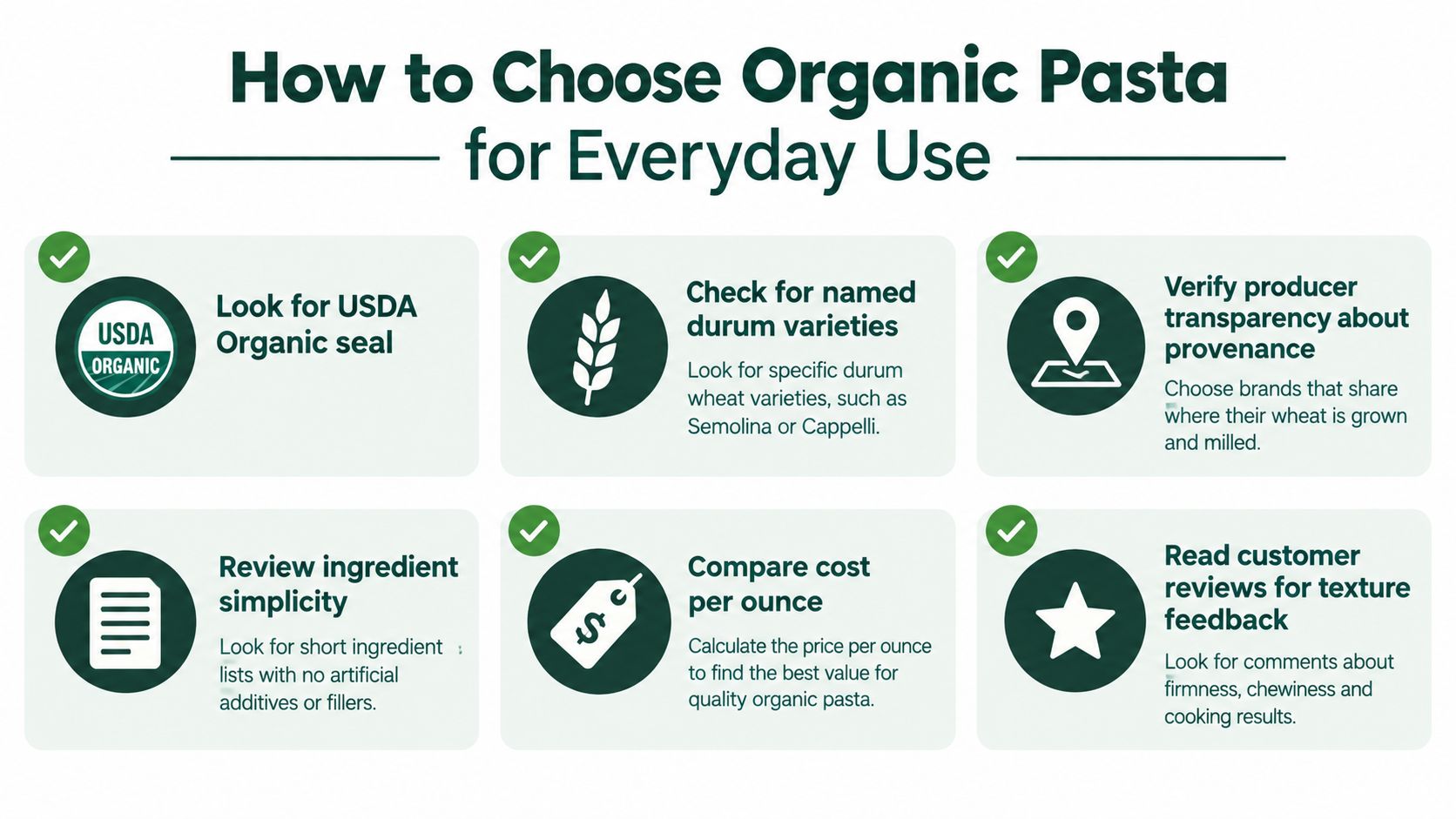
- Certification: Look for the USDA organic seal or clear organic wording that fits the product category.
- Ingredients: Choose a short, readable ingredient list if you want a plain dried pasta for frequent use.
- Wheat information: Prefer named durum varieties, or a producer that identifies the growing region, mill, or semolina source.
- Nutrition panel: Compare protein and fiber across similar shapes. The organic claim does not predict cooking performance by itself.
- Shape: Keep spaghetti or another sturdy dried shape on hand for flexible meals. Choose egg tagliolini or wider ribbons when the sauce is lighter, silkier, or richer.
- Cooking instructions: Use the stated time as a guide, then taste. Pasta behaves a little like rice in this respect. The package gives you a range, but your preferred finish decides the final minute.
Availability matters too. Organic grain remains a smaller part of the broader supply system, so selection can be narrower and prices can reflect certification, segregated handling, and extra documentation, as noted earlier. That makes provenance even more useful at the shelf. If a package tells you where the wheat was grown or which mill prepared the semolina, you are getting more than a buzzword. You are getting clues about consistency.
For a practical example, Flour + Water Organic Penne Rigate shows why shape belongs in the decision. Ridged penne catches sauce in its grooves and inside the tube, so it works well for baked pasta, vegetable sauces, and heavier preparations.
The strongest everyday choice combines certification with transparency. Check the farming standard, then keep going. Look for origin, cultivar detail when available, milling information, and a shape that matches how you cook. That is how an organic label becomes a confident pantry choice.