

You're standing in the kitchen with a bar of dark chocolate and a bottle of olive oil, wondering if this is a clever dessert move or a mistake waiting to happen. The pairing can feel surprising at first, but it makes sense once you taste how cocoa bitterness, olive-oil fruitiness, and fat-driven texture can either sharpen each other or fall into harmony.
That's the essential question with chocolate and olive oil. Not whether they can go together, but how to match the right oil to the right chocolate, and how to use each format so the result stays glossy, balanced, and pleasant on the tongue.
Table of Contents
- Why Chocolate and Olive Oil Belong Together
- The Science Behind Fat Pairing and Crystal Structure
- Choosing the Right Olive Oil for Chocolate
- How to Store Chocolate and Olive Oil for Best Results
- Three Ways to Combine Chocolate and Olive Oil
- Classic Chocolate Olive Oil Cake Recipe
- Simple Olive Oil Chocolate Dressing and Dip Ideas
- Building a Reliable Chocolate and Olive Oil Pantry
Why Chocolate and Olive Oil Belong Together
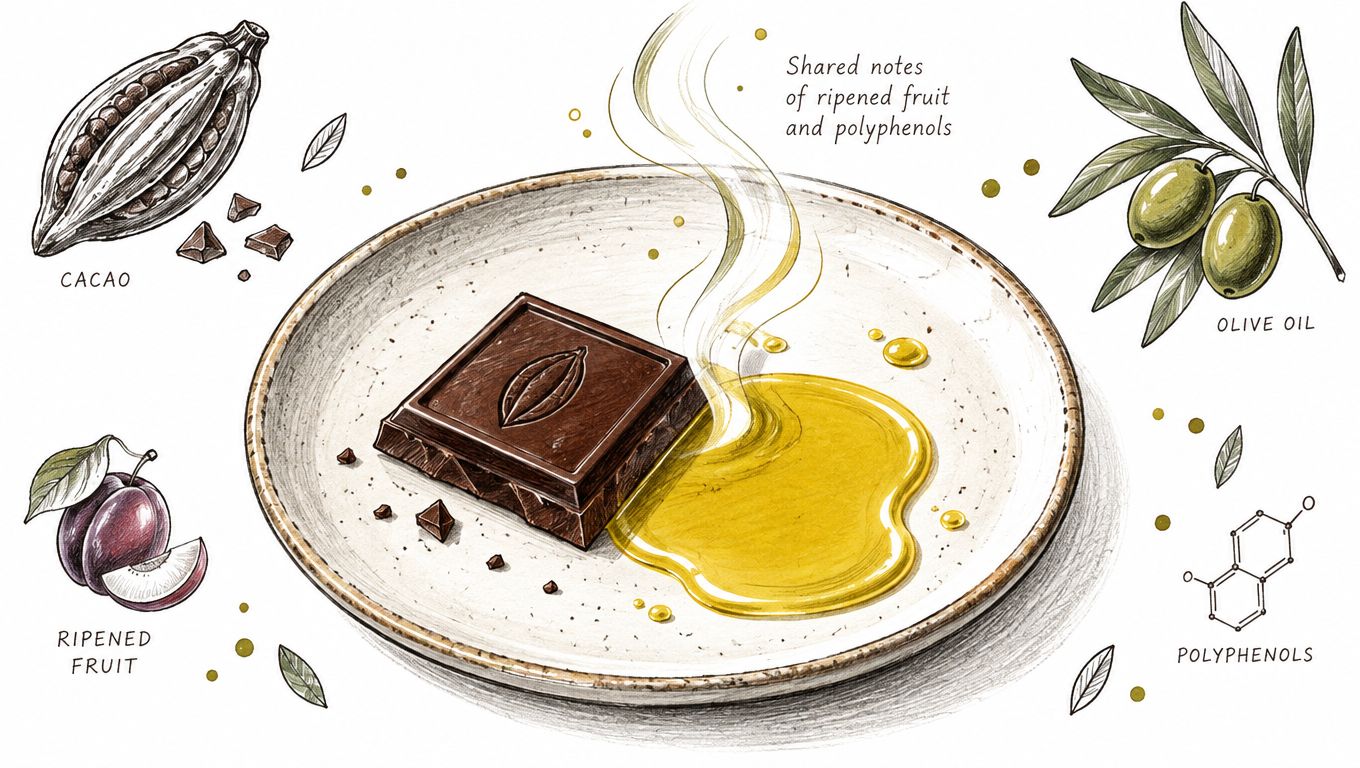
The first spoonful usually settles the debate. Dark chocolate lands with bitterness, warmth, and a dry finish, then olive oil comes in with fruit, pepper, and a round, slippery mouthfeel that keeps the chocolate from feeling too stern.
That works because both ingredients carry complexity beyond sweetness. Olive oil can bring grassy, ripe, or peppery notes, while chocolate brings roasted cocoa depth, so the pairing reads as intentional rather than decorative.
A flavor bridge, not a shortcut
A good pairing does not hide either ingredient. It lets the chocolate stay chocolate and the oil stay olive oil, while the fat from the oil smooths the edges of the cocoa and stretches the aroma across the palate.
Practical rule: if the chocolate is delicate, the oil should usually be gentle too. If the chocolate is very dark and assertive, a more vivid oil can work because the cocoa has enough weight to keep up.
This is why the pairing shows up in cakes, sauces, and finishing drizzles. A bright, green oil can lift a dense chocolate dessert, while a mellow oil can make the same dessert feel softer and more polished.
Why bitterness can work here
Bitterness is usually the part people worry about. In many foods, bitterness pushes pleasure away, but chocolate is one of the few places where a little bitterness can feel right when sweetness, fat, and aroma are all in balance.
That balance matters more than prestige. A bottle that tastes strong on its own is not automatically the best choice for dessert, because the most interesting result often comes from matching intensity rather than chasing the boldest oil on the shelf.
The Science Behind Fat Pairing and Crystal Structure
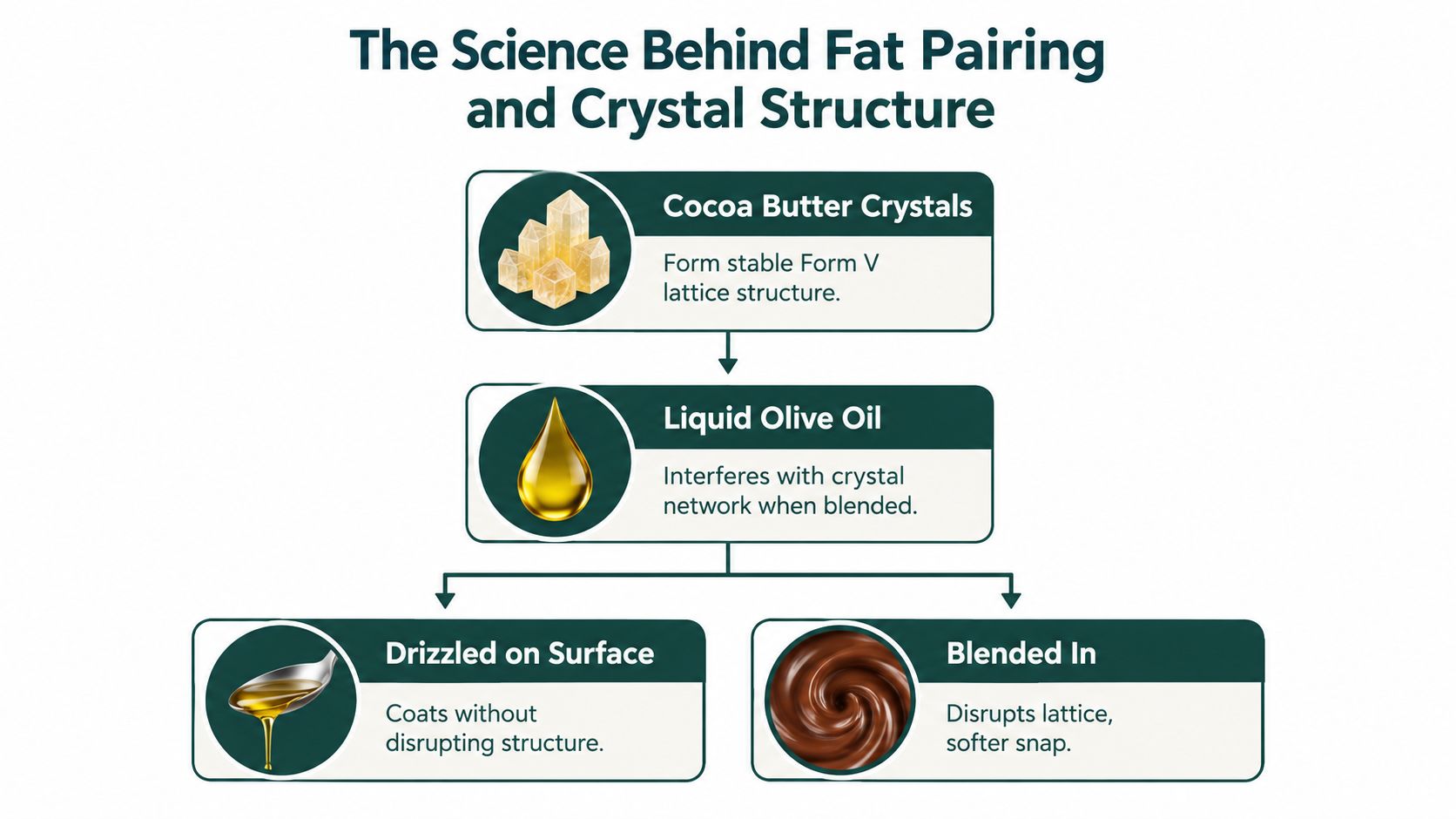
Chocolate is not just flavored fat, it is a carefully arranged fat crystal system. Cocoa butter can crystallize in several forms, and the texture you want in finished chocolate depends on steering that structure toward Form V, the form associated with gloss, snap, and a clean melt near body temperature.
When that structure is controlled well, chocolate feels crisp at first, then melts smoothly instead of turning waxy or greasy. When it isn't, the surface can dull, the texture can go soft, and the fat can reorganize later into less desirable forms.
Why drizzling and blending behave differently
Liquid olive oil doesn't crystallize the same way cocoa butter does. If you drizzle it on finished chocolate, it mostly stays at the surface and changes the eating experience without tearing apart the chocolate's structure.
If you blend olive oil into melted chocolate, the result changes more significantly. The oil becomes part of the matrix, which can soften the set, reduce snap, and make the final bite feel more like ganache or sauce than a snapped bar.
Chocolate that's meant to stay glossy and snappy needs crystal order. Chocolate that's meant to stay spoonable or spreadable can tolerate more disruption.
That's why tempering matters so much when you want a clean finish. A published processing benchmark describes melting the lipid phase at about 40 °C, then cooling at around 2.0 °C per minute before managing temperature to favor more stable beta-type nuclei (processing benchmark).
What to expect in the kitchen
If you want a firm bite, use olive oil as a finish rather than a structural ingredient. If you want a softer dessert, accept that the oil will change the chocolate's body and plan for that outcome instead of treating it like a failed batch.
Choosing the Right Olive Oil for Chocolate
The easiest mistake is choosing the most intense oil because it sounds serious. That can work with very dark chocolate, but with a softer bar it can push the dessert into harshness, where the oil's pepper and the cocoa's bitterness seem to compete instead of cooperate.
A gentler oil usually gives you more room to work. A fruit-forward oil with low pungency can deepen the chocolate without making the finish feel sharp, while a greener, more peppery oil can be excellent when the chocolate is dark enough to carry it.
Match intensity, not status
If the chocolate is milkier, sweeter, or meant for a wide crowd, look for a rounder oil that stays in the background. If the chocolate is intense and high in cocoa character, a livelier oil can add energy and keep the dessert from feeling flat.
Consumer research also shows that bitterness often drives dislike, while chocolate is a special case where bitterness can still be welcome when people are in the mood for it. A sensory study of dark-chocolate bars with extra-virgin olive oil found that the EVOO version received the lowest acceptance among trained professionals and consumers, while versions with apple or chestnut flour performed better, and the products differed in persistence, bitterness, aromaticity, acidity, and astringency (sensory study).
Good pairing rule: let the cocoa percentage, sweetness, and serving format decide how much olive-oil personality the dessert can handle.
That's why a drizzle on a finished square of dark chocolate can be lovely, while the same oil stirred into a delicate mousse might feel too forceful. For a practical buying lens, how to choose extra virgin olive oil is less about brand status than about flavor fit, freshness, and how noticeable you want the oil to be.
How to Store Chocolate and Olive Oil for Best Results
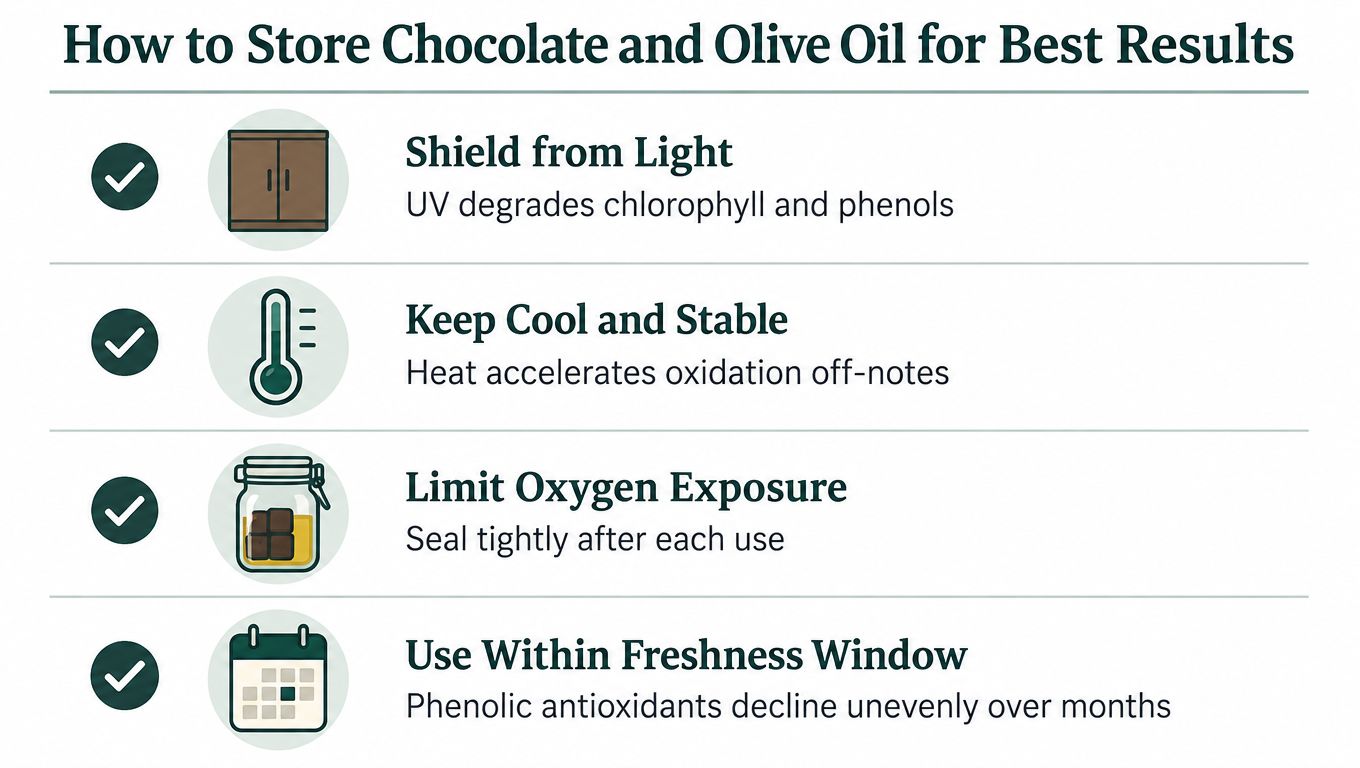
Storage is where many good ideas fail. Olive oil loses freshness as oxygen, heat, light, and time work on its minor compounds, and chocolate loses its best texture when temperature swings keep disturbing the fat structure.
With olive oil, the issue isn't only rancidity in the obvious sense. Phenolic compounds decline unevenly, so the oil can seem flatter, less lively, or less bitter before it looks or smells fully wrong.
Keep the oil dark, sealed, and cool
Use opaque or dark containers, close them tightly after each use, and keep them away from heat and direct light. Smaller bottles make sense when you use oil slowly, because there's less air sitting above the liquid after each pour.
Chocolate wants stability too. Repeated warming and cooling encourages fat bloom, which shows up as dullness or whitish patches and can change the bite, even when the chocolate is still safe to eat.
The practical habit is simple. Keep chocolate away from strong odors, store it in a dry place with steady temperature, and don't move it in and out of warm and cold rooms just to “check” it.
The oil side of that equation is especially clear in does olive oil expire. The point isn't that olive oil suddenly turns bad on one date, it's that freshness fades in stages, so handling matters as much as the bottle itself.
Three Ways to Combine Chocolate and Olive Oil
The format decides the texture. A drizzle gives you immediate aroma and contrast, a ganache-like mix gives you softness and a more unified bite, and a spread asks for much better emulsification if you want it to stay smooth.
Drizzle, whisked, or blended
A simple drizzle is the most direct route. Spoon a little oil over finished chocolate, or over a chocolate tart, and you get surface flavor without much structural change.
A whisked ganache sits in the middle. Chocolate and liquid can be coaxed into a smoother, richer matrix, but it's still more fragile than classic chocolate set with butter or cream alone.
A blended cold sauce or spread is the most technical. Once the oil is part of a full emulsion, the result can be pourable and glossy, but it also depends much more on temperature, mixing, and whether an emulsifier is doing its job.
Use drizzle for finishing, ganache for softness, and a spread only when the recipe is designed to hold together.
Food-technology research on olive-oil-based chocolate spread emulsions found that they can achieve sensory scores comparable to commercial controls, but formulations without proper emulsification may become harder, less spreadable, and weaker in melting behavior (spread research).
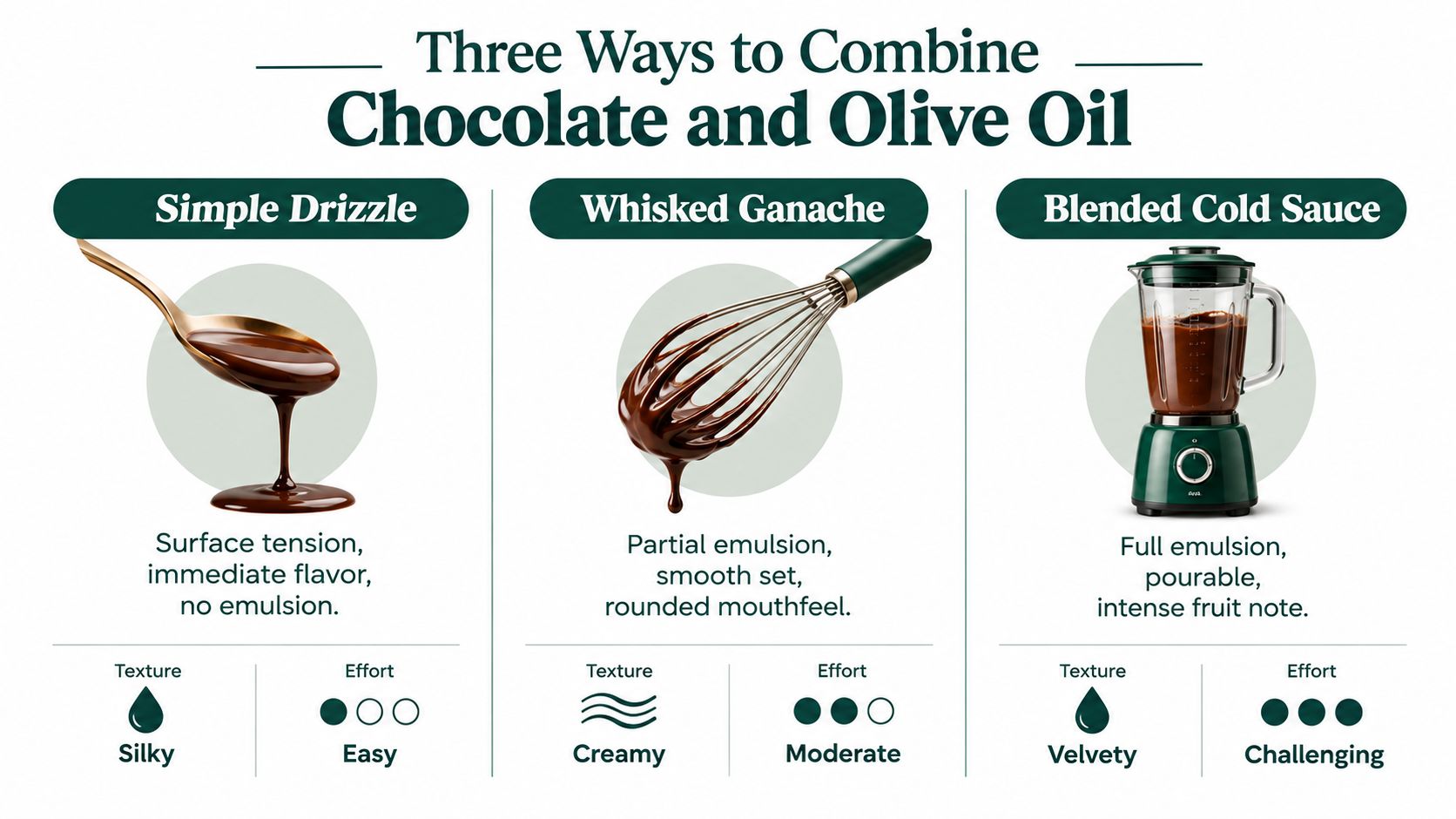
That's the useful distinction at home. A drizzle asks almost nothing of you, a ganache rewards careful mixing, and a spread rewards proper formulation.
Classic Chocolate Olive Oil Cake Recipe
A chocolate olive oil cake is the easiest place to feel how the pairing behaves in a full dessert. The oil keeps the crumb moist and supple, while cocoa gives the cake its depth, so the whole slice tastes more plush than buttery cakes often do.
Ingredients
- Dry mix: flour, cocoa powder, baking soda, baking powder, salt, and powdered sugar.
- Wet mix: olive oil, sour cream, egg, egg yolk, vanilla, and hot water.
- Finish: a light chocolate frosting or a simple drizzle of olive oil if you want the oil to stay visible.
Method
Whisk the dry ingredients together first. In a separate bowl, beat the oil with the sour cream, egg, yolk, and vanilla until smooth, then add the wet mixture to the dry ingredients and whisk in the hot water until the batter looks glossy.
Bake until the center is set and a tester comes out with a few moist crumbs. Let it cool until barely warm, because that's the point where the crumb still tastes soft and the frosting or drizzle can sit on top without sliding off.
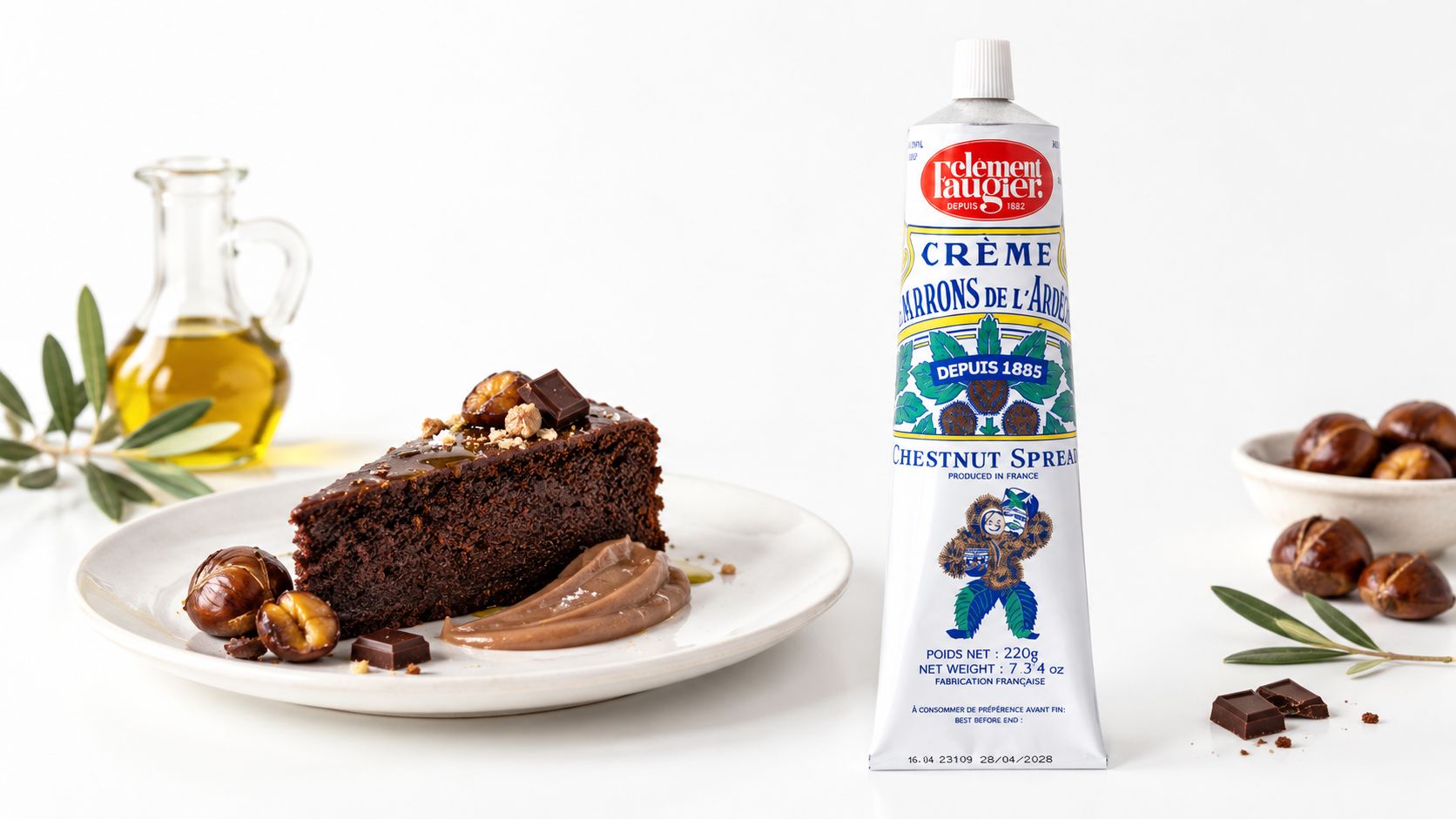
For a dessert built around a more old-world, chestnut-and-cocoa mood, Clément Faugier French Chestnut Cream, Crème de Marrons is a natural pantry companion. It's sweetened chestnut cream from France in a tube, with a velvety texture that works in the same warm, spoonable dessert space as chocolate and olive oil.
The idea behind this cake is not to hide the olive oil. It's to choose one that complements the cocoa so the crumb stays tender, the flavor stays clear, and the slice feels finished without extra fuss.
For a salted, cookie-like variation that leans into the same pairing, try this chocolate olive oil cookie idea. The logic is the same, a controlled amount of olive oil adds roundness, while salt makes the cocoa taste clearer.
Simple Olive Oil Chocolate Dressing and Dip Ideas
Chocolate can move into savory territory faster than people expect. Once you treat it as a bitter, aromatic ingredient rather than only a dessert base, olive oil becomes a bridge to fruit, acid, chile, and salt.
A chocolate dip for strawberries needs almost no work. Melt a little chocolate, whisk in a few drops of olive oil for shine and flow, then finish the berries with a pinch of salt so the fruit and cocoa both pop.
Fast combinations that stay balanced
- For fruit: use dark chocolate, a mild finishing oil, and a small pinch of flaky salt.
- For greens: whisk cocoa, olive oil, vinegar, and a little sweetener into a dressing with enough acidity to keep the result bright.
- For chile: add chocolate to a mole-style sauce with olive oil only as a finishing element, not as the base fat.
The useful rule is balance. Acidity keeps chocolate from feeling heavy, salt keeps it from tasting muddy, and olive oil gives the sauce a smoother mouthfeel than water alone.
You don't need much. In a dressing or dip, the oil should support the chocolate, not turn the mixture into something oily or blunt. If the result tastes flat, the answer is usually more salt or acid, not more chocolate.
Building a Reliable Chocolate and Olive Oil Pantry
A dependable pantry starts with two decisions. First, choose chocolate by how much bitterness and roast character you want, then choose olive oil by how much green, peppery, or mellow note you want alongside it.
Dark chocolate is the easiest partner for strong oils because it has the structure to keep up. Milk chocolate usually asks for gentler oil, and white chocolate needs much more care because its sweetness can make olive oil taste louder than you expect.
What to look for on the shelf
- Chocolate: pick bars you'd happily eat plain, because their roast profile will carry into the dessert.
- Olive oil: choose oils with clear provenance and packaging that protects freshness.
- Storage: prefer dark glass or other light-resistant containers, and buy smaller bottles if you won't use them quickly.
If you want a simple decision frame, think like this. Match delicate chocolate with a softer oil, match very dark chocolate with a more peppery oil, and keep all the structural jobs, like spreads and emulsions, for recipes that are built to hold together.
That's why this pairing works so well for cooks who pay attention to ingredients. You're not forcing two trendy foods together, you're choosing a fat, a fruit, and a bitterness profile that can actually talk to one another on the plate.
If you want pantry ingredients that make this kind of cooking easier, visit Lello.Store for curated olive oils, chestnut cream, and other specialty foods chosen for flavor, provenance, and practical use. It's a good place to look when you want a bottle or sweet pantry staple that can support chocolate desserts, finishing drizzles, and small dinner-table ideas without guesswork.