

Have you ever bought a bottle labeled golden balsamic vinegar and wondered whether you were holding a real style, a marketing phrase, or just a paler version of the dark balsamic already in your pantry? That question matters, because color alone doesn't tell you how the vinegar was made, how acidic it is, or how it'll behave in a dressing, a glaze, or a finished plate.
Golden balsamic is best understood by starting with the label, then moving to flavor. Once you know what the bottle is promising, the cooking choices get much easier.
Table of Contents
- What Golden Balsamic Vinegar Actually Is
- Golden, White, Dark, and Traditional Balsamic
- Reading the Label Before You Buy
- Flavor Profile and How to Taste It
- How to Cook With Golden Balsamic
- Buying With Confidence in 2026
- A Short Decision Guide
What Golden Balsamic Vinegar Actually Is
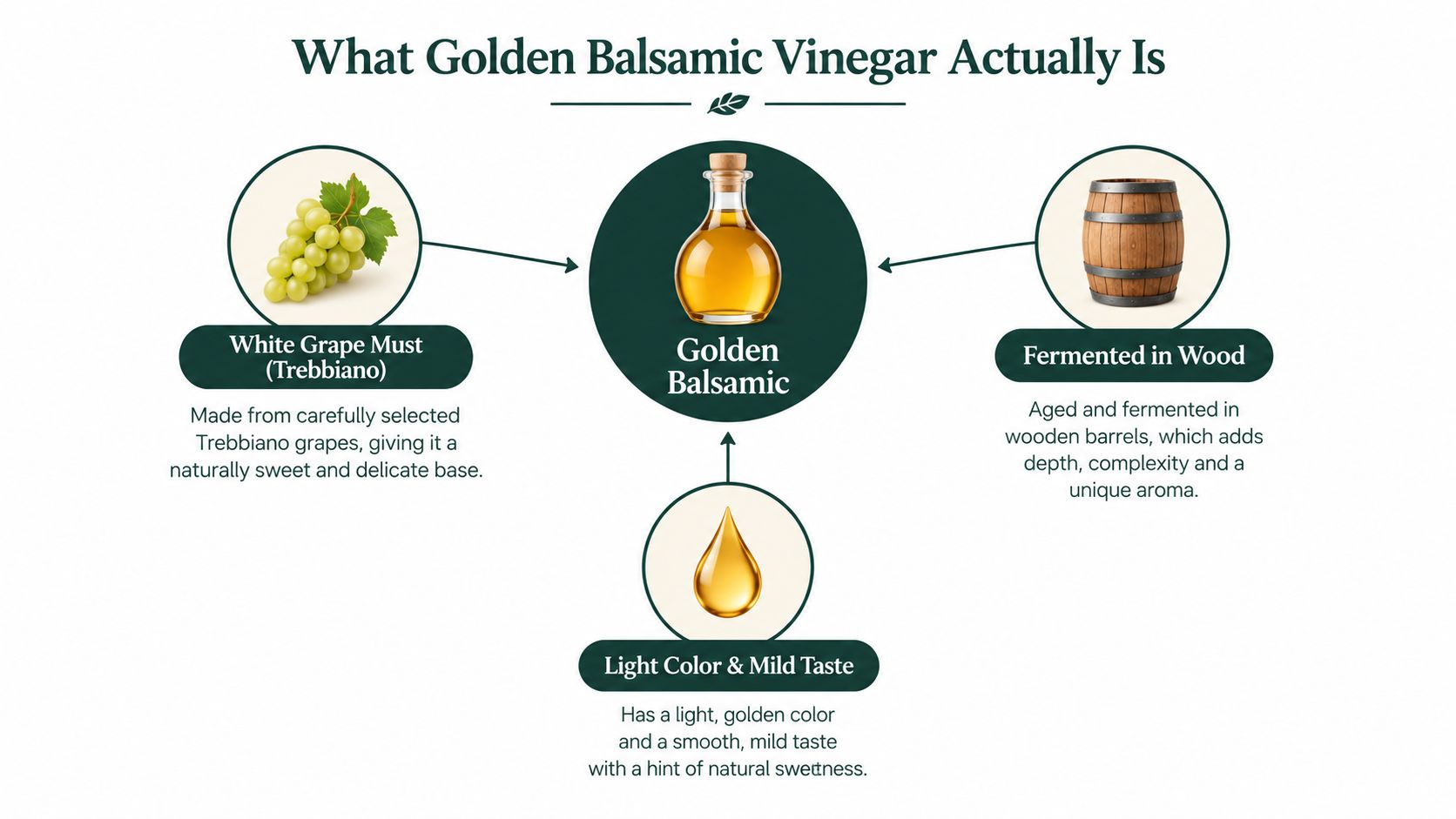
What makes a balsamic vinegar look golden instead of dark? The answer starts with the grape must. Golden balsamic vinegar is usually a light-colored, grape-based vinegar made from white grape must, often Trebbiano, and handled to keep the liquid pale and the aroma fresh. That usually means controlled fermentation and less reduction or oxidative darkening than the longer-aged bottles people usually picture when they hear “balsamic” Balsamic Vinegar overview.
What the color is telling you
Pale gold usually signals a fresher, brighter profile. It is the opposite of the dense, dark look that comes from heavy cooking of the must, long aging, or both. In the kitchen, golden balsamic behaves more like a clean, acidic vinegar than a sticky syrup, so it can lift a dish without coating it.
Practical rule: pale color tells you about appearance, but it does not prove age, origin, or quality.
Why the term causes confusion
“Golden balsamic” is a style description, not a protected category by itself. That is why one bottle may be a carefully made condiment while another is just a flavored vinegar with a polished label. A shopper gets farther by checking the grape base, acidity, and origin than by trusting the color alone.
The label is the part worth reading first. If you want a broader reference point for aged styles, Lello's aged balsamic vinegar overview helps show how pale bottles differ from longer-aged ones.
How to explain it to a friend in one sentence
Golden balsamic vinegar is a light, fresh-tasting balsamic style made to keep fruitiness and brightness intact. In the kitchen, that makes it useful for salads, vegetables, seafood, and other dishes where a dark, heavy vinegar would get in the way.
Golden, White, Dark, and Traditional Balsamic
These bottles sit on a spectrum, and the label often hides more than it reveals. Some are everyday condiments, some follow protected regional rules, and some are made under much stricter aging and production standards.
The four bottles at a glance
| Bottle | Color | Min. aging | Best use |
|---|---|---|---|
| Golden | Pale gold | No fixed protected minimum by the term itself | Vinaigrettes, seafood, fruit, light sauces |
| White | Very pale | Can be made without aging | Delicate dressings, dishes where color matters |
| Dark Modena PGI | Dark brown | 2 months in wooden barrels, 3 years for invecchiato | Everyday drizzling, marinades, general cooking |
| Traditional DOP | Very dark, thick | 12 years minimum, 25 years for extravecchio | Small finishing pours, tasting, special dishes |
Beyond color, Balsamic Vinegar of Modena PGI and Traditional Balsamic Vinegar of Modena are separated by production rules, aging minimums, and legal protection. The PGI product is tied to geographic origin and defined specifications, with milestones that include ministerial authorization in 1933, formal specifications in 1965, and EU PGI status in 2009 Balsamic vinegar reference. Traditional balsamic follows a stricter path and a much longer maturation period traditional product specifications.
How to think about the shelf
Golden and white balsamic are usually chosen for brightness and visual delicacy. Dark Modena PGI is the bottle most cooks reach for when they want a versatile all-purpose balsamic. Traditional balsamic is used more slowly, often by the spoonful, because its thickness and age change the whole experience.
If a recipe only says “balsamic,” the practical match is usually the dark everyday style, not a precious traditional bottle. Lello's balsamic-braised short ribs guide is a clear example of where a darker, bolder balsamic fits naturally.
A quick mental shortcut
Use golden when you want flavor without staining the plate. Use white when color matters even more. Use dark PGI for reliable pantry work. Save traditional for the moments where age, density, and restraint are the point.
Reading the Label Before You Buy
A good bottle tells you more on the back label than on the front. The front can say “golden,” “white,” “artisan,” or “premium,” but the useful clues are usually the ones that are less flashy.
What to inspect first
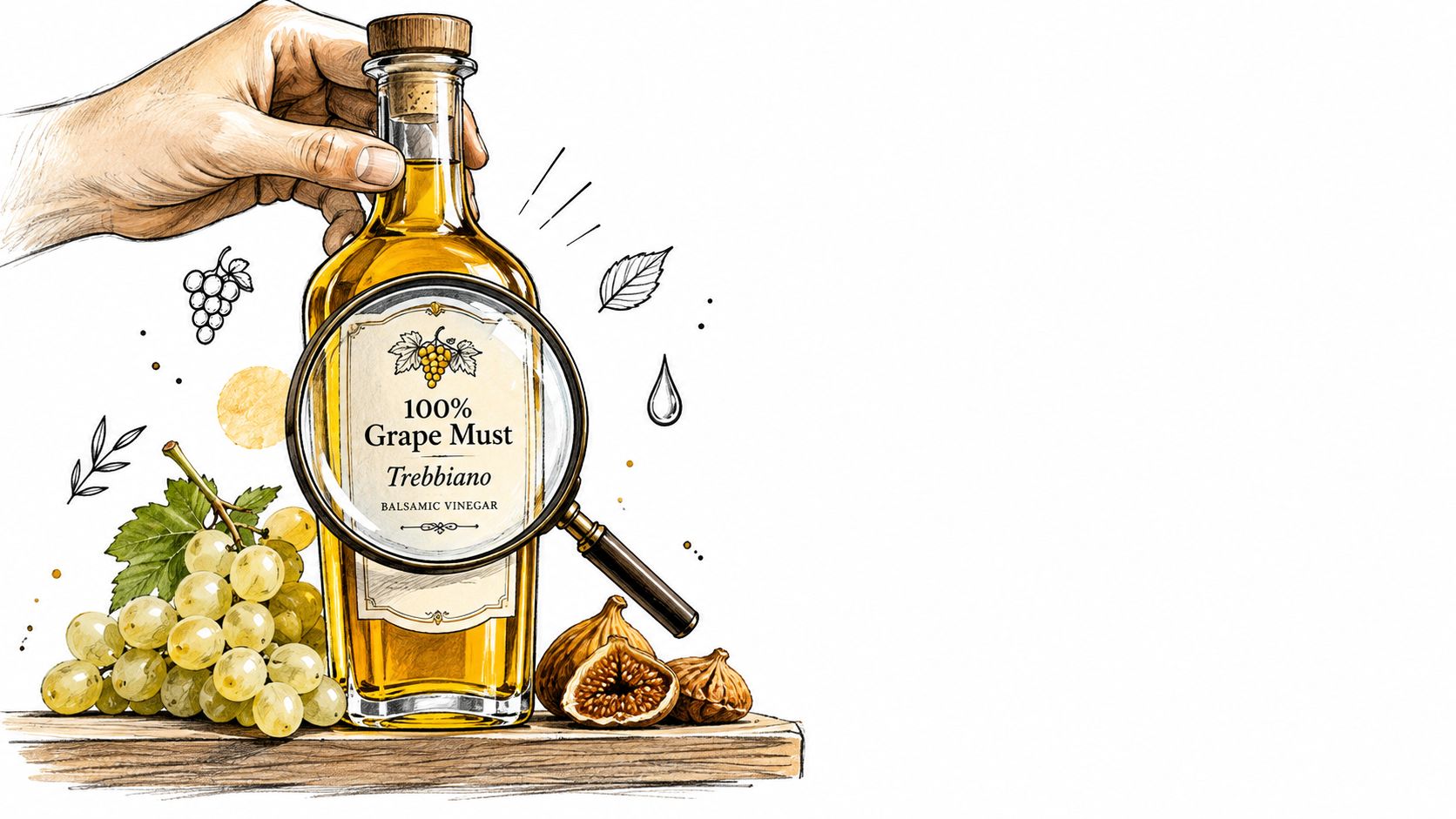
Look for grape must, not just generic vinegar wording. If the ingredient list is vague, the bottle may be more about flavoring than about a grape-based balsamic style. Also check whether the label mentions country of production, any PGI or DOP claim, and whether the maker identifies a specific grape source or method.
Useful habit: if the bottle doesn't clearly tell you what went into it, don't let the color do the selling.
Why acidity matters more than the marketing words
Acidity is one of the best clues for how the vinegar will taste in the bowl. Balsamic Vinegar of Modena specifications identify at least 6% total acidity for the matured product, while traditional balsamic uses a different measurement because its thick, sweet matrix changes how acidity feels on the tongue organoleptic characteristics. That's why two bottles can both say “balsamic” and still perform very differently in a vinaigrette.
If you want a practical decision rule, think this way. Higher acidity tends to give you a sharper, more assertive dressing. A denser, sweeter bottle may feel softer but can disappear under oil, fruit, or roast flavors.
A note for U.S. shoppers
Some vinegar labels in the U.S. can be confusing because the category on the shelf isn't always the same as the European one. That makes the ingredient list even more important. If a bottle reads like a flavored acid rather than a double-fermented grape product, the label language matters more than the bottle color.
The page on understanding best-by dates and packaging is useful if you're also trying to decide whether a date is about quality, aging, or simple retail rotation.
Flavor Profile and How to Taste It
Golden balsamic tastes lighter than dark balsamic because it's designed to keep the grape's fresher notes intact. I get the clearest read when I taste it next to a dark Modena-style balsamic and then next to lemon juice, because that gives my mouth three different kinds of sharpness to compare.
What you notice first
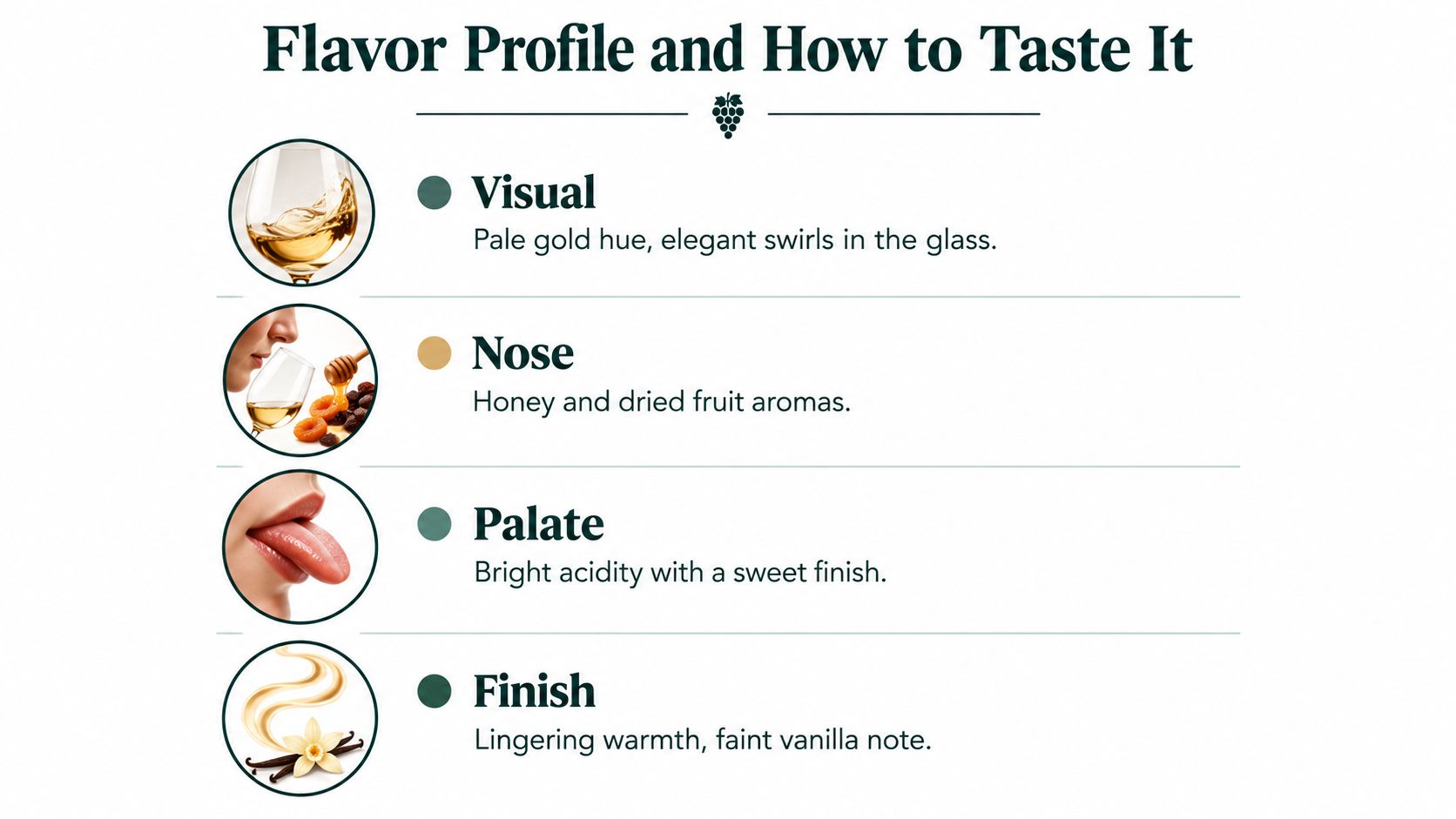
The aroma usually leans toward white fruit, mild grape sweetness, and a gentle acetic lift. You won't get the deep, woody, caramel-like impression you expect from long-aged dark balsamic. Instead, the smell feels cleaner, which is exactly why it works so well in dishes where heavy sweetness would flatten the other ingredients.
How it feels on the palate
A good golden balsamic should taste bright first, sweet second. The acid gives it structure, while the residual grape sugars soften the edge just enough to make it friendly in a dressing or a quick pan sauce. Compared with lemon juice, it usually feels less piercing and more rounded.
A simple home tasting
Taste three drops on a spoon. First, smell it. Then let a tiny sip sit on the front of your tongue. After that, taste a dark balsamic side by side so you can feel the difference in body and sweetness. If the golden version disappears too fast, it may be too thin for your needs. If it feels syrupy, it may have lost the freshness that makes the style useful.
“Taste it for brightness, not just sweetness.”
When a bottle is meant to stay pale, the finish should feel light and clean rather than sticky or heavily cooked. That makes it a better match for dishes where you want the vinegar to lift the food instead of covering it.
How to Cook With Golden Balsamic
Golden balsamic shines when you want acidity without a dark finish. I reach for it on salads, vegetables, seafood, fruit, and anything cream-based where a dark vinegar would leave a muddy trail. A recipe like Lello's classic bruschetta with balsamic vinegar is the kind of dish where brightness and visual restraint matter.
Best uses for a pale bottle
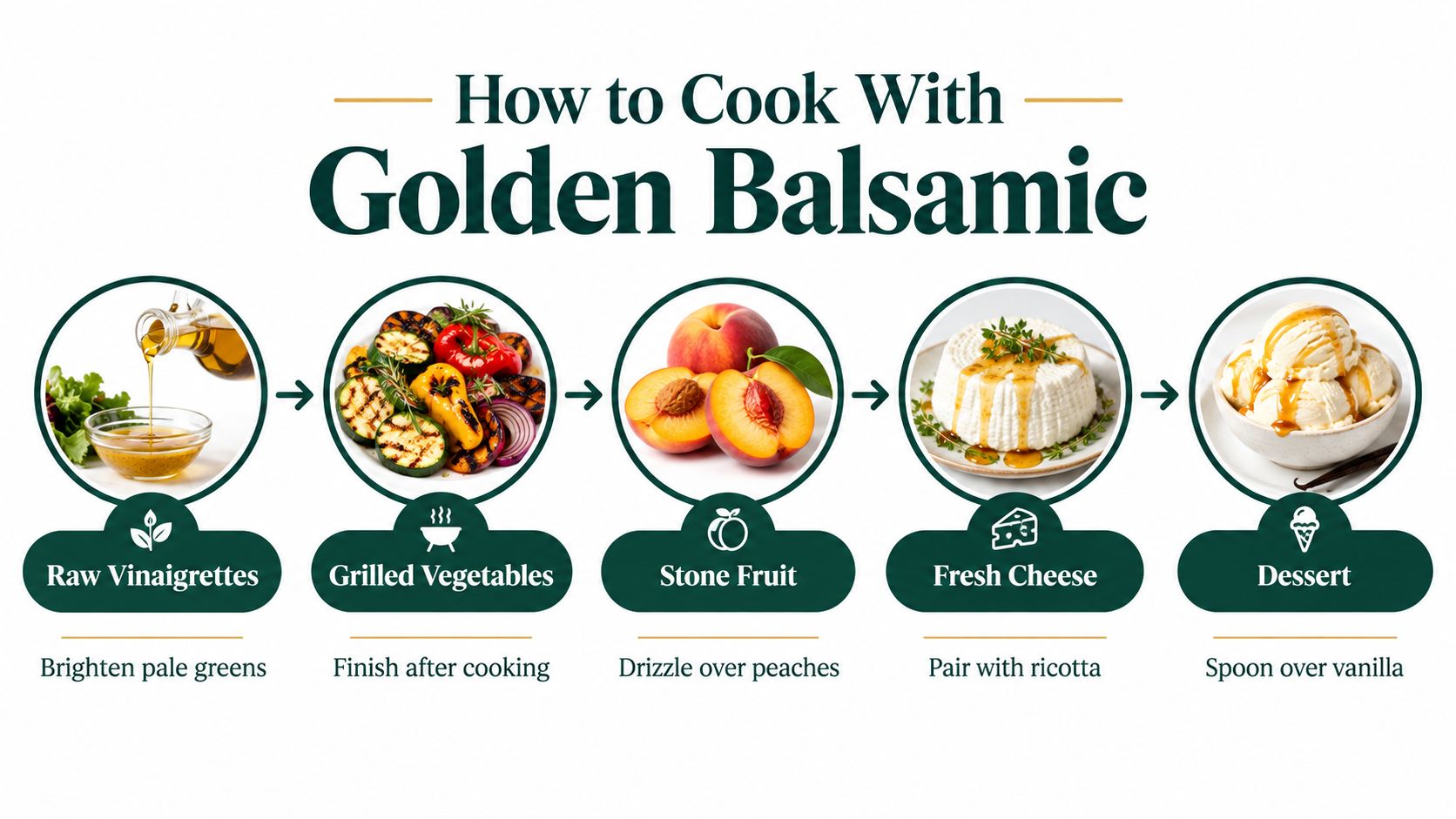
- Raw vinaigrettes: Whisk it with olive oil for leafy greens, shaved vegetables, or herbs.
- Seafood: Use it in a light finish over fish or shellfish where dark staining would look harsh.
- Fruit and cheese: Try it with strawberries, peaches, ricotta, or fresh goat cheese.
- Vegetables: Drizzle it over roasted carrots, asparagus, or fennel after cooking.
- Drinks and desserts: Use a tiny amount where you want tartness with a pale color.
The mistake to avoid
Don't reduce golden balsamic like a syrup unless you have a specific reason. Heat drives off volatile aromas, and prolonged boiling can leave you with something sticky, sweet, and flat. I've done this in the kitchen more than once, and the result usually tastes less elegant than the bottle did out of the cap.
A dependable starting point
For a vinaigrette, start with one part vinegar to three parts oil, then adjust to the dish. If the vegetables are sweet or the cheese is rich, you may want a little more acidity. If the salad already has sharp ingredients, use less. For warm dishes, add the vinegar late so the delicate notes stay alive.
Buying With Confidence in 2026
Pale doesn't automatically mean better, and a pretty bottle doesn't guarantee a better result in the kitchen. The smarter choice is the bottle whose specs fit the food in front of you.
What matters more than prestige language
Words like artisan, riserva, or premium can be useful, but they aren't the first thing I'd trust. I'd look for declared acidity, a clear grape-must statement, transparent origin, and any recognized PGI or DOP mark before I'd worry about the romance on the front label. Those details tell you more about performance than the styling of the bottle.
A bottle with a restrained label can be a better cooking tool than one wrapped in luxury cues. That's especially true when you're deciding between two golden balsamics that look nearly identical but taste very different.
Why the category is still evolving
Food authentication keeps getting more precise. A December 2024 study used compound-specific isotope analysis to distinguish traditionally produced balsamic vinegar from substitutes and to track aging-related changes, which shows that the gap between real production and marketing language is narrowing in measurable ways balsamic vinegar research PDF. At the same time, newer Modena labeling rules have pushed for clearer protection against vague expressions, which matters for shoppers trying to decode the shelf.
The takeaway is simple. “Golden,” “aged,” and “premium” are not interchangeable signals. You still need to read the bottle.
A practical buying stance
If you cook often, buy for the dish you make most. A bright, pale vinegar helps with salads and seafood. A darker PGI bottle covers more pantry jobs. A traditional bottle belongs on a different shelf, where you use it sparingly and on purpose. For a curated option that sits in that wider pantry conversation, Giusti's Expo's Hommage limited edition balsamic reserve collection is one example of how producers frame balsamic as a specialty product rather than a generic splash.
A Short Decision Guide
Before you buy, ask four questions. What is the grape base? What is the acidity? Is it PGI or DOP? What am I cooking? If the label answers those clearly, you're already ahead of the average shopper.
For cooking, keep three rules in mind. Use golden balsamic raw when you want brightness. Add it late when you want warmth without losing aroma. Don't reduce it like syrup unless the recipe requires that thicker, sweeter effect.
Keep this in your head
- Read the base: white grape must usually points toward a fresher style.
- Read the acid: higher acidity usually means a sharper, cleaner result.
- Read the designation: PGI and DOP matter more than vague luxury words.
- Read the dish: pale foods, fruit, seafood, and light sauces usually benefit most.
Golden balsamic vinegar is a tool, not a trophy. The right bottle is the one that helps the dish in front of you taste clearer, brighter, and more complete.
If you want a tighter way to shop for pantry staples that cook well, visit Lello.Store for curated vinegars, oils, and table items chosen for real use in the kitchen. The store also pairs products with practical guides, so it's easier to match a bottle to the dish before you buy.