
You know the moment. You're standing in front of a cheese counter or reading a label at home, and the cheddar in your hand is a deep orange while the farmhouse cheese next to it is almost ivory. The color difference feels loaded, as if one block must be richer, older, or more “real” than the other. In cheese making, that assumption trips people up all the time.
The orange color often comes from annatto in cheese, a plant-based colorant used to give cheddar a steady golden-orange look. It's a small ingredient with an outsized effect on how shoppers read quality, flavor, and style. The tricky part is that color can be a deliberate craft choice, not a direct signal of better milk, longer aging, or stronger taste.
Table of Contents
- The Orange Cheese Mystery
- What Annatto Actually Is
- Color Perception and Flavor Expectations
- Reading Cheese Labels Across Markets
- Making Smart Cheese Selections
- Building Your Cheese Board Strategy
The Orange Cheese Mystery
Walk through a British supermarket and you'll see plenty of pale cheddar. Walk through many North American shops and the cheddar often glows orange. That contrast is one of the easiest ways to see how cheese style, market expectation, and food history overlap on the same shelf.
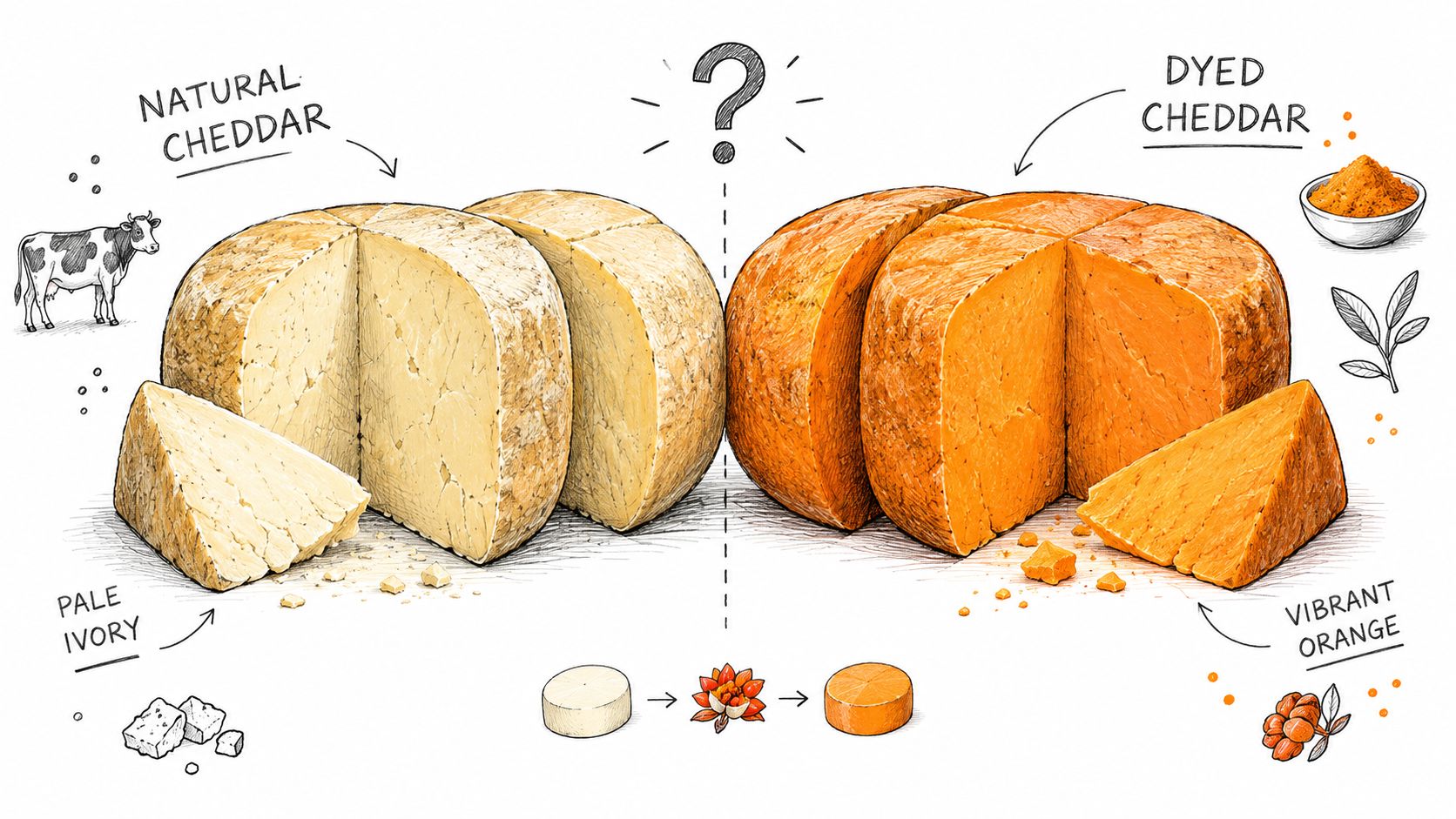
The old assumption is that the darker wheel must be more mature. In practice, color can be added to standardize appearance, especially when milk composition shifts with season and feed. That's why two cheeses can look very different while still being cut from similar cloth in the vat.
If you like shopping by flavor style as much as by appearance, a good starting point is a properly labeled mature cheddar and smoked chilli option such as this Lello cheese selection. The color may catch your eye first, but the aging, milk source, and maker's decisions tell you far more than hue alone.
Practical rule: treat cheddar color as a clue, not a verdict.
Cheesemakers have long balanced tradition with the reality of consumer expectation. Some buyers want the pale, natural look. Others expect orange because that's what they grew up seeing on cheese boards, sandwiches, and snack platters. The result is not a battle between right and wrong, it's a practical adjustment to what people recognize at a glance.
What Annatto Actually Is
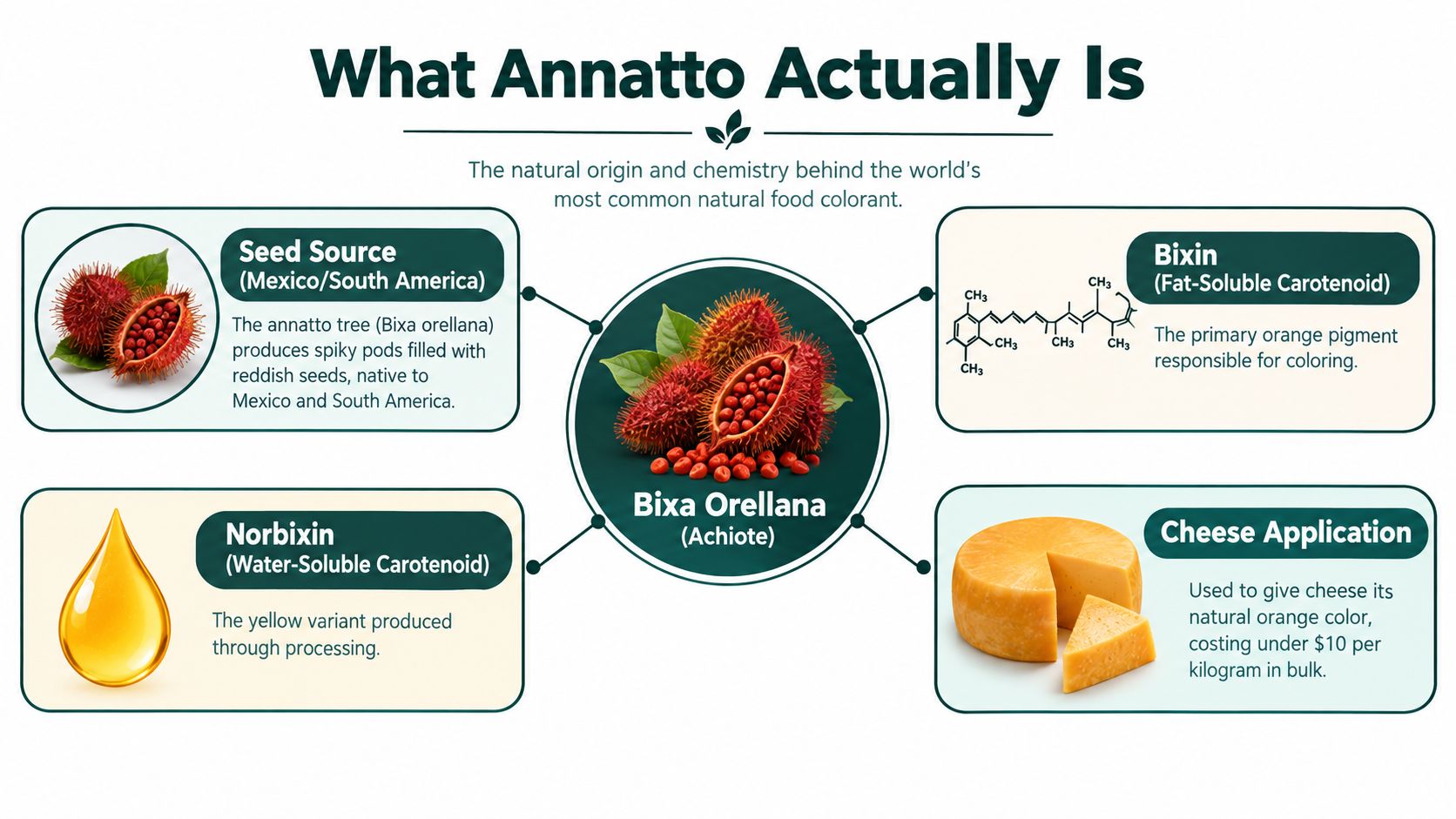
Annatto comes from the seeds of the achiote tree, and the part that matters to cheesemakers is its carotenoid pigment system. The two names you'll hear most are bixin, the fat-soluble form, and norbixin, the water-soluble form. Those names sound technical, but the practical idea is simple. One version behaves better in oily, dairy-rich systems, while the other suits aqueous extracts and dispersions.
Why Cheese Makers Care About Form
Annatto isn't one single delivery style. In cheddar manufacture, it's typically added to milk as an aqueous extract containing norbixin, though other systems like encapsulated norbixin, bixin microcapsules, and fat-compatible formulations have also been studied to improve retention in the curd and limit migration into whey. The reason is practical, not cosmetic. When color moves away from the curd, the finished cheese loses intensity and the whey can pick up the pigment.
That matters because cheese making is a separation process. Milk becomes curd and whey, and pigment doesn't always stay put just because it was added to the vat. Research has shown that about 20% of the added annatto colorant can partition into whey rather than staying in the cheese curd, which is why a stronger-looking vat doesn't automatically mean a stronger-looking cheese.
Cheesemaker's lesson: validate the finished curd and the whey separately. The vat can look rich while the cheese itself tells a different story.
For a simple pantry-side comparison, even something as basic as fleur de sel reminds cooks that ingredient form changes performance. Salt crystals, like pigments, behave differently depending on how they're prepared. Annatto is similar. The chemistry is part of the craft.
What Changes Retention
Three things tend to shape the result in the vat. Pigment form affects solubility and movement. Dispersion quality affects how evenly the color spreads. Curd handling affects how much of that color ends up trapped in the cheese matrix versus washed away with liquid whey.
Milk fat also plays a role. Emulsification, milk composition, cutting, and drainage conditions all influence whether the color stays where the cheesemaker wants it. That's why one producer's orange cheddar can look consistent all year while another's shifts visibly from batch to batch.
Color Perception and Flavor Expectations
Shoppers don't just see color, they taste through it. Cheese that appears too white can seem bland before it ever reaches the tongue, while cheese that looks very orange can feel engineered or overly processed even when the ingredients are familiar. The gap between what you see and what you taste is small, but it changes buying decisions in a real way.
Why Middle Ground Often Wins
Consumer research on cheddar color found that intermediate orange intensity was preferred, while cheese that looked too white or too orange was less acceptable. That makes intuitive sense at the counter. Shoppers generally want the color to suggest richness without turning the cheese into a novelty.
A 2024 study added another layer. Shoppers valued an “all-natural” label more than matching the exact Cheddar color when they made purchase decisions. That doesn't mean color stopped mattering. It means the label on the package can outweigh a purely visual preference when buyers are deciding what belongs in their basket.
If you're serving cheese with accompaniments, the visual balance matters just as much as the taste. A bright accent like golden balsamic vinegar can frame a pale or orange cheese differently on the board, which shows how presentation shapes expectation before the first bite.
Don't Read Shade As Aged Flavor
Here's the mistake many shoppers make. They assume darker orange means sharper, older, or more artisanal. It doesn't. A deeper orange can reflect formulation choices, color standardization, and consumer preference rather than a direct measure of aging.
Color can nudge the brain toward a flavor idea, but it doesn't prove the flavor is there.
That distinction matters on a cheese board. If you're comparing two cheddars from the same maker, the one with annatto may look more familiar to guests, while the uncolored one may look more rustic or traditional. Neither appearance guarantees better quality. The smarter move is to pair visual cues with aging notes, milk source, and tasting description.
Reading Cheese Labels Across Markets
Cheese labels get confusing because the same color ingredient doesn't always appear under the same name. In the European Union, annatto is identified as E 160b, with separate bixin and norbixin categories, and the rules set permitted uses and maximum levels for ripened cheeses. In the United States, annatto extract is a permanently listed, certification-exempt color additive, and FDA guidance accepts declarations such as annatto or annatto color as satisfactory color identification.
What To Look For On The Package
The wording varies, but the clue set is fairly consistent:
- Annatto, annatto extract, or annatto color usually signals a plant-derived color added for appearance.
- Bixin or norbixin may appear when the label gets more technical or when a manufacturer names the specific pigment form.
- E 160b is the EU-style code you'll often see on imported products or labels designed for that market.
- Color added tells you the package contains a declared colorant, even if the exact type is less obvious.
A label can tell you what was used, but not everything about how it behaves. It won't show you the carrier, the exact dispersion system, or how much color remains in the cheese after processing. That's why imported cheeses often look a bit different in the ingredient panel than domestic ones even when they're doing the same job in the vat.
For date-sensitive shoppers, understanding best-by dates on food packaging is useful alongside ingredient reading. Color and freshness aren't the same thing, and a clean ingredient panel doesn't replace proper storage or shelf-life awareness.
Label check: if you care about color sensitivity or ingredient transparency, read the back of the pack, not just the front claim.
When To Ask Questions
If the label is unclear and you have a personal sensitivity, contact the manufacturer. Rare reactions have been reported, so vague reassurance isn't as useful as a direct answer about the color source. The safest habit is to look for the actual term on the package and confirm what the company used if anything feels ambiguous.
Making Smart Cheese Selections
The best cheese choice isn't the brightest one, it's the one that fits the meal, the guest list, and your own taste. If you want a mellow, familiar cheddar look, annatto-colored cheese is often the style that feels most recognizable at the table. If you prefer a pale, traditional appearance, naturally colored cheese may suit you better.

Start with the producer before you start with the color. Milk source, aging statement, and tasting notes tell you much more about quality than whether the wheel leans ivory or orange. A cheese made from carefully managed milk with thoughtful aging can look understated and still outclass a louder-looking rival.
A Simple Buying Framework
- Choose by milk source first: If the maker explains herd, region, or seasonality, that's useful information about flavor and consistency.
- Check the aging note: “Mature,” “aged,” or “young” usually tells you more about taste than color does.
- Read the ingredient list: If annatto appears, treat it as a color decision, not a quality warning.
- Trust your palate: If you like a paler cheese, buy it. If you want the classic orange look, buy that instead.
The practical difference becomes clearer when milk composition shifts through the year. Changes in feed and processing can alter how naturally pale or yellow the base cheese appears, so some makers use annatto to keep the shelf look steady. That's a consistency choice, not a shortcut.
The same approach helps when you're comparing two cheeses from the same maker. One may be annatto-colored for a familiar supermarket profile, while another is left natural for a more rustic presentation. Both can be well made. The label just tells you which visual language the cheesemaker chose.
If you want the right cutting tools for serving either style, this cheese knives guide is a practical place to start. Clean slicing matters more than color when you're trying to keep a wedge attractive on the board.
Building Your Cheese Board Strategy
A good cheese board tells a story without needing a speech. Put an annatto-colored cheddar beside a naturally pale one from the same producer and the contrast does the teaching for you. Guests see that color can be a style choice, not a measure of worth.
Arrange For Contrast, Not Confusion
Place the orange cheese where it can act as an anchor, then give the paler cheese room to breathe. That keeps the board from turning into a blur of similar tones. If you add crackers, fruit, and condiments, let them frame the cheeses rather than crowding them.
A few practical pairings work especially well:
- Orange cheddar with sliced apple: the color looks lively next to fresh fruit, and the sweet-tart bite keeps the board from feeling heavy.
- Natural cheddar with honey or fruit confit: the lighter color lets the topping stand out and gives the cheese a quieter profile.
- Both together with a neutral cracker: the guest can compare texture and flavor without the garnish getting in the way.
Tell The Story Simply
You don't need a lecture. A line like “This one uses annatto for a steadier color, this one is left natural” is enough. That sentence helps people stop assuming the orange block is automatically stronger or more aged.
For hosts who like to keep service tools close at hand, the Laguiole Mini Black Cheese Set in Presentation Box is a tidy way to cut, portion, and spread without cluttering the board. It fits the same mindset as a well-labeled cheese selection, practical, restrained, and clear about function.
Keep the focus on how the cheeses taste together, not on which one looks more expensive.
If you're serving guests who care about ingredients, mention the label term when it comes up, then move back to flavor. That keeps the conversation grounded in the food itself. Annatto becomes part of the craft story, not a distraction from it.
If you want to build a cheese board that feels thoughtful without being fussy, browse Lello.Store for pantry pieces, serving tools, and hosting items that suit real cheese service. You'll find practical supports for tasting, plating, and gifting, which makes it easier to choose cheeses with confidence and serve them well.