

Fruity olive oil means aroma from sound, fresh olives, measured on a 0–10 panel scale, not sweetness or infused fruit; extra virgin oil needs a fruity median above 0 and a defect median of 0. That makes the familiar advice to buy the smoothest oil you can find a poor shortcut: smoothness alone tells you little about freshness, aroma, or what will work on dinner.
A grassy oil that catches in your throat may be exactly right for warm beans. A softer oil with an almond-like aroma may suit fish better. Neither needs to taste like sweet fruit, and the louder bottle isn't automatically the better one.
The useful question isn't whether an oil is fruity. It's what kind of fruitiness you notice, how strongly you notice it, and whether you want that character on the plate.
Table of Contents
- Fruity Olive Oil Intensity at a Glance
- From Green Fruit to Ripe Fruit
- How to Taste Fruity Olive Oil
- Peppery Bite Versus a Real Fault
- How to Buy and Keep a Fruity Oil
- Dishes and Bottles for Tonight
Fruity Olive Oil Intensity at a Glance
Fruitiness is the olive's own perfume. It shows up first when you smell the oil, then as aromas rise from your mouth toward your nose while tasting. That returning aroma is called retronasal perception. In everyday terms, it is what you notice as you swallow and breathe out.
The International Olive Council sensory method measures fruitiness on a 0–10 scale and defines the median bands below. For extra virgin classification, the fruity median must be above 0 and the defect median must be 0.
Fruity olive oil intensity and aroma bands
| Style | Median on 0–10 | Aroma cue | First use |
|---|---|---|---|
| Delicate fruitiness | Below 3 | Soft ripe fruit, almond, low aroma | Delicate fish, baking, mild salads |
| Medium fruitiness | 3 to 6 | Tomato, apple, balanced herbs | Bread, vinaigrettes, vegetables |
| Full-bodied fruitiness | Above 6 | Grass, artichoke, green tomato leaf | Beans, bitter greens, grilled food |
| Green fruitiness | Any intensity | Unripe olive, cut grass, green apple | Finishing hearty savory dishes |
| Ripe fruitiness | Any intensity | Banana, ripe apple, nut | Delicate foods and milder palates |
These aroma cues and kitchen uses are practical guides, not definitions of intensity. A delicate oil may smell green, while an intensely aromatic one may have ripe-fruit character. The rows do not rank oils from poor to excellent.
Intensity describes how much aroma you perceive. Green or ripe describes what that aroma brings to mind. Keep the two questions separate when reading tasting notes or comparing oils.
A delicate oil has its own quieter aromatic voice, while a more intense oil speaks up more clearly.
Read intensity separately from quality
A panel's median describes the strength of fruitiness, not deliciousness, personal preference, or price. It gives you one useful point of comparison, rather than a verdict on the bottle.
Fresh basil has a more noticeable aroma than tender lettuce, though both can taste fresh and appealing. Oils also differ in how strongly their aromas come through. The intensity scale helps describe that difference without deciding which one belongs on your table.
Your preferred strength depends partly on what you are eating. An assertively green oil may suit someone who enjoys artichoke and bitter greens; another person may like that same oil better with bread, salt, and tomato.
When comparing labels, the guide to choosing extra virgin olive oil can help you sort through buying clues without treating full-bodied aroma as a sign of higher quality. Start with a provisional description of the oil in your cupboard: delicate, medium, or full-bodied, then green or ripe.
An official score is optional. A clear description is enough to help you decide what to pour it on tonight.
From Green Fruit to Ripe Fruit
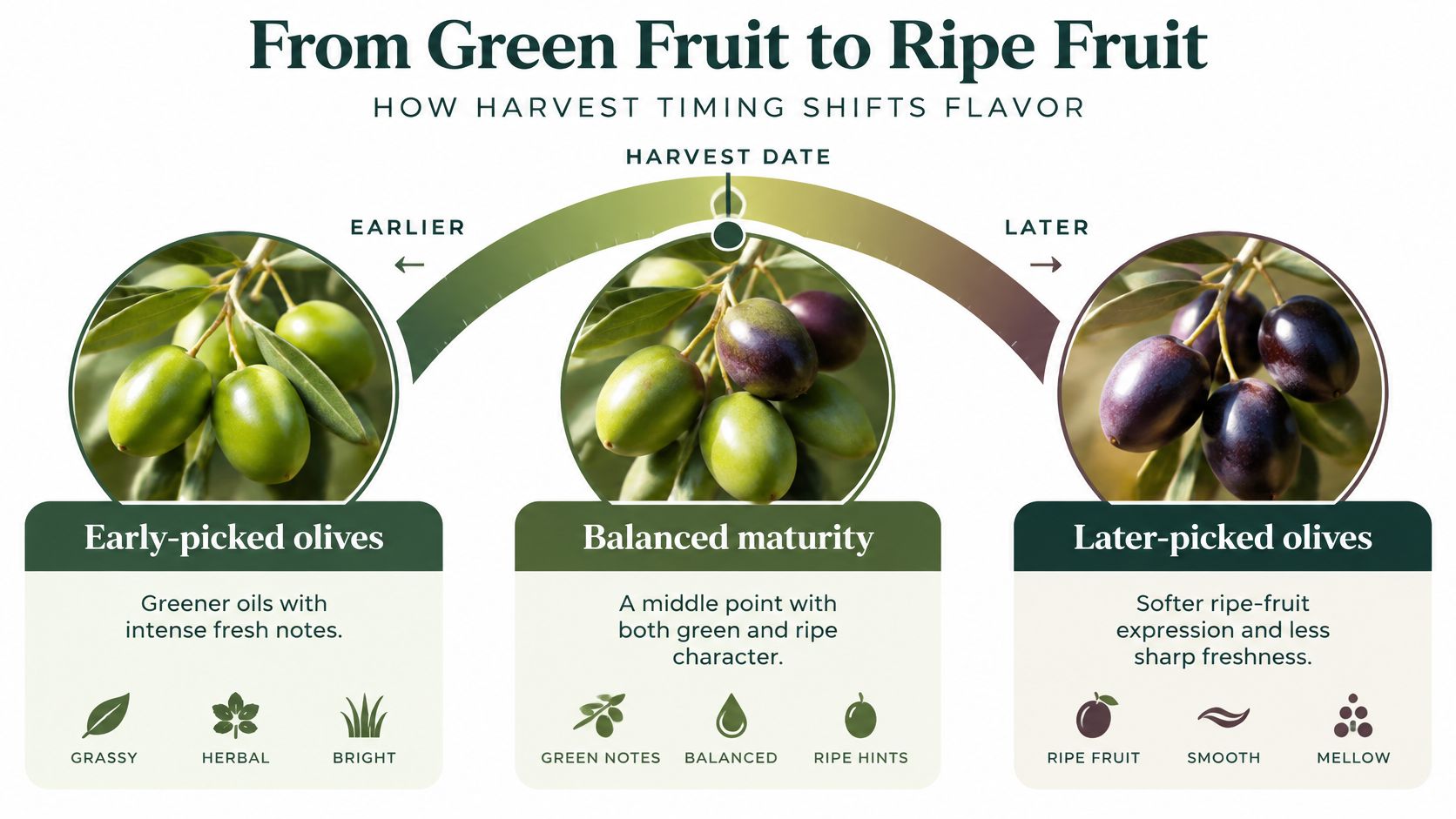
An olive's maturity can shift the aromas in its oil. Fruit picked while greener often produces oil with fresh, vegetal impressions, such as crushed leaves, cut grass, or green apple. As the olives mature, those green notes may soften and give way to rounder, riper fruit aromas. Some oils hold both green and ripe impressions.
Harvest timing explains part of this progression, alongside olive variety and milling conditions.
Follow the fruit, not just the calendar
Consider oils made from the same olive variety at different stages of maturity. The earlier-picked oil might feel fresh and leafy; a middle-stage oil could combine green and ripe aromas; a later-picked oil may smell softer, with a narrower range of aromas.
A review of olive-oil aroma and sensory characteristics describes green-fruity, balanced fruity, and ripe-fruity oils, with aromatic intensity and the range of positive aromas declining as olives ripen further. Each stage gives the grower and cook a different expression of the fruit.
The variety, condition of the olives, and care taken between picking and milling also shape the result. Early-harvest wording is a clue toward greener character, not a guarantee of a particular aroma.
Why apple doesn't mean apple was added
Aroma descriptions compare smells. When a taster writes “green apple,” they mean the oil brings that aroma to mind, not that apples went into the mill.
Volatile compounds, including hexanal, trans-2-hexenal, alcohols, and esters, contribute to these impressions. Because they work together, it is more useful to notice broad families, such as green, leafy, ripe, and fruity, than to assign each familiar smell to one compound.
Naturally fruity and flavored oils get their character in different ways. An oil can suggest fruit through the olives themselves; a lemon-flavored oil gets its citrus character from an added ingredient. This guide to flavored olive oil explains the distinction when labels might leave the categories unclear.
A bottle's name alone cannot tell you exactly what you will smell. Look at the ingredient list, then use the aroma to decide whether its character suits the dish.
How to Taste Fruity Olive Oil
Use a small, clean glass or cup, plain drinking water, and a place away from scented candles or a busy frying pan. Strong room smells make subtle aromas harder to identify, and detergent residue can spoil the exercise before you begin.
Taste the oil by itself before putting it on bread. Bread is useful for understanding how an oil behaves with food, but it can soften bitterness and distract you with its own toasted aromas.
This kitchen method borrows the logic of sensory tasting without pretending that your notes are an official panel result.
Taste with a purpose
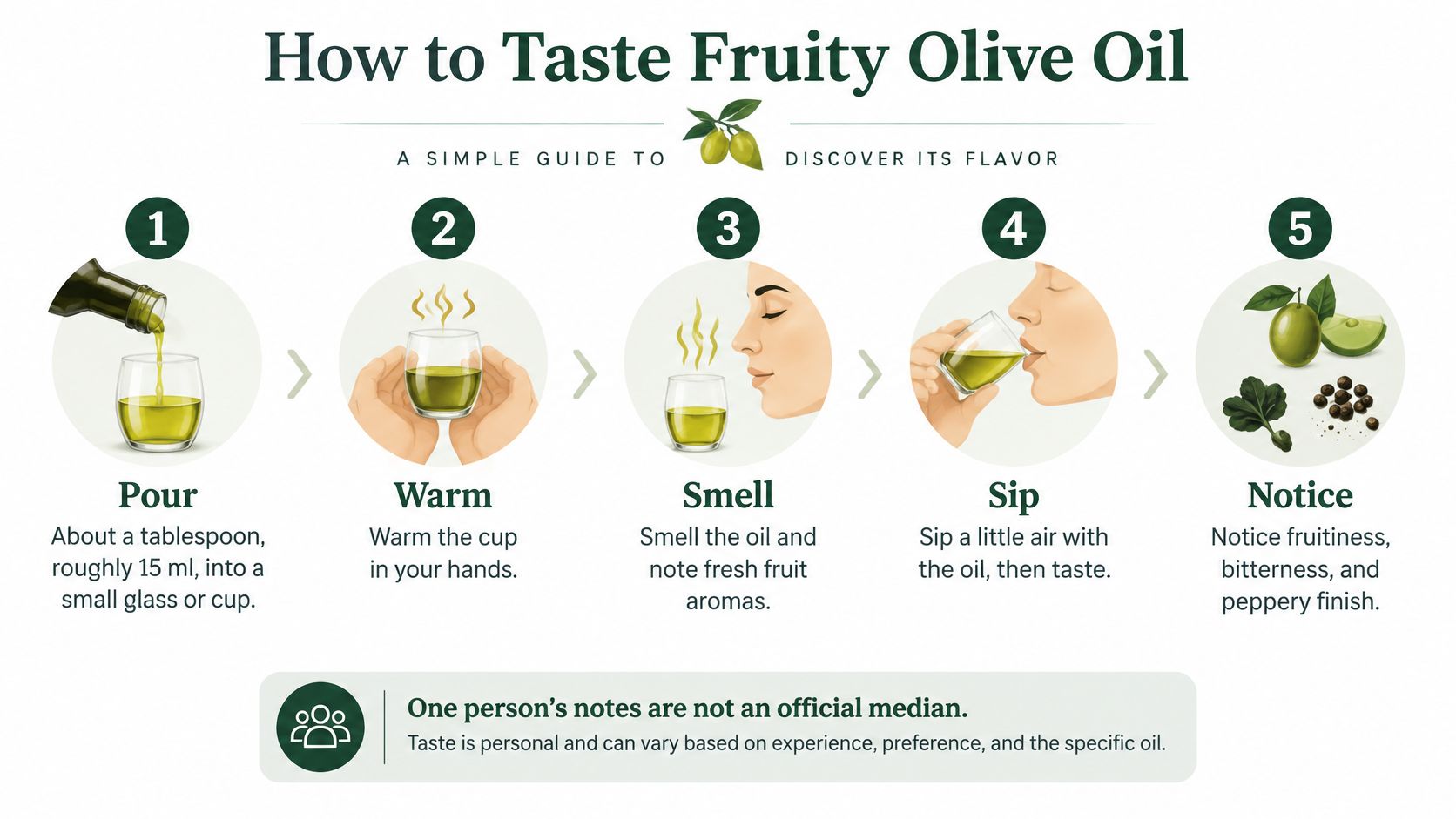
- Pour a small tasting portion into the cup, enough to swirl and sip comfortably, so you can smell the oil without committing to a mouthful.
- Warm the cup gently in your palm, because cold oil releases less aroma and can seem quieter than it really is. Don't heat it on the stove or in the microwave.
- Smell before you taste, then cover the cup with your hand, swirl, uncover, and smell again to gather the aroma above the surface. Name the first familiar impression rather than searching for an impressive tasting term.
- Take a small sip and gently draw air through the oil, because this helps you notice the aromatic impression inside your mouth. A restrained slurp is enough; you don't need to inhale forcefully.
- Notice the tongue separately, especially whether the oil tastes bitter, so that bitterness doesn't get mistaken for strong fruit aroma. Write down both observations even if they seem to disagree.
- Swallow a little and pause, because a peppery sensation may arrive in the throat after the first mouth impression. Stop if the sensation feels uncomfortable, and don't force yourself to swallow more.
- Compare contrasting oils side by side, because a quiet aroma is easier to recognize next to an assertive one than in isolation. Use matching cups so the containers don't become another difference.
- Reset with water or plain bread between samples, then record aroma, bitterness, and throat sensation separately so your notes remain useful when you cook.
Write what you'll recognize tomorrow
A practical note might read: green apple, medium aroma, gentle bitterness, brief peppery finish. That's more informative than smooth, premium, or fruity.
If you can't identify a specific fruit, start broader. Fresh and leafy is a useful observation; so is soft and nutty. Tasting gets easier when you allow ordinary language instead of treating every sip as an identification test.
Once you've made a plain-oil note, taste it with food and notice what changes. Salt, starch, sweetness, and richness can change how forcefully you perceive the same oil.
For a contrasting food exercise, try the approach in chocolate and olive oil. The point isn't to prove that an oil suits everything. It's to learn which parts of its character you enjoy in a particular setting.
Peppery Bite Versus a Real Fault
Bitterness doesn't mean an oil has gone off. Neither does a peppery catch after swallowing. Rejecting every assertive oil would rule out styles that can be especially useful with rich, earthy, or bitter foods.
Fruitiness, bitterness, and pungency are distinct positive attributes. Volatile compounds drive much of the aroma, while phenolic compounds contribute strongly to bitterness and pungency. They don't necessarily increase together.
In a study published in the Journal of Sensory Studies, higher phenol concentrations reduced the perceived fruity score by about 39%. That's a finding about sensory interaction in that study, not a rule that lets you calculate aroma from a bottle's bitterness.
Positive fruity-oil traits versus defects
| What you notice | Where | What it means |
|---|---|---|
| Green or ripe fruit aroma | Nose and retronasal | Positive fruitiness |
| Bitter on the tongue | Mouth | Positive phenolic bitterness, a style rather than a flaw |
| Peppery throat catch that fades | Throat after swallowing | Positive pungency, potentially too strong for delicate food |
| Crayon, putty, or stale nuts | Nose | Rancid defect; don't treat it as fruitiness |
| Damp cellar or mold | Nose | Musty defect |
| Vinegar, nail polish, or fermented sharpness | Nose | Winey or vinegary defect |
A clean peppery finish and a stale smell aren't different degrees of the same sensation. One is a throat response; the other is an aromatic warning. Separating where you notice something often helps you decide what it is.
Don't let a pleasant apple or grassy note excuse an obvious off-smell. Fresh fruit aroma can coexist with a fault, and a home cook shouldn't need to tolerate rancidity just because the label looks convincing.
Choose the bite you actually enjoy
An assertive oil can dominate poached fish even when the oil is perfectly sound. The same oil may feel balanced on beans, where starch and a generous serving of food spread out its impact.
A mild oil isn't automatically better for beginners, either. Some people immediately enjoy a lively throat catch, while others prefer a gentler finish. Offer the stronger oil at the table when you're unsure, rather than dressing everyone's plate with it.
Practical rule: Match the bite to the eater and the dish, not to the prestige of the bottle.
Don't use pungency as a health test. These sensory findings don't establish that a more bitter or peppery bottle is healthier, and your throat can't measure a health benefit.
Treat the bite as a flavor trait you can choose, moderate, and pair. Quality still requires clean character, not merely intensity.
How to Buy and Keep a Fruity Oil
Make the label do some work before you buy. Look for extra virgin designation, a harvest date when available, protective packaging, and a named variety, producer, or estate. A best-by date can help with stock selection, but it doesn't tell you when the olives were picked.
Origin gives context, not a verdict. Compare an oil from California with one from a Mediterranean producer using the same questions about freshness, traceability, packaging, and intended style.
Translate the label into useful clues
The earlier International Olive Council sensory method records the trained panel's median to one decimal place and uses light, medium, and intense terminology for the bands now commonly described as delicate, medium, and full-bodied. Those older words can help you interpret a technical sheet without assuming it describes a different grading system.
A retailer's tasting description isn't necessarily a panel certificate. Treat words such as grassy, almond-like, or balanced as guidance about experience, and look for clear documentation if an official sensory result matters to your purchase.
- Check the harvest information. Prefer a clearly identified harvest over a romantic account of the setting.
- Inspect the container. Dark glass or a suitable tin protects against light better than an exposed clear bottle.
- Read the ingredients. Confirm whether you're buying plain olive oil or an added-flavor finishing oil.
- Match the bottle to your cooking. Buy for the meals you make, not for a tasting vocabulary you feel you should admire.
Protect the aroma after opening
Store the bottle in a cool, dark cupboard away from the stove. Cap it after pouring, and resist keeping a decorative open cruet beside a sunny window.
Heat, light, and air can flatten the fresh character you paid for. Choose a bottle size you can use steadily instead of saving a special oil indefinitely; the guide to whether olive oil expires explains the freshness questions behind that decision.
Smell a newly opened bottle before adding it to a full dish. If something seems stale or musty, investigate before cooking with it.
Your pocket checklist is short: clear harvest information when available, extra virgin designation, no off-smell at opening, and an aromatic style that suits your food. Attractive packaging is welcome, but it can't answer those questions for you.
Dishes and Bottles for Tonight
A spoonful of fruity olive oil can taste vivid on its own and still overwhelm a quiet dish. On the plate, the food changes how the oil's aroma and finish come through. Let the ingredients guide the amount and intensity.
Let green fruitiness act like a sauce
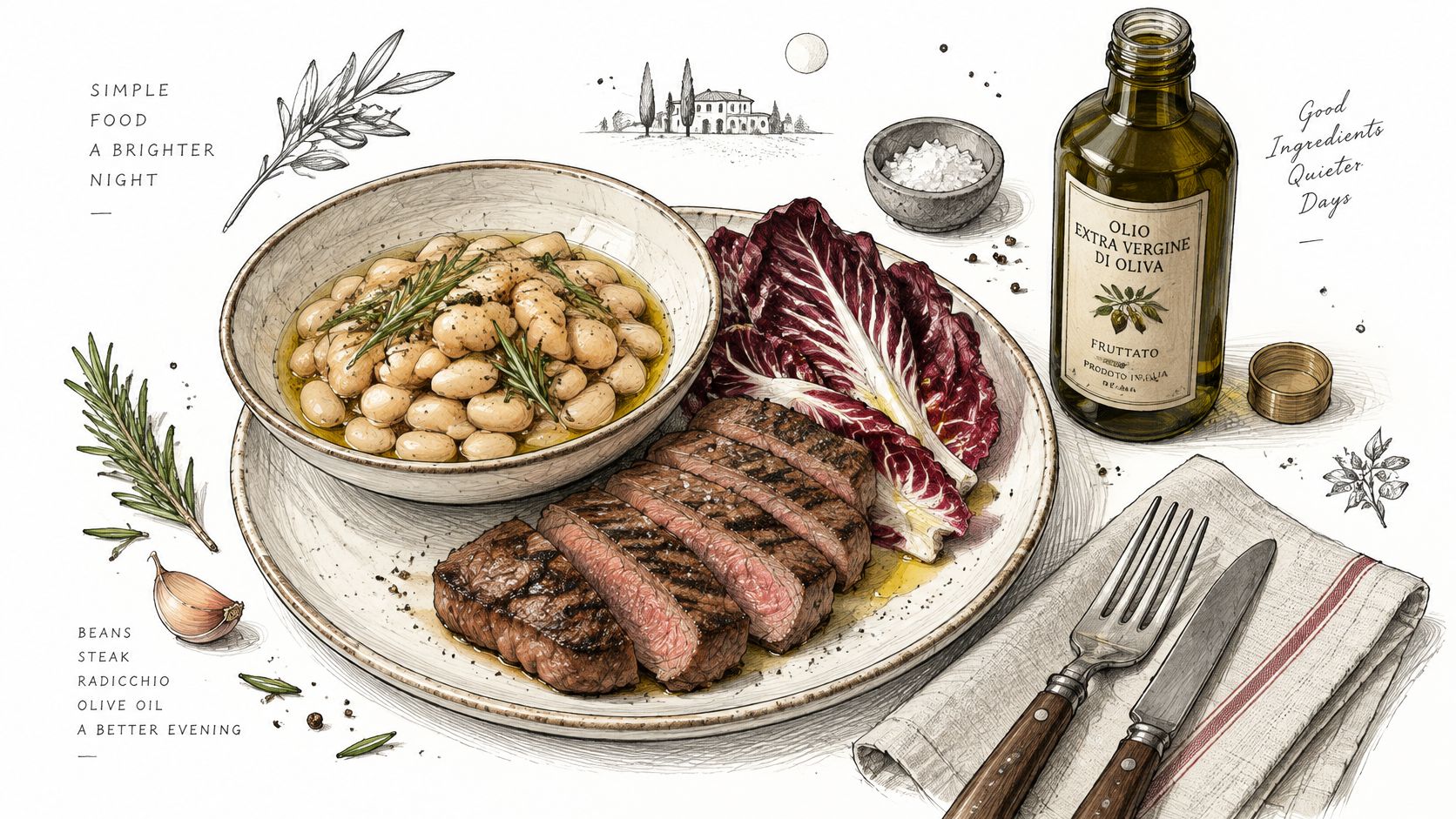
Warm white beans with rosemary make a forgiving match for full-bodied green oil. Once the beans are off the heat, add a little oil and taste before adding more. The mild, starchy beans soften the oil's leafy aroma and lively finish. A spoonful of cooking liquid helps the oil cling to the beans instead of collecting underneath.
Grilled steak and bitter radicchio can also stand up to assertive fruity notes. Spoon the oil over sliced meat or dressed leaves, rather than onto the grill, where heat can dull its aromatic detail.
Tomato bruschetta gives the oil a different role. Toast the bread, add seasoned tomato, then finish with oil while the bread is warm. The tomatoes and Heritage olive oil recipe shows the pairing through the dish itself.
Give balanced oils everyday jobs
Medium fruitiness suits meals where oil should contribute without taking over. Try it in vinaigrette, over roasted vegetables, or with bread alongside dinner.
For dressing, whisk lemon juice or vinegar with salt, then add oil gradually. Taste it on a leaf. Dressing sampled alone can make the acidity seem sharper than it does with salad, so let the food be your guide.
Roasted carrots, squash, and cauliflower welcome a finishing pour after cooking. Extra virgin olive oil can also be used during cooking. Add it at the end when preserving its particular aroma matters most.
The same serving method can help you compare how much aromatic presence a finished plate needs.
Leave room for delicate food
Poached white fish calls for a restrained drizzle of delicate, ripe-fruity oil. Taste the fish and oil together before adding more, particularly if the sauce already includes herbs or citrus.
A softer oil also suits mayonnaise or olive-oil cake, where a forceful leafy aroma could compete with the other flavors. For baking, follow a recipe written for oil rather than casually swapping it for another fat.
Choose an expression that belongs beside the other ingredients.
Keep infused finishes in their own category
Lavender oil is a different choice from naturally green or ripe-fruity oil. Use it sparingly and off the heat with lamb, goat cheese, roasted carrots, or stone fruit. Stop when the floral aroma begins to cover the food.
Summer-truffle oil also works best in restrained drops, on eggs, mushroom pasta, or risotto. Its added aroma does not describe the olives' own flavor, and prolonged heating can diminish the aromatic finish.
Lello.Store's French Pantry includes Heritage Extra Virgin Olive Oil from California in a 473 ml (16 fl oz) bottle. A L'Olivier Lavender Olive Oil, a separate infused finishing option, is sold for $24.00. Choose between plain olive character and a floral accent based on the dish, and consult the product details rather than guessing harvest date or intensity from a name.
Tonight's best choice may be a bottle already in your cupboard. Taste it, identify its character, and use it where that character contributes to the plate.
Lello.Store offers extra virgin olive oils, separate infused finishes, and practical pantry guides. Browse the selection with a dish in mind, whether you're dressing tomatoes, finishing beans, or choosing a gentler oil for fish.