

Napa Valley balsamic vinegar is usually a California-packaged vinegar made from Italian-origin ingredients, not a protected Napa designation. It doesn't have to contain Napa-grown grapes.
That simple fact overturns the most popular shopping advice for this category. You're often told to look for the thickest bottle, the longest age claim, or the most prestigious place name. None of those shortcuts tells you what's really in the bottle. Thickness can come from concentrated must, but it can also hide in marketing language. A place name can describe packaging or distribution rather than grape origin. An age claim can be descriptive rather than legally defined.
A better approach is slower but far more useful. Read grape must share, declared acidity, ingredient order, origin wording, and any recognized certification. Then taste a small amount on the food you plan to serve. That turns a confusing label into a practical buying decision, and it helps you judge a Napa Valley style bottle fairly beside protected Italian styles without assuming that either one wins by name alone.
Table of Contents
- Napa Valley Balsamic Compared With Traditional Styles
- Reading the Napa Valley Label
- How Napa Valley Style Balsamic Is Made
- Tasting Notes and a Simple Tasting Test
- Culinary Uses for Napa Valley Balsamic
- Choose a Napa Valley Balsamic for Your Kitchen
Napa Valley Balsamic Compared With Traditional Styles
The clearest comparison is between a bottle's stated ingredients and its certification. Traditional Balsamic Vinegar of Modena (PDO) follows a protected Italian method; Balsamic Vinegar of Modena (PGI) has its own protected rules and allows a broader style. A bottle labeled “Napa Valley balsamic vinegar” without either certification is a separate product category, so its label needs to carry more of the comparison.
Napa Valley Style, PDO and PGI Balsamic Compared
| Feature | Napa Valley-style balsamic | Traditional Balsamic (PDO) | Balsamic of Modena (PGI) |
|---|---|---|---|
| Minimum aging | No legal minimum; barrel-aging claims are not standardized | At least 12 years in a regulated barrel-aging system | At least 60 days |
| Base ingredient | Concentrated grape must, cooked grape must and wine vinegar | Cooked grape must only | Wine vinegar with concentrated and/or cooked grape must |
| Minimum acidity | Set by each product; examples appear at 4% to 6% | 4.5% under the Modena standard | 6% |
| Protected designation | None unless a certification applies | Protected (PDO) | Protected (PGI) |
| Permitted additives | Check the ingredient list for each bottle | No permitted caramel in the traditional cooked-must model | Permitted caramel |
The aging thresholds help explain why bottles with similar names can differ in production time and price. The Tasting Table guide to balsamic categories states that PGI vinegar requires at least 60 days, products aged beyond 3 years may use an “Aged” designation, and Traditional Balsamic Vinegar PDO requires at least 12 years.
Ingredients offer another useful comparison. Traditional vinegar begins with cooked grape must alone; PGI vinegar can combine wine vinegar with concentrated or cooked must. A generic bottle labeled “balsamic vinegar” without a PDO or PGI mark falls outside those protected categories. Check its ingredient list for grape must, wine vinegar, and any additives rather than relying on its packaging.
The designation matters when a label uses the word traditional. It has a specific legal meaning when paired with the relevant PDO status. The guide to aged balsamic vinegar explains how regulated aging claims differ from ordinary product language.
Without a PDO or PGI mark, compare the bottle's ingredients, stated acidity, and aging language, then judge how it tastes with your food.
Reading the Napa Valley Label
“Napa Valley” on a bottle tells you about the label's California connection, often packaging or distribution. Check the origin statement to see where the vinegar and its ingredients come from. A California company can package vinegar made with ingredients sourced from Modena, Italy.
Read each phrase carefully. “Made in,” “product of,” “packaged in,” and “distributed by” identify different parts of a product's journey. Terms such as reserve or grand reserve describe the producer's chosen wording; on their own, they do not establish a regulated age.
Origin, Ingredients and Barrel Language
The ingredient list helps explain how a vinegar may taste. A Sprouts product specification for a Napa Valley-branded balsamic identifies Modena, Italy as the origin and lists concentrated grape must, cooked grape must, and wine vinegar as the principal components. It gives an organic example with 25% grape must and 6% acidity, and a Grand Reserve formulation with 65% grape must and 4% acidity.
Those figures point to different kitchen uses. More must generally means more grape sweetness and a thicker, more coating texture, because reducing water concentrates the liquid. Wine vinegar contributes sharper acidity and a more pourable consistency. A must-rich bottle will often taste rounder; one with higher acidity can cut through oil and rich foods more clearly.
Barrel language offers another clue, but not a complete account of production. Cherry wood, oak, and chestnut can contribute aroma during maturation. The phrase barrel aged does not say how long the vinegar spent in wood or establish a regulated aging sequence. Treat the wood type as sensory information, not an age measure.
Two Real Napa Valley Style Labels Compared
The figures below come from the Sprouts Napa Valley-branded balsamic product specification.
| Label feature | Organic example | Grand Reserve example |
|---|---|---|
| Grape must share | 25% | 65% |
| Declared acidity | 6% | 4% |
| Pasteurization statement | Unpasteurized | Unpasteurized |
| Possible haze or sediment | Possible; not automatically spoilage | Possible; not automatically spoilage |
The organic example has less than half the must share of the Grand Reserve, alongside higher declared acidity. Neither profile is automatically better. The 65% must, 4% acidity combination may suit finishing, where sweetness and cling are useful. The 25% must, 6% acidity combination may work well in vinaigrettes, marinades, and reductions.
Acidity alone cannot predict the whole taste. A Whole Foods Market listing for Napa Valley Naturals balsamic vinegar shows retail examples at 4% and 6% acidity, while another barrel-aged product reports 4.6%. Must concentration, wood maturation, and residual sweetness also affect how sharp the vinegar tastes. Bottles with the same acidity figure can taste different on a tomato.
Both examples in the table are described as unpasteurized, and either may develop haze or sediment. That appearance can reflect minimal filtration; it is not automatically a sign of spoilage. Keep the bottle capped in a cool, dark place, and follow the producer's storage guidance.
For a contrast in color and kitchen role, this guide to golden balsamic vinegar explains how ingredient choices can shape a paler style.
A Five-Part Label Check
- Origin statement: Identify where the vinegar was made and where it was packaged or distributed.
- Ingredient order: Check for concentrated or cooked grape must, wine vinegar, caramel, sweeteners, and thickeners.
- Grape must percentage: Use it as a clue to sweetness, body, and coating power.
- Declared acidity: Consider softer acidity for finishing and sharper acidity for dressings or cooking.
- Pasteurization and storage: Note whether haze or sediment may occur, and keep the bottle away from heat and light.
How Napa Valley Style Balsamic Is Made
A balsamic-style vinegar develops through a sequence of changes: grape must is concentrated, sugars ferment into alcohol, and bacteria convert that alcohol into acetic acid. Aging and blending then shape the finished vinegar.
The illustration below shows those stages in order.
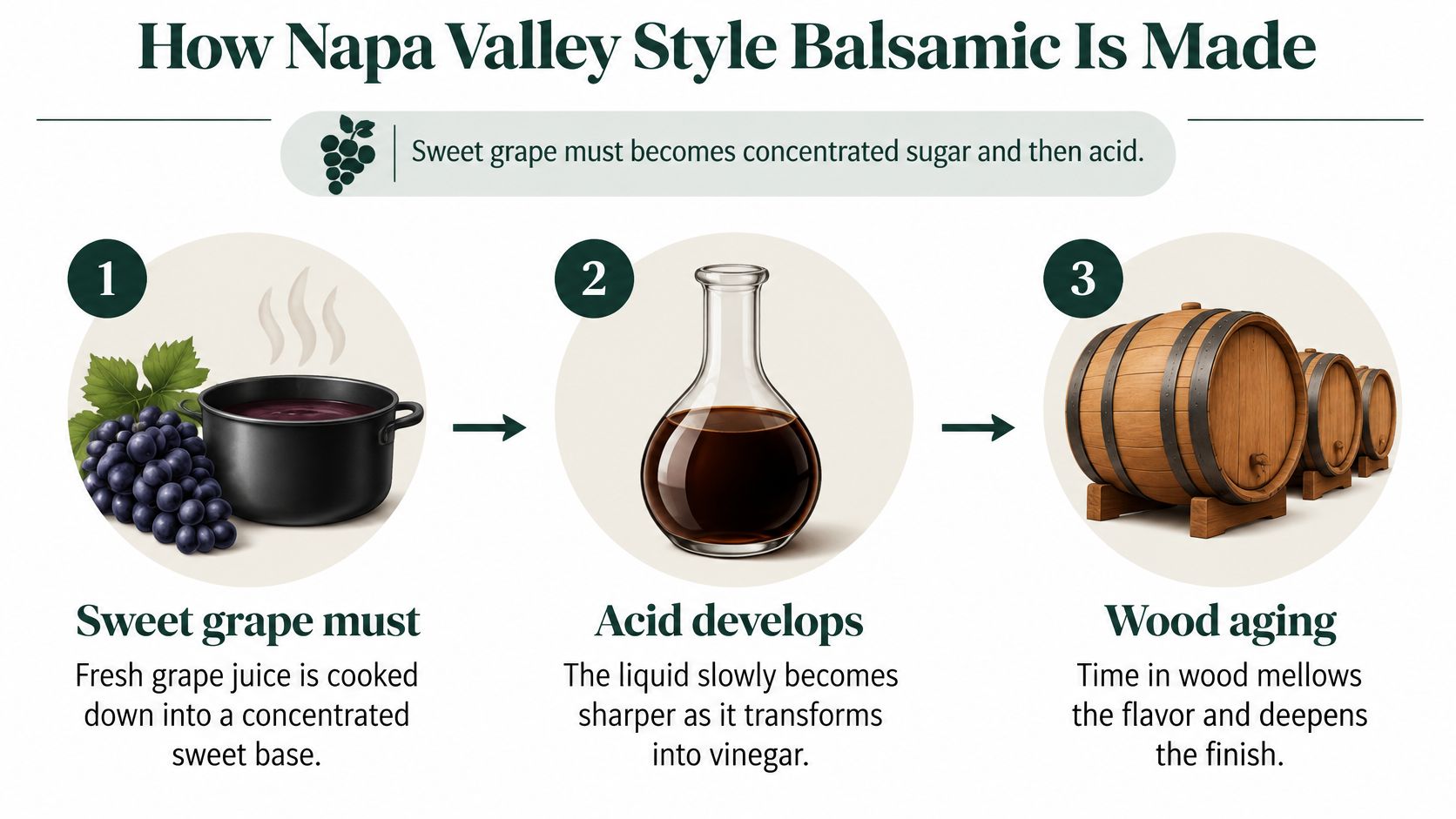
From Grape Must to Finished Vinegar
- Cook the grape must. Heating fresh grape must concentrates its sugars and other soluble solids. The result is a sweeter, darker base with more body before fermentation begins.
- Ferment the sugars. Yeast converts some of the sugar into alcohol. That alcohol supplies the starting material for the next stage.
- Convert alcohol into acetic acid. With oxygen available, acetic acid bacteria convert ethanol into acetic acid. The liquid takes on its distinctly vinegary character.
- Age in wood. Barrels allow gradual evaporation and contact with wood. Fruit notes may deepen, sharp edges may soften, and aromas such as vanilla, caramel, or dried fruit may develop.
- Blend for balance. Commercial producers may combine concentrated or cooked must with wine vinegar to adjust acidity, flow, and flavor consistency.
- Filter and bottle. Some vinegars are filtered until clear; others receive less filtration and may retain haze or sediment.
The finished vinegar is strongly acidic, but its texture varies with the amount of must, concentration, evaporation, and blending. Acidity and pH describe related but different features: sweetness and body can affect how sharp the vinegar seems in the mouth.
Aging also affects cost and flavor development. A briefly aged commercial vinegar can be clean and pleasantly sweet, while extended barrel aging can deepen flavor and lengthen the finish. Read an age claim as one clue about the production process, then consider it alongside the ingredients and intended use. For comparison, this guide to Italian balsamic vinegar styles and aging explains how those choices shape a bottle.
Process rule: Reduction concentrates sweetness and body, bacterial conversion develops acidity, and wood aging shapes the final balance.
Tasting Notes and a Simple Tasting Test
A good Napa Valley balsamic vinegar should give you more than generic sweetness. Look for grape depth first, then a clear acidic lift, then any wood, caramel, prune, fig, or vanilla notes that remain after you swallow.
The diagram near the opening separates those impressions so you can name what you're tasting instead of rating the bottle as thick or thin.
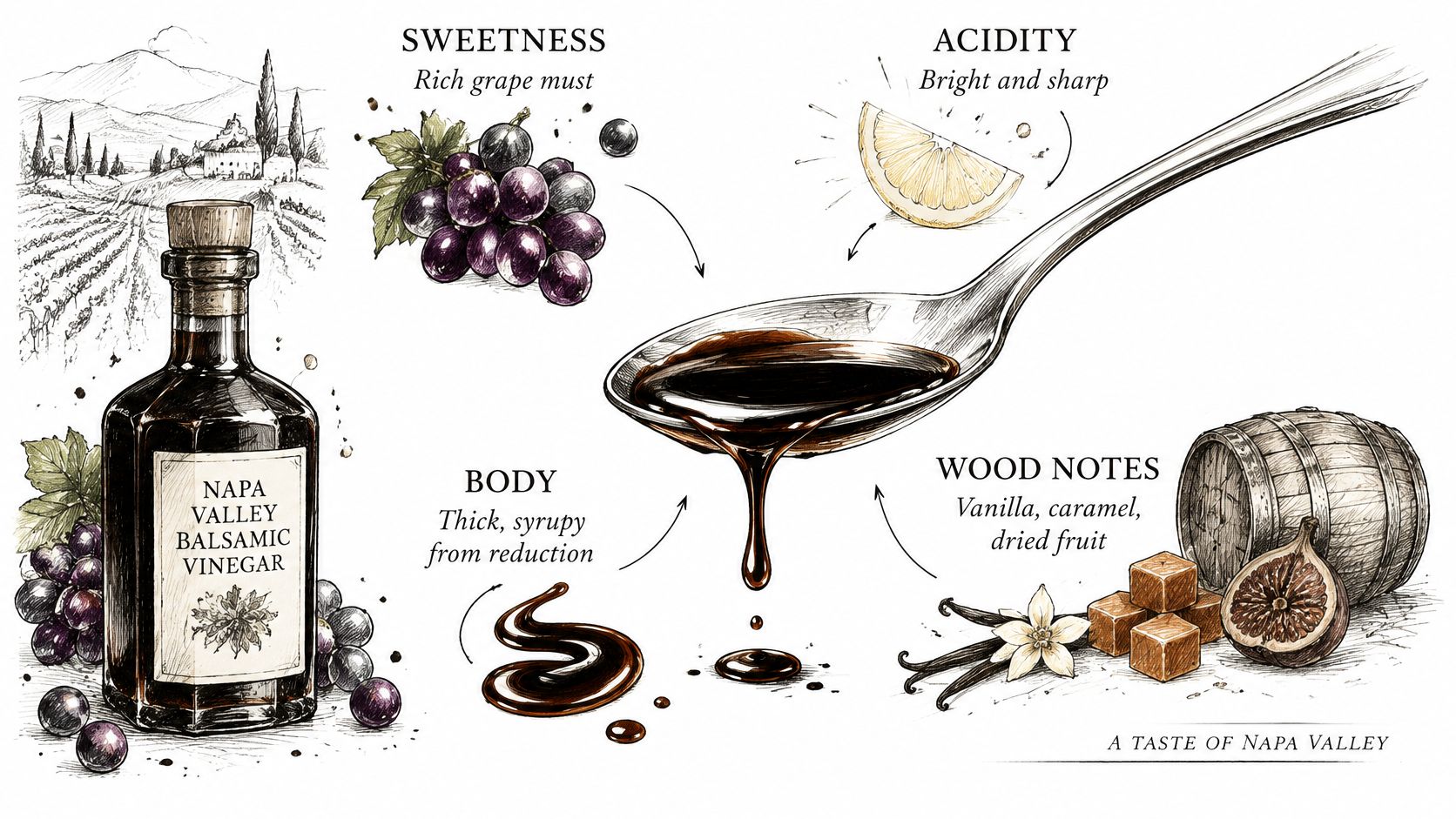
What to Notice on the Palate
Sweetness comes mainly from concentrated grape must. It should taste fruity and rounded rather than like plain syrup. Sharpness comes from acetic acid, and it should brighten the fruit without making your throat catch harshly.
Body describes how the vinegar coats your tongue and clings to food. Persistence describes how long recognizable flavor remains after swallowing. A short finish may be fine in a marinade, while a long, layered finish is valuable when you use only a few drops.
Texture can mislead you if you judge it alone. A syrupy pour may reflect concentrated must and careful reduction, but thickness doesn't guarantee aromatic depth. Pair the spoon test with food, because strawberries, cheese, and tomatoes reveal balance differently.
Run the Same-Food Test
- Choose one plain food. Use a ripe strawberry, a slice of tomato, or a small piece of Parmigiano at room temperature.
- Measure one teaspoon. Pour about 5 ml over the food so every bottle gets the same amount.
- Taste one drop alone. Note sweetness first, sharpness second, and any wood or dried-fruit flavor third.
- Repeat with the second bottle. Use the same food, spoon, and serving size, and drink water between tastings.
- Rate persistence and texture. Score each from one to five instead of relying on a vague preference.
- Calculate cost per serving. For example, a hypothetical 250 ml bottle provides about 50 teaspoons, so divide its price by 50 before deciding whether the premium feels justified.
- Assign each bottle a job. Keep the winner for finishing and move the other toward dressings or cooking if its acid performs better there.
The short video below offers another visual reference for evaluating color, flow, and the amount needed for a controlled taste.
Keep conditions consistent because temperature changes aroma and a sweeter strawberry can flatter a sharper vinegar. Your preference remains subjective, but the comparison becomes useful when only the bottle changes. If you also test olive oil beside it, our guide to fruity olive oil can help you separate green, peppery oil notes from the vinegar's grape sweetness.
Culinary Uses for Napa Valley Balsamic
A bottle's Napa Valley label does not tell you how it will behave in a recipe. Let its flavor and acidity guide the job: delicate, rounded vinegar suits a finishing touch, while a sharper one can bring lift to dressings and cooked dishes.
For fruit, start with a few drops over strawberries or peaches. The vinegar should sharpen their flavor, not turn the dish into a sauce. Vanilla gelato calls for the same restraint: cold dairy can soften the impression of acidity while leaving the vinegar's sweetness and fruit notes noticeable.
Caprese, burrata, and sliced tomatoes benefit from balsamic added after salting. Salt draws out tomato juices, olive oil adds gloss, and vinegar brings contrast. For Parmigiano or a cheese board, add drops to individual pieces rather than pooling vinegar on the board, where it can soak crackers or dominate milder cheeses.
A vinaigrette needs enough acidity to remain lively once oil is mixed in. Whisk one part balsamic with three parts olive oil and a pinch of salt, then taste the dressing on a leaf. The leaf's water and bitterness change the balance, so the spoon alone is not a reliable preview. For a fruit-forward variation, try this fig balsamic dressing.
For a reduction, simmer gently and stop before the sauce reaches its final thickness; it will thicken as it cools. Grape sugars concentrate and can scorch, particularly in a thin pan. For a pan sauce, add balsamic after deglazing, reduce briefly, then finish with butter or olive oil off the heat.
For a marinade, compare the vinegar before committing the whole batch. Mix a spoonful of marinade with a small piece of the same food, cook it briefly using the same heat and seasoning, and taste. If the vinegar's flavor disappears beneath smoke, chili, or meat juices, use a less costly bottle for that dish and save the more aromatic one for finishing.
Choose a Napa Valley Balsamic for Your Kitchen
“Napa Valley” tells you where a bottle was packaged; it does not, by itself, define a protected balsamic style. Read the label for the stated origin, ingredients, grape must content, acidity, and any certification. Then choose according to how you plan to use the vinegar.
For a protected Italian designation, look for PDO or PGI on the label. PDO balsamic is suited to careful finishing, while PGI offers a practical choice for everyday use. For any bottle, check that its ingredient list and taste match your expectations.
Rather than rely on general acidity targets, compare bottles on familiar food. Taste a small amount on a tomato, a piece of cheese, or a leaf, and notice whether sweetness, acidity, and fruit suit that food. Repeat with the same food when comparing bottles.
As an Italian PGI reference point, Le Marké Organic Balsamic Vinegar of Modena I.G.P. costs $48.00. It can help you compare a certified Italian product with a Napa Valley-labeled bottle, while keeping in mind that certification identifies a category and tasting reveals whether the vinegar suits your kitchen.
Keep the result simple: note which food you tried and whether the vinegar worked well on it. That record makes the next choice more specific than a broad label claim.
Lello.Store offers a curated pantry that includes olive oils and vinegars. Comparing labels and tasting each vinegar on food you already enjoy can help you choose a bottle for your table.