

Smoked sea salt is still salt. A quarter teaspoon carries a substantial share of a day's sodium allowance, and oak smoke does nothing to dilute it. A cook dusts flakes over a steak because the smoke seems mellow, then tastes meat that has turned aggressively salty. The smoke is real, settled into the crystal and perfuming it. Maldon Smoked Sea Salt is a finishing tool with a flavor layer on top, so a pinch is always adding both, and the salt decides the outcome.
Table of Contents
- What Maldon Smoked Sea Salt Is at a Glance
- Where the Salt and Smoke Come From
- How to Use It Without Oversalting a Dish
- Pairing Oak Smoke With Savory and Sweet Foods
- Storing the Salt and Checking Each Jar
- Choose Between Maldon and Other Smoked Salts
What Maldon Smoked Sea Salt Is at a Glance
Maldon Smoked Sea Salt is a finishing salt with a real oak-smoke aroma and the full sodium load of any pure salt. The flakes are pure salt crystals smoked over untreated English oak, with no added flavorings, blends, or anti-caking agents. You add it at the end so its shape, crunch, and aroma stay noticeable.
| Attribute | Maldon Smoked Sea Salt |
|---|---|
| Ingredients | Salt crystals, smoked, no additives |
| Smoke source | Untreated English oak (Quercus) wood chips |
| Smoking time | About three days of gentle oak smoking |
| Crystal shape | Hollow, pyramid-like flakes, light brown |
| Sodium chloride | Pure salt; no reduced-sodium claim |
| Sodium per 0.25 teaspoon | Same sodium load as plain salt |
The Maldon guide to smoked salt describes flakes gently smoked over oak for approximately three days, producing light-brown flakes with a natural oak-smoke aroma. That tells you the flavor comes from smoke deposited on the crystal, not from a seasoning mixed through it.
What the Flake and the Salt Load Mean in the Kitchen
The flake shape matters first. Hollow pyramids break with a light crunch and stay visible on eggs, potatoes, vegetables, and chocolate. They do not disappear as quickly as fine salt sprinkled over the same food.
The salt load matters just as much. Smoked salt carries the same sodium load as plain salt. Add enough to make smoke the dominant flavor, and you have also added a lot of salt.
Smoke adds aroma. It does not lower the sodium.
Treat it as a sodium-dense finishing tool: one of the purposeful finishing salts for final seasoning, used in a measured pinch rather than by the spoonful.
Where the Salt and Smoke Come From
Salt making at Maldon, Essex, on the Blackwater Estuary reaches back well before the modern business. The Maldon company history notes that the Domesday survey of 1086 recorded 45 salt pans in Maldon, and commercial production began in 1882.
The pans below show the basic setting behind that long history of shallow evaporation and hand work.
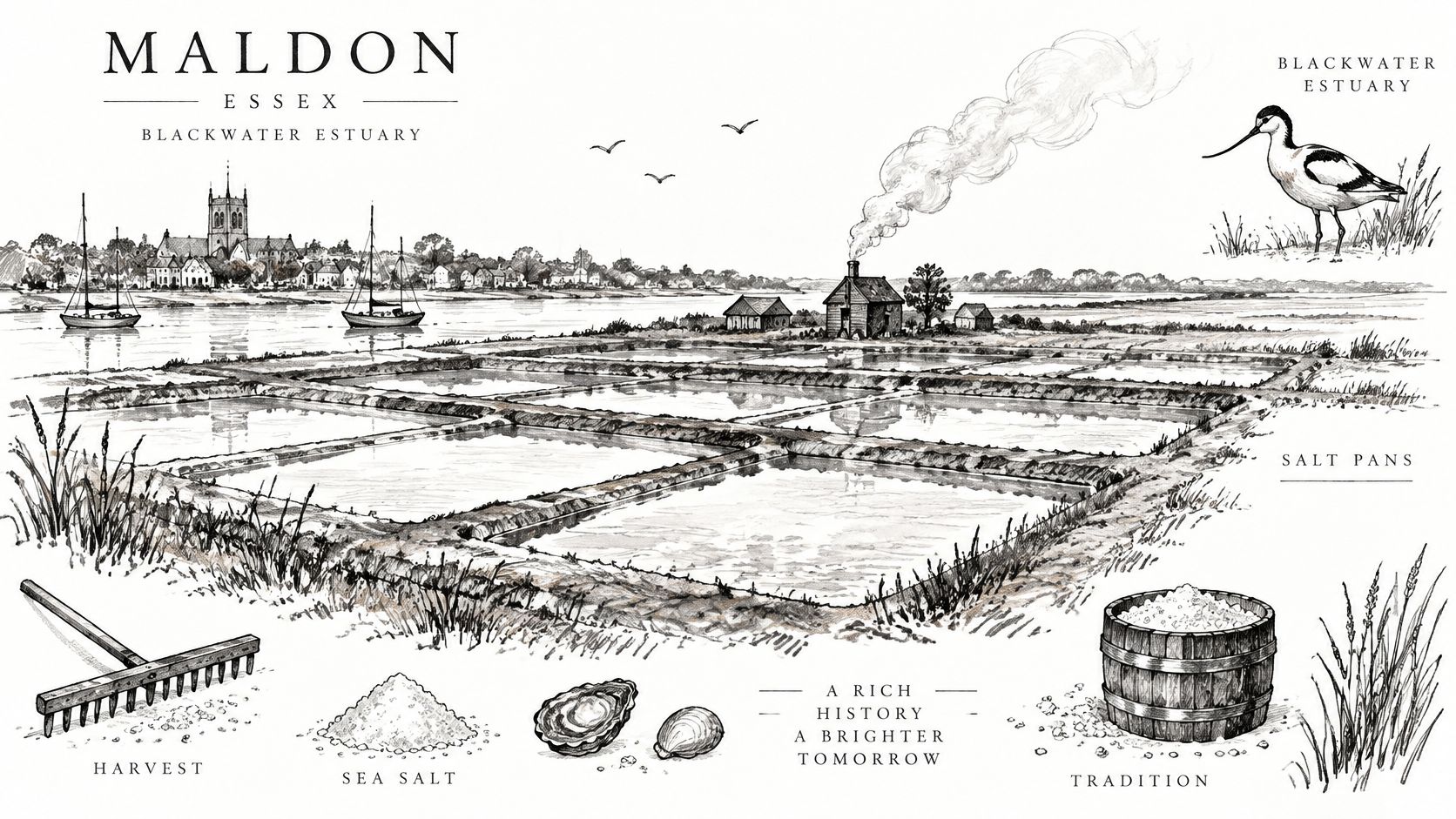
Producers draw in estuary seawater, concentrate it in shallow pans, and control heat and evaporation until crystals form. Workers harvest the delicate flakes by hand, then dry them. Temperature control is the difference between a hollow, pyramid-like crystal and a dense grain. Gentler evaporation leaves the flake crisp and light rather than hard and compact.
From White Flake to Smoked Flake
The flakes are smoked only after they have crystallized. They go into bulk over untreated English oak chips, then return for packing. The oak smoke settles on the outside of an already formed finishing crystal, so each pinch carries salinity, crunch, and aroma together. Dissolve the salt early in a large pot and you still get salt, but the hollow structure and much of the aroma are gone. The smoke works like a sear on a steak: it changes the outside first, while the interior remains salt.
The Osborne family has operated the business across four generations, and historical reporting in Maldon's local salt history puts production at approximately 2,755 tons annually, with 60% exported. Maldon now sells internationally, so the flakes reach home cooks far beyond Essex.
Its roots differ from Mediterranean pans such as those behind Sicily sea salt, but the lesson is similar. Place and crystal formation set the texture, and oak smoke is the final layer on the surface.
How to Use It Without Oversalting a Dish
Start by deciding what job you want the salt to do. Do you want visible flakes on the surface, smooth seasoning with a hint of smoke, or smoke spread through a rub? Each choice changes both timing and amount.
| Method | Best Foods | Starting Amount | Why It Works |
|---|---|---|---|
| Finish after cooking | Grilled vegetables, seafood, fried eggs, steak, dark chocolate | Light pinch per serving, then taste | Keeps flakes visible and the smoke aroma intact |
| Dissolve in sauces or egg mixtures | Scrambled eggs, vinaigrettes, pan sauces | Add in small portions and taste before adding more | Smooth texture when crunch is unwanted |
| Rub or marinade with less other salt | Beef, pork, roast chicken | Cut the other salt first, then season in steps | Smoke spreads across the surface while sodium builds up |
| Crush for even coverage | Roast potatoes, focaccia, popcorn | Crush between fingers, sprinkle lightly | Spreads flakes evenly without clumps on the surface |
Finish After the Heat
For most uses, cook and season the food normally, then add Maldon Smoked Sea Salt after it leaves the heat. A steak that came off a pan, a fried egg, grilled mushrooms, or roasted cabbage only needs a light pinch per serving at first. Taste one bite before adding more, because whole flakes create concentrated points of salt rather than even seasoning.
This timing protects two things at once. The crystal stays crisp, and the oak aroma reaches you before it fades into hot liquid or cooking fat. If whole pyramids feel too large, crush them between your fingers directly over the plate.
Dissolve It When Crunch Would Distract
Sometimes you want smoke without texture. Whisk a small amount into scrambled eggs before cooking, a vinaigrette, or a pan sauce. Add it in stages and taste after each addition, since dissolved salt spreads through the whole mixture and can't be picked off later.
Don't use this method by habit for soups or pasta water. The flake disappears, and ordinary cooking salt does the basic job more predictably. The same portion logic behind why we salt pasta water and when to use less applies here. Season the bulk of the dish appropriately, then reserve specialty flakes for the surface.
Count It as Salt, Not as Seasoning Garnish
The Fresh Market listing for Maldon Smoked Sea Salt Flakes gives roughly 580 to 590 mg of sodium per 0.25-teaspoon serving, about 25 to 26% of the U.S. Daily Value. That's the number to remember when advice suggests adding it at any point in cooking.
Say you use it in a marinade, salt the potatoes separately, then finish everything with another pinch. The smoke may seem mild, but the sodium has arrived three times. Reduce other salt first if smoked salt goes into a rub or marinade, and don't add a finishing pinch automatically.
Practical routine: Season during cooking with ordinary salt, taste, then finish with smoked salt only if the dish still needs both salt and smoke.
If you're managing sodium, count that quarter teaspoon against the day's total before cooking. Swapping in smoked salt doesn't create room for extra salt elsewhere.
Pairing Oak Smoke With Savory and Sweet Foods
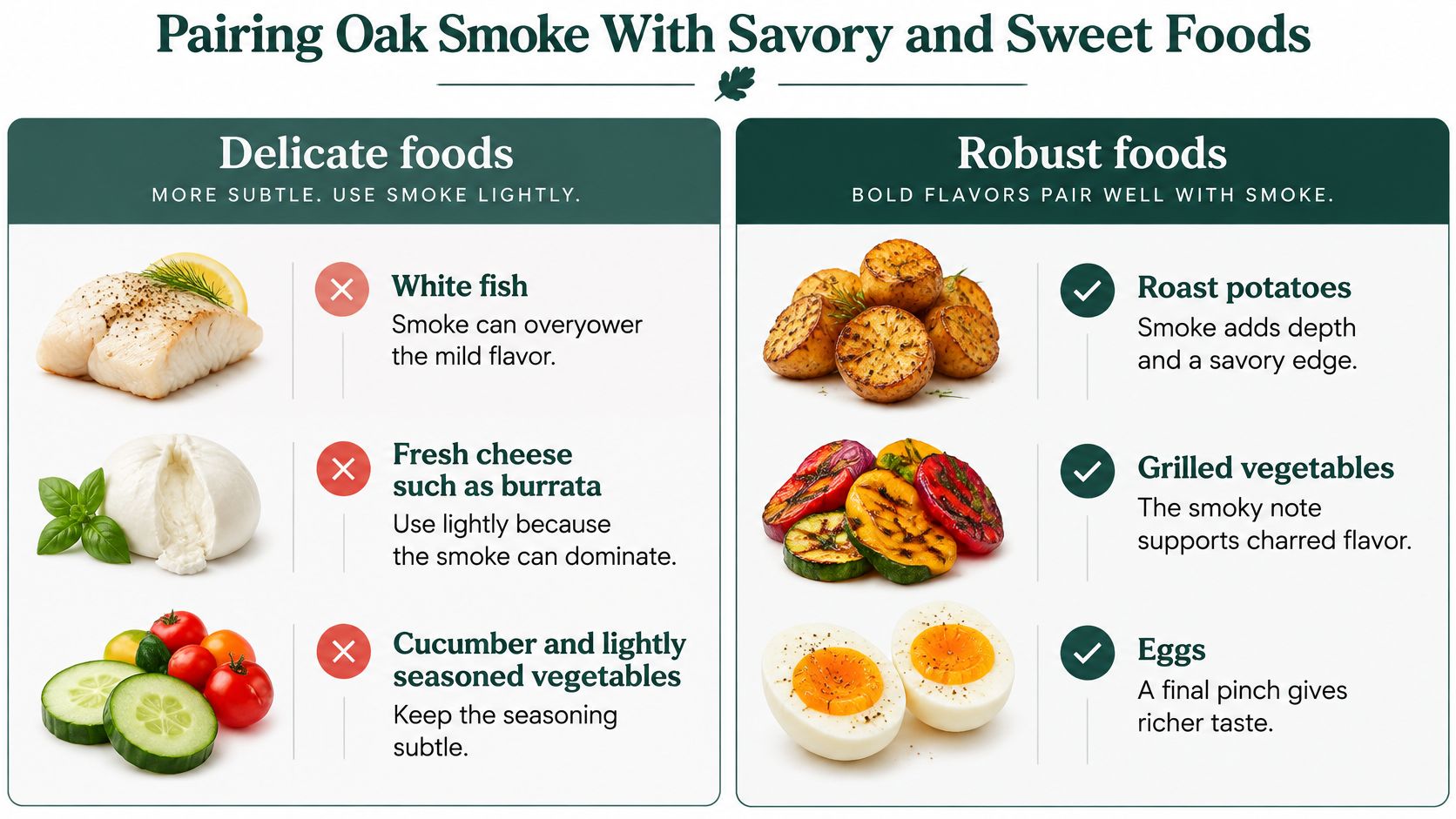
Oak smoke doesn't suit every food equally. The smoke is the variable. The salt is the constant, so the dose still decides whether the pairing works. A food with browned, roasted, fatty, or caramelized flavors gives the smoke something to join. Mild, fresh foods need restraint because there's little underneath to balance either the smoke or the salt. Smoke behaves like a concentrated stock: it needs a savory base to sit in, or it reads as a sharp edge.
The Sainsbury's listing for Maldon Smoked Sea Salt reflects the product's mellow positioning, yet perception varies because saltiness and smoke land together. A flake that feels gentle on beef can feel blunt on cucumber.
| Food group | Foods | Smoke effect | How to apply |
|---|---|---|---|
| Delicate | White fish, burrata, cucumber, lightly seasoned eggs | Smoke can overpower and read as a harsh spike | Use a sparse pinch, scattered finely |
| Deeply savory | Beef, mushrooms, roasted cabbage and broccoli, beans, roast potatoes | Smoke sits alongside browned flavors | Keep whole flakes as a visible finish |
| Sweet | Dark chocolate, caramel, brownies, cookies | Smoke complements roasted and caramelized notes | Test tiny amounts on milk, dark and caramel chocolate |
| Avoid | Fresh fruit | Smoke clashes with bright, fresh flavors | Keep smoked salt off fruit |
Delicate Foods Need a Lighter Hand
White fish, fresh cheese, cucumber, and lightly seasoned eggs can work, but only with a sparse pinch scattered over the surface. A small amount reaches more bites, so no single flake lands as a smoky jolt. Taste the food plain first, especially if capers, olives, cured fish, or a salty sauce are already on the plate.
Browned Foods Give Smoke Somewhere to Land
Beef, mushrooms, beans, roast potatoes, and roasted brassicas have deeper savory or browned notes. Whole flakes make sense there because the crunch is part of the pleasure. A pan-cooked steak without grill char benefits more than meat that's already heavily charred.
Sweet foods follow the same rule. Smoke sits naturally with dark chocolate, caramel, brownies, and cookies because those foods contain roasted or caramelized flavors. Test a few small flakes on milk chocolate, dark chocolate, and caramel side by side, then use the winner sparingly. That's a better test than salting an entire batch at once.
For a concrete sweet application, try a restrained pinch with European chocolate olive oil cookies with salt. Fresh fruit is the main mismatch. Its bright, juicy flavor doesn't need smoke, and adding more only pushes it toward a savory side dish.
Three useful first tests are:
- Fried egg: Add a tiny pinch over the yolk just before eating.
- Roast potatoes: Keep the flakes whole so salt and crunch stay on the crisp surface.
- Dark chocolate: Add two or three small flakes to one square and compare it with an unsalted square.
Storing the Salt and Checking Each Jar
Moisture is the main storage problem. It can clump delicate flakes, soften their edges, and dull the smoke aroma you're trying to preserve. A short routine at the counter prevents most of that damage.
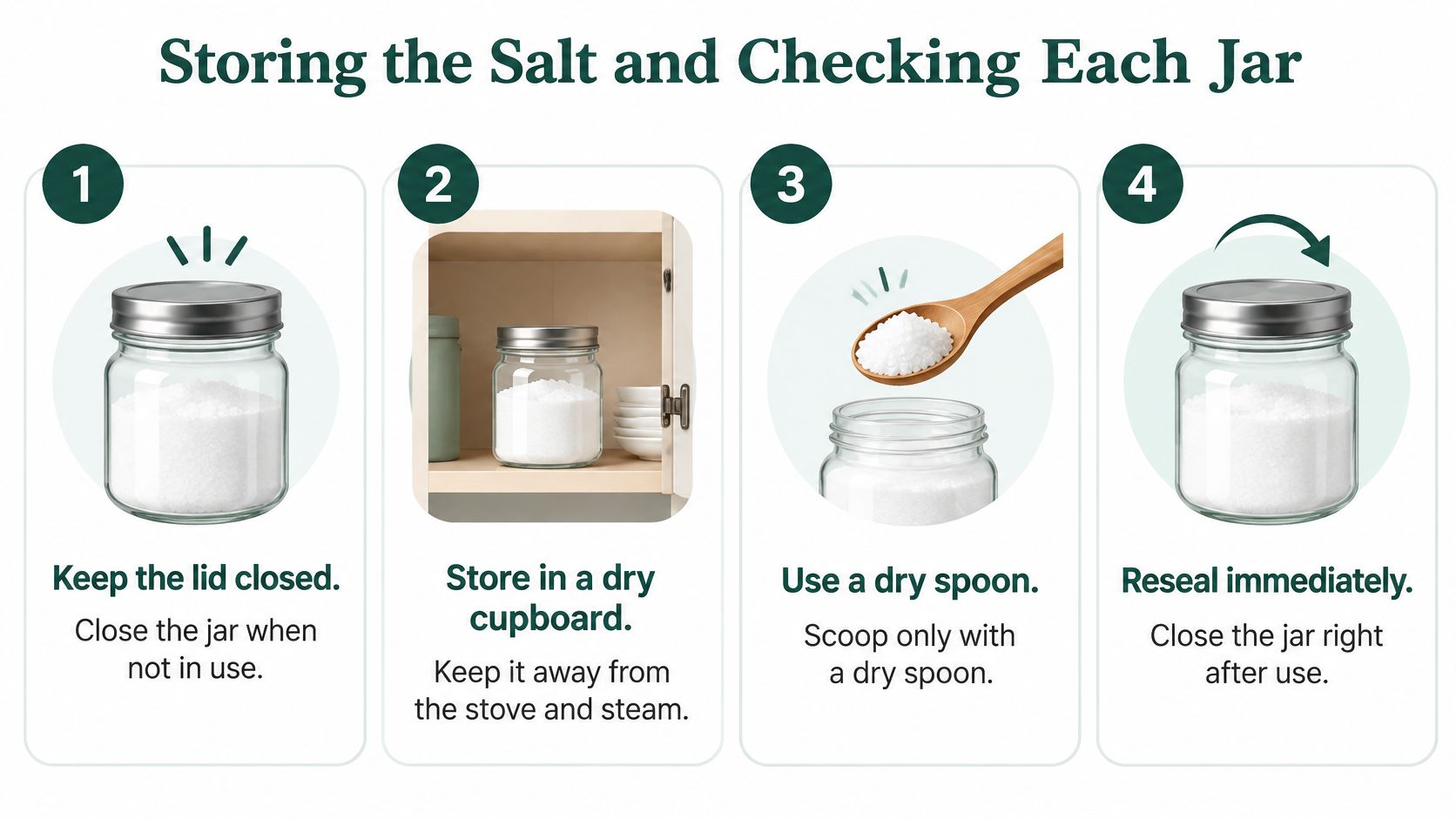
- Keep the lid closed: Don't leave the container open while you finish cooking.
- Store it in a dry cupboard: Keep it away from stove steam, the sink, and a boiling kettle.
- Use a dry spoon or dry fingers: Wet hands introduce moisture directly into the flakes.
- Reseal immediately: Close the jar as soon as you've taken what you need.
Each step limits the time humid kitchen air can reach the salt. If you prefer a salt cellar, keep only a small amount out and refill it from the sealed container.
What to Check Before Serving
The 2025 Maldon Smoked Sea Salt specification lists sodium chloride at not less than 97% on a dry-matter basis and no additives. It also notes that occasional hard non-salt particles, including calcium-carbonate minerals, may occur from crystallization.
That means your check is mostly visual and sensory. Look for loose, light-brown flakes and a clear oak-smoke smell. Remove any unusually hard piece that doesn't look like a salt flake before serving.
Loose flakes and a clear smoky aroma mean the jar is ready. Damp clumps and a stale smell mean the texture and aroma have already declined.
Pure salt is stable, but a smoked finishing flake can lose the qualities that make it worth using. Replace a jar that stays damp or no longer smells smoky, even if the salt itself still seasons food.
Choose Between Maldon and Other Smoked Salts
The smoke gets the attention, but the salt sets the dose. Maldon Smoked Sea Salt earns its place when a dish needs a visible, crunchy layer of oak smoke: grilled steak, roast chicken, fried potatoes. Its broad pyramid flakes sit on the surface and stay crisp, so each pinch delivers aroma and texture together. A smoked fleur de sel is the other useful shape. The crystals are finer and moister, so they dissolve faster and land more gently. The smoke works like a finish on wood: it changes aroma, while the salt sets how much seasoning you apply.
A smoked flake is still salt. Its sodium load is close to that of other sea salts, so the smoke does not make it a low-sodium choice. Match the crystal to the surface and the amount to the food.
Lello's smoked fleur de sel from Greece offers that finer, moister crystal. Use it when you want smoke with a softer finish on fish, vegetables, or eggs. Use Maldon when the crunch is part of the point and the food can carry a broader flake.
A non-smoked alternative can clarify what smoke adds. Les Terres Blanches Sicilian Lemon Sea Salt (Fior di Sale) is Sicilian sea salt with a bright lemon accent, added at the end for crunch and citrus fragrance on fish, vegetables, or fresh cheese. On delicate fish, lemon may brighten where oak smoke would darken. Lemon salt changes aroma; smoked salt adds oak aroma as well. The amount of salt still determines seasoning.
Buy a small amount first. Set out two portions of the same plain food, such as a seared chicken cutlet or a sliced tomato. Finish one with a single light pinch of the smoked salt and the other with your everyday salt. Taste both. If the smoked version reads only as saltier, use less or crush the flakes before adding them. If you notice smoke, crunch, and a measured saltiness together, the salt is working as a finishing tool. If the smoke fades under the food, add a little more flake and taste again.
Visit Lello.Store to explore finishing salts, olive oils, preserves, and other specialty pantry staples selected for provenance and everyday usefulness. Compare smoked and citrus finishing salts, then start with one small jar and run the side-by-side taste test in your own kitchen.