

You've got warm bread on the table, roasted vegetables in the oven, and guests arriving soon. Then the lemon herb aioli separates into a glossy puddle of oil and a garlicky paste. It's a frustrating failure, but it usually isn't a recipe problem. It's an emulsion problem, and emulsions respond to temperature, pace, and proportion more reliably than they respond to luck.
A good lemon herb aioli should be thick enough to cling to a sandwich or roasted potato, bright enough to cut through richness, and flexible enough to suit the menu. Once you understand how the oil, water, egg yolk, garlic, lemon, and herbs work together, you can treat the sauce as a dependable hosting staple rather than a fragile one-use dip.
Table of Contents
- Rethinking the Classic Emulsion
- Mastering the Emulsification Technique
- Building a Customizable Flavor Framework
- Rescuing Broken Sauces and Ensuring Food Safety
- Elevating Sandwiches and Aperitivo Boards
- Frequently Asked Questions
Rethinking the Classic Emulsion
The word aioli covers more than one preparation. Traditional Mediterranean aioli is a garlic-and-oil emulsion made by crushing garlic into a paste and gradually working in olive oil. It can be made without egg yolk, because compounds in the garlic help stabilize the mixture as the oil is incorporated. The sauce is particularly associated with Catalonia, Valencia, and Provence, and its name joins regional words for garlic, such as Catalan all or Occitan ail, with words for oil, including oli. Historical accounts connect the tradition with older western Mediterranean preparations, including the Roman-era mixture moretum and the Catalan cookbook Llibre de Sent Soví, written in 1324. The history of aioli and its garlic-and-oil foundation gives useful context for separating the traditional sauce from modern shortcuts.
Modern lemon herb aioli often takes a different route. Egg yolk supplies lecithin, a highly effective emulsifier, while a neutral oil or olive oil provides the fat. Prepared mayonnaise can stand in for the yolk and oil altogether, making a stable base for flavoring. Neither approach is automatically more authentic or more useful. The right choice depends on whether you want a mortar-made garlic sauce, a freshly whisked emulsion, or a practical condiment for a crowded kitchen.
Practical rule: Think of aioli as a base with a structure, not as a fixed ingredient list.
That change in mindset matters during hosting. If the herb drawer contains parsley and chives instead of basil and dill, the sauce can still work. If the lemon is fragrant but not especially juicy, zest can carry much of the citrus character while a small amount of juice supplies the necessary acidity. A spoonful of stable mayonnaise can also give you a reliable starting point when raw-egg handling isn't appropriate.
For a deeper look at how olive oil behaves in everyday cooking, keep Lello's lemon and olive oil guide alongside your pantry notes. The useful question isn't whether one formula is canonical. It's whether the finished sauce has the right balance of fat, water, acidity, salt, garlic, and aroma for the food you're serving.
Mastering the Emulsification Technique
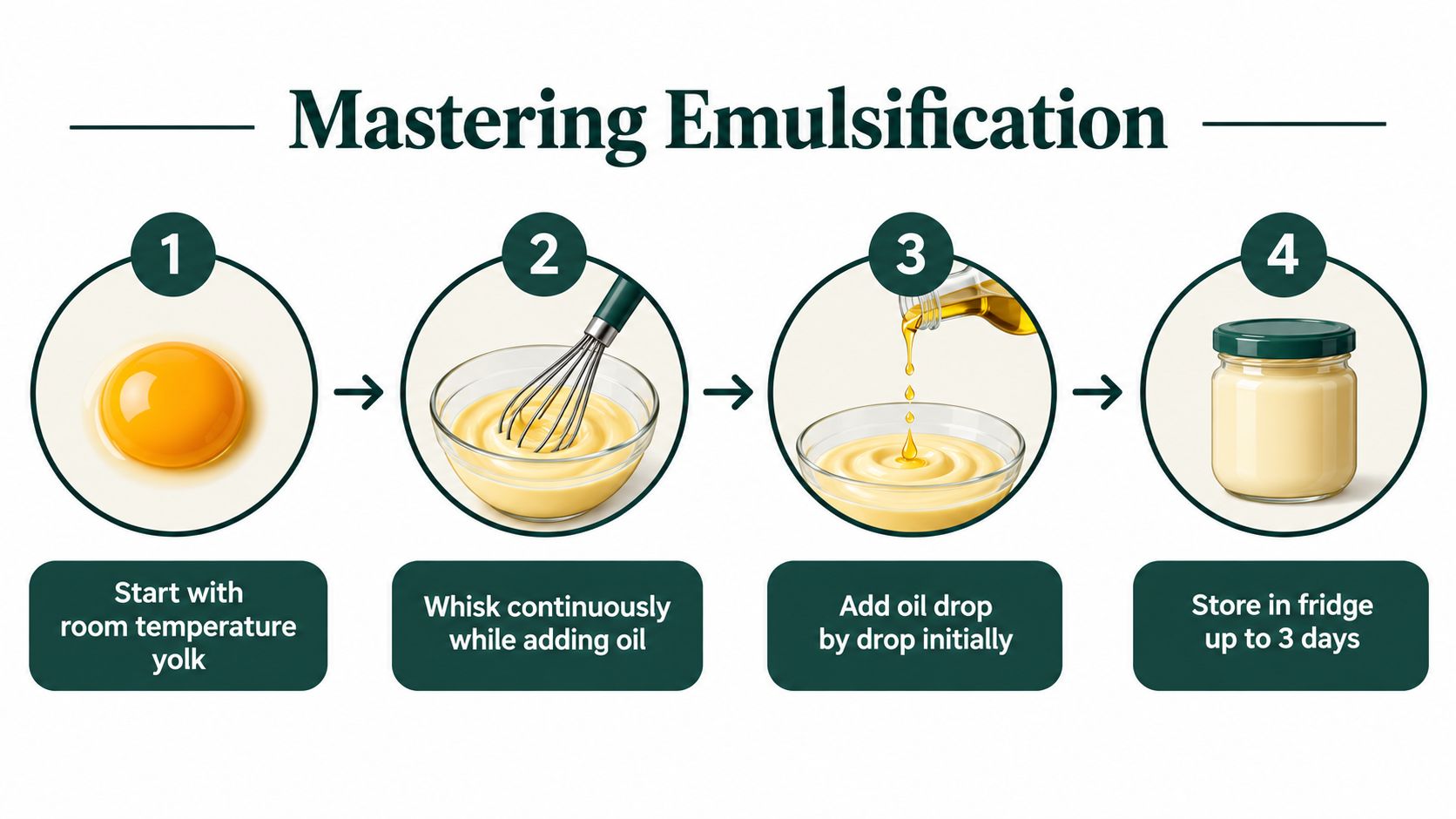
A mayonnaise-style lemon herb aioli is an oil-in-water emulsion. Tiny droplets of oil become dispersed through a water-based mixture, while egg-yolk lecithin helps surround those droplets and keep them from joining back together. Whisking supplies the mechanical shear that breaks the oil into smaller droplets. Add oil too quickly, and the watery phase can't accommodate it fast enough.
Start with an even temperature
Bring the egg yolk and garlic paste to approximately 20–22°C before mixing. A cold yolk and warmer oil can make the sauce harder to stabilize, especially during the first stage when the emulsion is most vulnerable. Crush the garlic thoroughly with salt so it becomes a smooth paste rather than a collection of sharp pieces.
Whisk the yolk and garlic with salt until the mixture looks pale and slightly aerated. You're not trying to whip it into a foam. You're creating an even base in which the first droplets of oil can disperse.
Control the first oil
The first 60 mL of oil should enter extremely slowly, at about one drop per second. Keep whisking continuously, and make sure each addition disappears into the base before adding more. This is the point where impatience causes most failures.
Look for a visible change. The mixture will become glossier, thicker, and more resistant to the whisk. Once that happens, you can add the remaining oil in small increments rather than single drops. Don't pour a fast stream just because the sauce looks stable. A strong emulsion can still become overloaded if you add oil faster than the whisk can disperse it.
The emulsification technique guidance for aioli explains the role of lecithin and the practical importance of slow incorporation. Its central lesson matches what you see in the bowl: continuous whisking and controlled oil flow matter more than forceful mixing.
Adjust the texture at the end
A finished sauce can become so thick that it feels heavy or difficult to spread. Loosen it with a measured 5 mL addition of cold water, whisking until the water disappears. Adding more oil to a sauce that's already too thick only increases the fat load and can push the emulsion toward failure.
Add lemon juice and finely chopped herbs after the emulsion has formed. A large dose of acid introduced too early can interfere with droplet formation and make the raw garlic taste more aggressive. If you're using a stick blender, keep the head fully immersed while you establish the emulsion, then move it gently once the sauce has thickened.
For a visual demonstration of the process, this aioli technique video shows the pace and movement more clearly than a written recipe alone.
Building a Customizable Flavor Framework
Once the emulsion is stable, flavor it in layers. Lemon juice and lemon zest aren't interchangeable, and treating them as though they are can leave the sauce either dull or thin.
Use juice for balance and zest for aroma
Juice brings water and acidity. It cuts through the richness of oil or egg and makes garlic and herbs taste sharper. Zest contributes aromatic citrus oils without adding much liquid, so it can intensify the lemon character while preserving the aioli's spoonable texture.
Lemon also contributes nutrients, but the amount in a serving of aioli is small. Raw lemon flesh without peel contains approximately 29 kilocalories, 9.3 grams of carbohydrate, 2.8 grams of dietary fiber, and 53 milligrams of vitamin C per 100 grams, with the vitamin C amount equivalent to roughly 59% of the Daily Value. A typical lemon provides about 31 milligrams of vitamin C, while its juice generally contributes around 15–25 milligrams. USDA-linked lemon composition data supports the practical conclusion: lemon-herb aioli is a sauce, not a significant vitamin-C source.
Add finely grated zest to the base before adjusting with juice. Then add juice gradually, tasting after each addition. The sauce should taste bright, not aggressively sour.
Match the herb to the menu
Tender herbs are easy to mince and fold through at the end. Parsley gives a clean green note, chives add mild onion flavor, basil makes the sauce softer and sweeter, and dill brings a fresh character that works particularly well with fish and chilled vegetables.
Woody herbs need more restraint. Rosemary can dominate a delicate sandwich, while thyme and tarragon can add depth when used sparingly. Mince them very finely, infuse them into the oil before making the aioli, or blend them into a small portion of the finished sauce before combining it with the rest.
| Herb style | Best treatment | Natural pairing |
|---|---|---|
| Parsley, chives, basil | Finely mince and fold in | Sandwiches, potatoes, grilled vegetables |
| Dill | Mince and add gradually | Fish, eggs, cucumbers |
| Thyme, rosemary, sage | Mince finely or infuse | Roasted roots, beans, poultry |
| Tarragon | Use sparingly | Chicken, eggs, delicate vegetables |
Fresh herbs can darken and become grassy during storage, so more isn't always better. For a make-ahead batch, a restrained amount of fresh herb often tastes cleaner than an overloaded mixture. A good prepared mustard can also add tang and contribute some stabilizing power, while giving the sauce a savory bridge between the lemon and garlic.
Rescuing Broken Sauces and Ensuring Food Safety
A broken aioli isn't necessarily wasted. If the mixture has separated but still smells fresh and has been handled safely, you can use it as the oil component in a new emulsion. Start with a clean bowl and a fresh egg yolk, then whisk in 1 teaspoon of warm water. Slowly drizzle the broken aioli into this new base, just as you added the original oil. The rescue works because the new yolk provides another supply of lecithin and a fresh water phase.
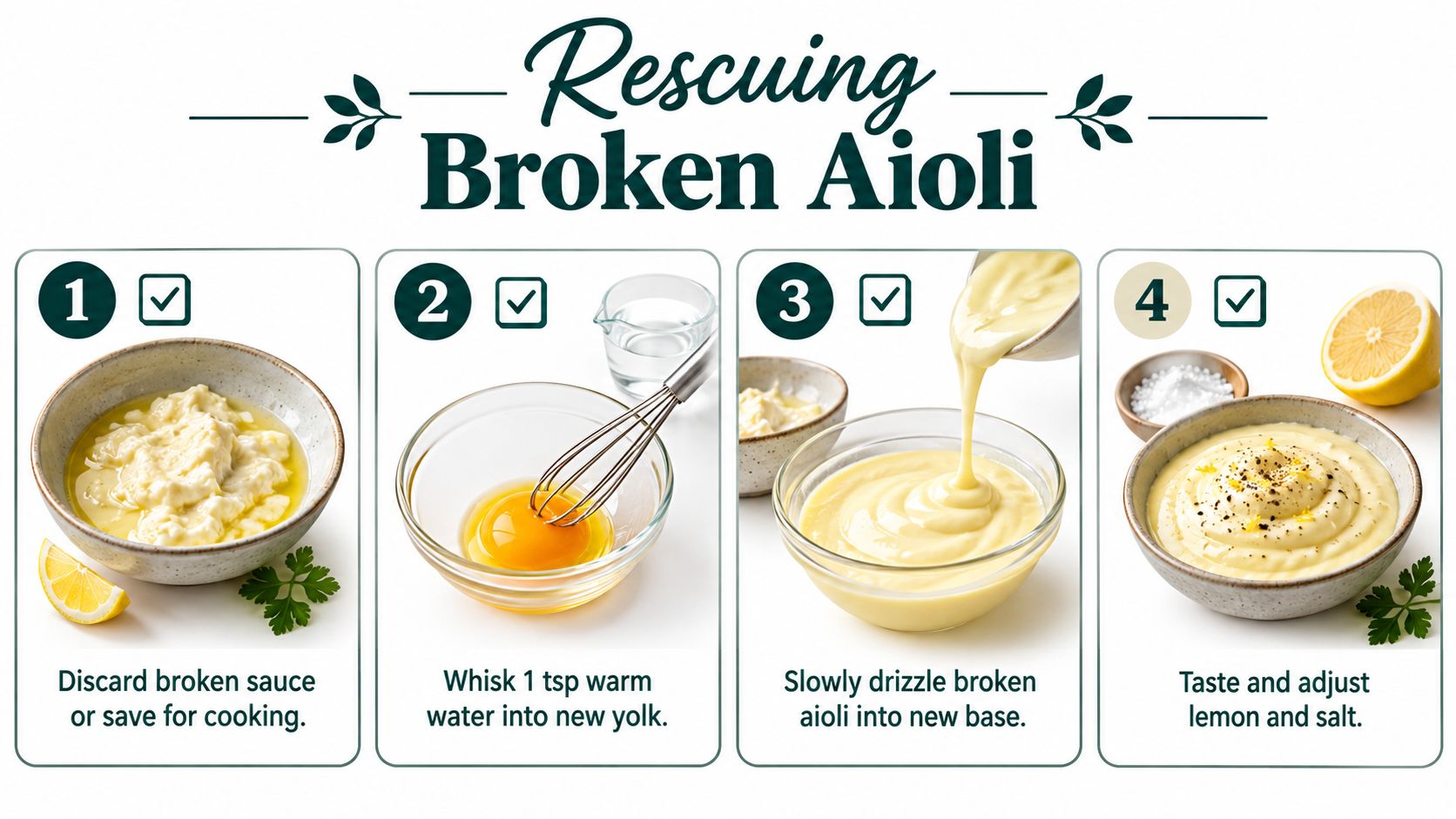
If you're unsure how long the broken sauce has been warm, discard it rather than trying to save it. You can also reserve a separated mixture for cooking, where its oil and garlic may still be useful, provided it has been stored safely. Taste the rescued aioli only after the texture has returned, then adjust lemon and salt carefully.
Treat it as a perishable sauce
Homemade lemon herb aioli should be handled like homemade mayonnaise. Use pasteurized eggs where available, refrigerate the finished sauce at 4°C/40°F or below, and don't leave it at room temperature for more than 2 hours, or more than 1 hour when the ambient temperature exceeds 32°C/90°F. The food-safety guidance for homemade mayonnaise also recommends small batches, cold holding, and conservative disposal.
For quality and safety, use a practical 3-day refrigerator limit for a homemade batch. Lemon juice may inhibit some bacterial growth, but it doesn't replace refrigeration or a validated commercial acidification process. Fresh herbs can darken, garlic can intensify, and the emulsion can separate even before obvious spoilage appears.
Safety rule: A bright lemon aroma and a smooth texture don't prove that an egg-based sauce is safe.
For a gathering, make only what you expect to serve and keep the bowl chilled until it reaches the table. If you're preparing food for gifting or a larger service, choose a commercially produced, pasteurized, acidified aioli instead of relying on an unvalidated house recipe. Aquafaba can provide an egg-free route, while commercial mayonnaise offers a practical pasteurized base that you can season with lemon zest, herbs, and garlic.
Keep handwashing and cross-contamination in the same planning conversation as refrigeration. A fragrance-free sink option such as Fer à Cheval Genuine Marseille Liquid Soap, Olive Oil, 500 ml is made in cauldrons from vegetable oils and naturally occurring glycerin, and its quiet formula suits a working kitchen. For broader household guidance, this pantry refrigeration guide offers a useful reminder that storage decisions belong to the whole cooking routine, not just the recipe card.
Elevating Sandwiches and Aperitivo Boards
Lemon herb aioli earns its place when it changes how a dish eats. Spread it inside a sandwich as a moisture barrier before adding juicy tomatoes, roasted vegetables, or dressed greens. On a toasted panini, apply it after the bread has warmed if you want the lemon and herbs to remain vivid. For a cold sandwich, pair the sauce with sliced chicken, boiled eggs, tuna, or grilled vegetables, then keep the filling restrained so the emulsion remains identifiable.
Fried foods need acidity and freshness. Serve the aioli beside potatoes, croquettes, fried fish, or crisp vegetables rather than burying the food under it. With roasted roots, use a sharper, more herbaceous version. With delicate fish, reduce the garlic and choose dill, parsley, or chives.
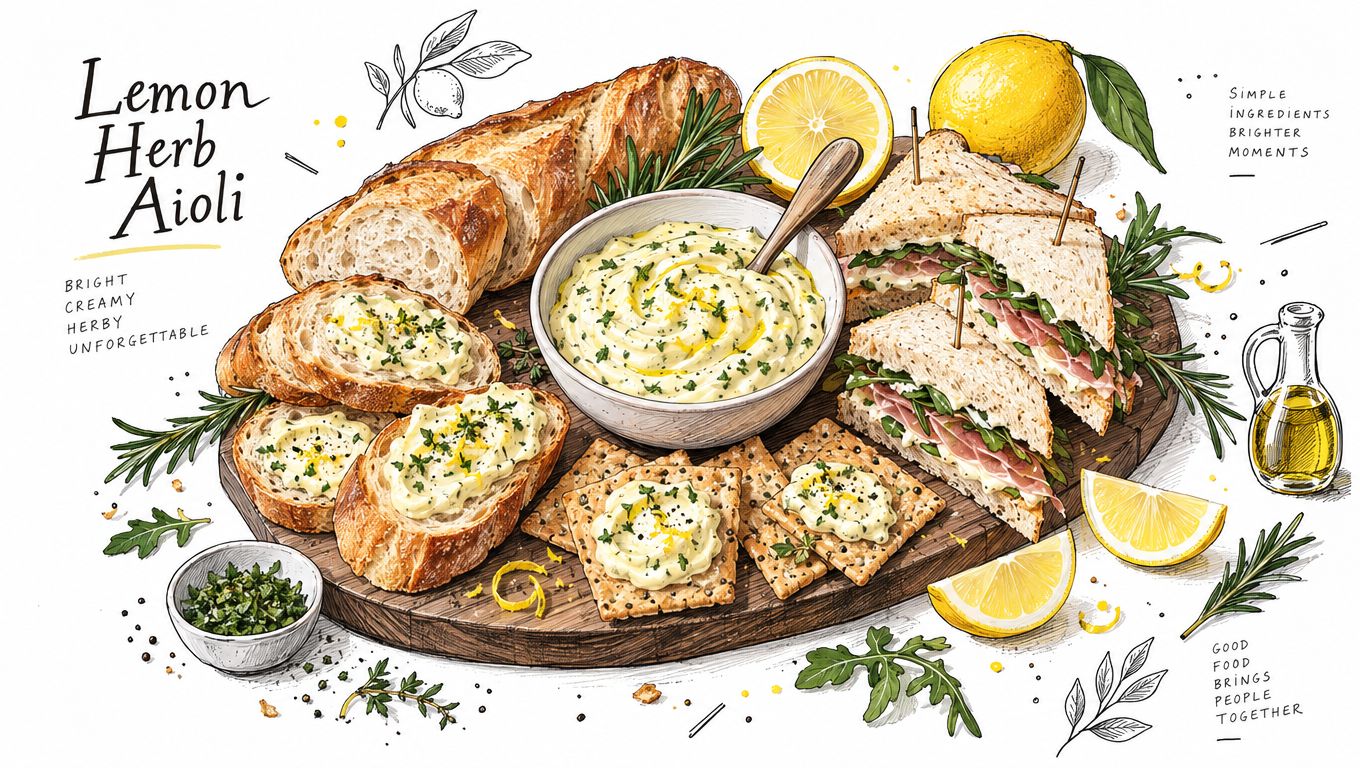
For an aperitivo board, serve the aioli in a small ramekin with a broad enough opening for dipping. Place it near crackers, baguette slices, roasted vegetables, pickled items, and cured meats, but don't let the bowl touch foods that guests may return to the board after dipping. A small garnish of lemon zest or a dehydrated citrus wheel signals the sauce's flavor before anyone tastes it.
The same principle applies to menu planning. A board feels more generous when one sauce connects several elements without making them identical. Use the aioli with bread and vegetables, then let a separate mustard or pickle provide a contrasting sharpness. Lello's aperitivo guide is useful when you're arranging the sauce as part of a larger spread rather than serving it as an isolated dip.
Frequently Asked Questions
Is extra virgin olive oil the right choice?
It depends on the flavor you want. A peppery extra virgin olive oil can give aioli a vivid, savory finish, but high-speed blending may make a bold oil taste bitter or overly forceful. A neutral oil creates a softer base and lets the garlic, lemon, and herbs lead. You can also use a blend, reserving a more expressive olive oil for a final drizzle rather than making it carry the entire emulsion.
How does traditional aioli differ from mayonnaise-style aioli?
Traditional aioli relies on crushed garlic and gradual incorporation of oil, often without egg yolk. Mayonnaise-style aioli uses egg yolk and lecithin to stabilize the oil droplets, which makes the process more forgiving and produces a familiar thick texture. Prepared mayonnaise is the most convenient shortcut, especially when you're avoiding raw-egg preparation or need a predictable base for a gathering.
Can it be made without eggs?
Yes. Aquafaba can replace egg in an egg-free emulsion, though its behavior and flavor differ from yolk-based aioli. A commercial vegan mayonnaise provides a more stable shortcut. In either case, add lemon juice gradually and use zest to build citrus aroma without unnecessarily loosening the sauce.
Why did my olive oil aioli turn bitter?
The oil may be too assertive for vigorous blending, or the garlic may have been processed aggressively. Try a milder oil, whisk by hand, or combine olive oil with a neutral oil. If the bitterness is already pronounced, more lemon won't necessarily fix it. A small amount of prepared mayonnaise can soften the flavor and restore a more balanced base.
Lello.Store curates specialty pantry foods, olive oils, condiments, cocktail garnishes, and table essentials for cooks building an aperitivo, dinner, or thoughtful food gift. Visit Lello.Store to find the pantry and hosting pieces that can turn a bowl of lemon herb aioli into part of a complete table.